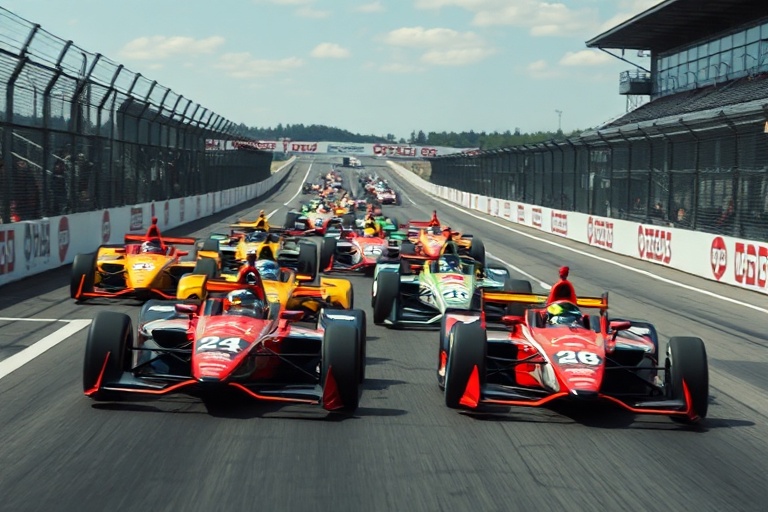
Why the Indy 500 Remains the World’s Most Iconic Race
The Indianapolis 500: America’s Greatest Racing Tradition
The Indianapolis 500, often called “The Greatest Spectacle in Racing,” is more than just a motorsport event. It’s a 100-year-old tradition that blends speed, strategy, and spectacle into a single Memorial Day weekend. Held annually at the Indianapolis Motor Speedway in Indiana, the race draws over 300,000 spectators and millions of television viewers worldwide. Yet its influence extends far beyond the track, shaping automotive culture, global racing calendars, and even local economies. From its early days as a test of engineering prowess to today’s high-tech, high-stakes competition, the Indy 500 remains a defining moment in both American and international motorsport.
What makes the Indianapolis 500 unique isn’t just its speed or its history. It’s the way the race has woven itself into the fabric of American identity. Unlike Formula 1, which operates as a global circuit with races across continents, the Indy 500 is deeply rooted in one place—Indianapolis—yet attracts drivers, teams, and fans from over 30 countries. This blend of local pride and international participation gives the event a cultural resonance that few sporting events can match.
The Origins: A Race Born from Innovation
The Indianapolis 500 traces its roots to 1909, when the Indianapolis Motor Speedway was built as a testing ground for the burgeoning American auto industry. The first race in 1911, won by Ray Harroun in the Marmon Wasp, was not just a sporting event—it was a showcase of engineering. Harroun’s car featured the first known rearview mirror in motorsport, a technological leap that symbolized the race’s forward-thinking spirit. Within years, the Indy 500 became a proving ground for innovations that would shape the automotive world: improved tire technology, aerodynamic designs, and safety systems.
By the 1920s and 1930s, the race had grown into a national obsession. Crowds of over 100,000 filled the grandstands, and drivers like Louis Meyer and Wilbur Shaw became household names. These early decades established the Indy 500 as a symbol of American ingenuity and ambition—a narrative that still resonates today. The track itself, with its four distinct turns and long straightaways, became a laboratory where mechanical limits were constantly pushed.
The Globalization of an American Classic
While the Indy 500 is undeniably American, its appeal has always been global. European drivers like Mario Andretti, who won in 1969, and Nigel Mansell, who claimed victory in 1993, have left their mark on the Borg-Warner Trophy. Today, the field includes competitors from Brazil, Japan, Colombia, and beyond. This international participation reflects the broader shift in motorsport, where national boundaries have blurred in favor of technical collaboration and shared competition.
The race’s global reach is also evident in its broadcast history. The Indy 500 has been televised in over 200 countries, with networks like ESPN, ABC, and Fox Sports reaching audiences from Tokyo to Toronto. In 2023, the race drew over 4.2 million U.S. viewers and millions more online, making it one of the most-watched motorsport events in the world. This global audience has helped turn the Indy 500 into a cultural export, introducing new generations to the thrill of open-wheel racing.
Notable international teams and drivers have also shaped the race’s evolution. In recent years, teams like Andretti Autosport and McLaren have fielded entries with multinational rosters, while drivers such as Takuma Sato (Japan) and Hélio Castroneves (Brazil) have become fan favorites. The presence of these global competitors has elevated the level of competition and added layers of strategy, as teams adapt to different driving styles and track conditions.
The Economic and Cultural Impact
The Indianapolis 500 is a major economic driver for the region. The event generates over $400 million annually for Indiana’s economy, supporting thousands of jobs in hospitality, tourism, and retail. Local businesses—from family-owned diners to luxury hotels—see a surge in activity during race week. The Indianapolis Motor Speedway itself employs hundreds of year-round staff and seasonal workers, from engineers to hospitality coordinators. This economic ripple effect extends beyond race day, as the track hosts testing, events, and even concerts throughout the year.
Culturally, the Indy 500 has become a symbol of perseverance and tradition. The month of May in Indianapolis is defined by the race, with festivals, concerts, and community events filling the calendar. The “Month of May” includes the IndyCar Grand Prix, community parades, and the famous Carb Day concert, which draws tens of thousands of fans. These events create a festival atmosphere that transforms the city into a hub of energy and excitement.
The race has also inspired countless films, documentaries, and books, further embedding it in popular culture. Movies like Winning (1969) starring Paul Newman and Turbo (2013) have used the Indy 500 as a backdrop, while documentaries like The Ride of a Lifetime have explored the stories of drivers and crew members. Even video games like iRacing and Gran Turismo feature the Indianapolis Motor Speedway as a playable track, introducing digital audiences to its legendary layout.
Challenges and the Future of the Indy 500
Despite its enduring legacy, the Indy 500 faces challenges in the modern era. Declining television ratings and shifting audience habits have forced organizers to adapt. In response, the Indianapolis Motor Speedway has invested in digital content, including live streaming, virtual reality experiences, and interactive fan engagement. The race has also embraced sustainability initiatives, such as reducing waste and promoting eco-friendly transportation, to align with growing environmental concerns.
Another challenge is the evolving nature of motorsport itself. With Formula 1 gaining popularity in the U.S. and electric racing series like Formula E expanding, the Indy 500 must compete for attention. Yet its unique blend of history, accessibility, and raw speed keeps it relevant. The race’s 2.5-mile oval, with its high-speed corners and dramatic overtakes, offers a spectacle that few other motorsport events can replicate.
Looking ahead, the Indy 500 is poised to remain a cornerstone of American racing. Innovations in car design, safety, and fan experience continue to shape the event. The introduction of hybrid engines in 2024 marks a new chapter, blending tradition with cutting-edge technology. As long as drivers chase the checkered flag under the iconic Yard of Bricks, the Indianapolis 500 will endure as a testament to speed, skill, and the pursuit of greatness.
For racing fans worldwide, the Indy 500 offers more than just a competition—it’s a pilgrimage. Whether you’re watching from the grandstands, a local sports bar, or a streaming device, the experience is electric. It’s a reminder that some traditions, when built on innovation and passion, never fade. They only grow stronger.