air india
In 2022, Air India began a dramatic turnaround under the Tata Group’s ownership after decades of state control. The airline’s recent initiatives reflect broader shifts in India’s aviation sector, where competition and passenger expectations are rapidly evolving. This transformation isn’t just about fleet upgrades or route expansions—it’s about redefining what an Indian carrier can achieve on the global stage.
With a focus on customer experience, operational efficiency, and strategic partnerships, Air India is positioning itself as a serious contender against Middle Eastern giants and Southeast Asian competitors. Yet challenges remain, from infrastructure constraints to the lingering effects of the pandemic. The airline’s journey offers a case study in how legacy carriers can reinvent themselves in a crowded market.
The Tata Group Revival: What’s Driving Air India’s Comeback
The Tata Group’s acquisition of Air India in 2022 marked a pivotal moment for India’s aviation industry. Unlike previous privatization attempts, this deal came with a clear mandate: modernize the airline while respecting its legacy. The group’s deep pockets and corporate acumen have already yielded tangible results, including a $47 billion order for 470 aircraft from Airbus and Boeing in 2023—the largest in aviation history.
This investment signals more than just fleet renewal. It reflects a strategic bet on India’s growing middle class and its role as a global travel hub. By 2030, India is expected to surpass China as the world’s most populous nation, creating unprecedented demand for air travel. Air India’s expansion aligns with this demographic shift, aiming to capture both domestic and international travelers who seek reliability and premium service.
The Tata Group’s approach also emphasizes employee engagement, a critical factor in turning around a carrier burdened by years of underinvestment. Early reports suggest improved morale and a renewed focus on safety and punctuality—areas where Air India historically lagged behind competitors.
Fleet Modernization: The Engine Behind Air India’s Ambitions
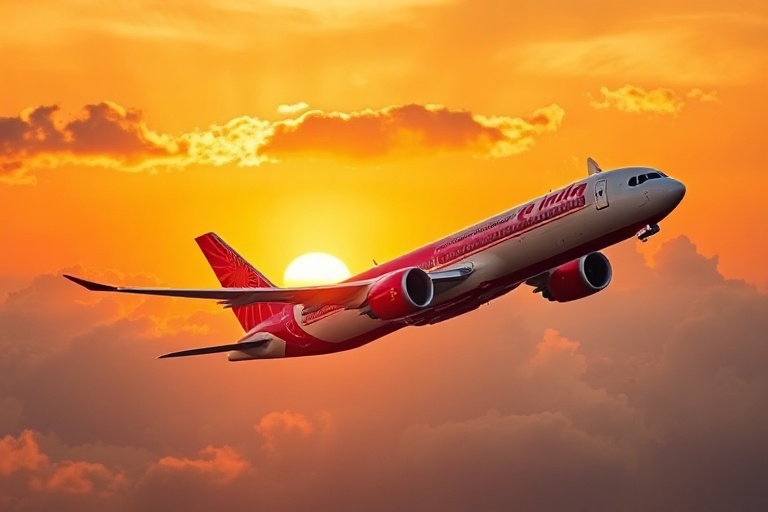
Air India’s fleet overhaul is the most visible sign of its transformation. The airline’s order includes a mix of wide-body and narrow-body aircraft designed to serve diverse markets. The Airbus A350s, set to join the fleet by 2025, will enhance long-haul capabilities, while the Boeing 737 MAX and A320neo families will improve efficiency on short-haul routes.
These planes incorporate cutting-edge technology, such as fuel-efficient engines and advanced avionics, which reduce operating costs and environmental impact. For passengers, the upgrades mean quieter cabins, better air quality, and in-flight entertainment systems that rival those of premium carriers. Air India is also investing in its premium cabins, with lie-flat seats and enhanced dining options to compete with Gulf airlines.
The fleet expansion isn’t without risks. Integrating hundreds of new aircraft requires significant training for pilots and ground staff, as well as upgrades to maintenance facilities. Delays in delivery or operational hiccups could disrupt the airline’s ambitious growth plans. Still, the long-term benefits—reduced fuel consumption, lower maintenance costs, and higher passenger satisfaction—are undeniable.
Global Competition: Can Air India Compete with the Gulf Giants?
Air India’s resurgence comes as no surprise to industry analysts, but its success is far from guaranteed. The airline faces stiff competition from carriers like Emirates, Qatar Airways, and Singapore Airlines, which dominate key routes between India and the West. These airlines have spent decades building brand loyalty and offering seamless connections through their hubs in Dubai, Doha, and Singapore.
To compete, Air India is leveraging its strengths: a vast domestic network, cultural ties to the Indian diaspora, and a reputation for warmth and hospitality. The airline is also focusing on niche markets, such as direct flights to North America and Europe, where demand for non-stop travel is growing. By 2024, Air India plans to launch new routes to cities like New York, London, and Frankfurt, challenging the Gulf carriers’ dominance.
Yet competition isn’t limited to passenger numbers. Air India must also contend with rising fuel prices, geopolitical tensions, and the economic slowdown in key markets. The airline’s ability to navigate these challenges will determine whether its revival is sustainable or merely a temporary blip.
Key Strategies for Air India’s Growth
- Route Optimization: Focusing on high-demand international routes while expanding domestic connectivity to feed into long-haul flights.
- Customer-Centric Upgrades: Enhancing in-flight services, digital booking platforms, and loyalty programs to retain passengers.
- Strategic Partnerships: Collaborating with global alliances like Star Alliance to offer seamless travel experiences and code-share agreements.
- Sustainability Initiatives: Committing to carbon-neutral growth by investing in sustainable aviation fuels and more efficient aircraft.
Broader Implications: What Air India’s Revival Means for the Industry
Air India’s transformation is more than a corporate success story—it’s a bellwether for India’s aviation sector and its global ambitions. The airline’s revival could inspire other state-owned carriers in India and beyond to pursue privatization, fostering innovation and competition. It also highlights the growing influence of Indian travelers, whose preferences are shaping global aviation trends.
For the Tata Group, the stakes are high. A successful turnaround would reinforce the conglomerate’s reputation as a savvy investor and a driver of economic growth. It could also position Air India as a flagship brand, much like Singapore Airlines or Emirates, which are synonymous with quality and service.
On a broader scale, Air India’s growth reflects India’s rising prominence on the world stage. As the country’s economy expands and its middle class grows, so too does its influence in global trade, culture, and travel. Air India’s success could serve as a model for how legacy carriers in other emerging markets can adapt to changing realities.
Yet challenges remain. Infrastructure bottlenecks at India’s airports, regulatory hurdles, and the need for skilled labor all pose risks to the airline’s long-term success. The Tata Group’s ability to address these issues will be critical in determining whether Air India’s revival is a fleeting moment or the start of a new era.
Looking Ahead: The Future of Air India
As Air India continues its transformation, the airline faces a pivotal few years. The next decade will test its ability to balance growth with profitability, innovation with tradition, and ambition with pragmatism. For passengers, the changes promise a better travel experience—one that reflects India’s dynamism and global aspirations.
The airline’s journey also offers lessons for other industries grappling with legacy challenges. Whether it’s embracing technology, reimagining customer service, or reinvesting in core strengths, Air India’s story is a testament to the power of reinvention. As the skies grow more crowded, the carriers that thrive will be those that adapt fastest—and Air India is betting it can be one of them.
For now, the early signs are promising. Improved on-time performance, rising passenger loads, and positive reviews from travelers suggest that the airline is on the right track. Yet the true measure of success will come in the years ahead, as Air India takes to the skies with a renewed sense of purpose.
Explore more travel insights on Dave’s Locker or stay updated with industry news as Air India’s story unfolds.