Cain Velasquez: The Heavyweight King Who Redefined MMA
Cain Velasquez emerged from the sun-scorched valleys of central California to become one of the most dominant forces in mixed martial arts history. His rise was not just a personal triumph but a cultural moment that reshaped how the world viewed American wrestling talent in the global octagon.
Born on July 28, 1982, in Salinas, California, Velasquez grew up in a working-class family with immigrant roots. His father, a Mexican immigrant, worked in fields and construction, instilling in Cain a relentless work ethic and respect for humility. Wrestling became his gateway, first in high school, then at Arizona State University, where he compiled a 118-12 record and became a two-time All-American. But it was in MMA that Velasquez found immortality—not just as a fighter, but as a symbol of Mexican-American excellence in a sport often dominated by European and Brazilian athletes.
His professional debut in 2006 at UFC Fight Night 6 marked the beginning of a new era. Unlike many heavyweight champions before him, Velasquez combined Olympic-level wrestling with devastating power and intelligent cardio. He didn’t just win fights; he dismantled opponents with surgical precision, often in under two rounds. By 2010, he had become UFC Heavyweight Champion, a title he would defend twice before injuries and personal challenges intervened.
The Fighting Style That Changed Heavyweight MMA
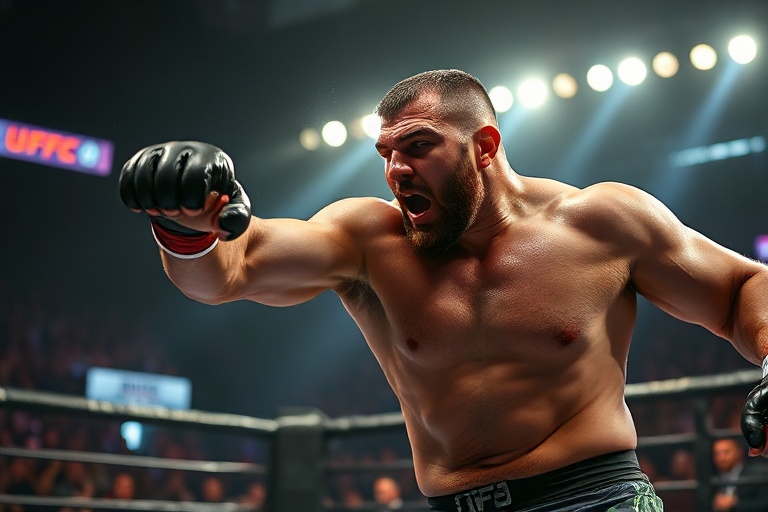
Velasquez’s fighting style was a masterclass in athleticism and technique. Standing 6’1” with a 79” reach, he used his wrestling base to control opponents against the cage, then unloaded with brutal combinations of uppercuts, hooks, and knees. His cardio was legendary—many fights ended not because he was out of gas, but because his opponent was broken.
What set him apart was his ability to blend amateur wrestling with the raw aggression of boxing. He didn’t rely on flashy submissions or high-risk techniques. Instead, he methodically broke down opponents with takedowns and ground-and-pound, a style reminiscent of early UFC legends like Mark Coleman but executed with 21st-century precision.
- Wrestling Roots: Two-time All-American at Arizona State, with over 100 career wins in folkstyle wrestling.
- Cardio Mastery: Known for maintaining pace through five-round title fights in an era when many heavyweights gassed early.
- Power Punching: Recorded one of the highest punch-strike rates in UFC heavyweight history.
- Cage Control: Used positioning to neutralize taller opponents and generate fight-ending damage.
His 2010 victory over Brock Lesnar at UFC 121 was a watershed moment. Lesnar, a former WWE star with knockout power, was expected to dominate. Instead, Velasquez used relentless wrestling to wear him down, finishing him in the first round with a flurry of punches. The win cemented his legacy and announced the arrival of a new kind of heavyweight.
Cultural Impact: Breaking Barriers in MMA and Beyond
Velasquez’s significance extended far beyond the cage. As a Mexican-American from a working-class background, he represented a demographic that had long been underrepresented in elite MMA. His success helped legitimize Mexican-American athletes in combat sports, paving the way for fighters like Daniel Cormier, Henry Cejudo, and current stars like Sean O’Malley, who often cite Velasquez as an inspiration.
In Mexico, Velasquez became a national hero. Despite never fighting there professionally, his name became synonymous with pride and resilience. Fans in Guadalajara and Monterrey wore his UFC gear, and his fights were broadcast on major networks like Televisa. He was more than a fighter; he was a cultural ambassador, proving that talent could transcend borders and economic barriers.
Off the canvas, Velasquez engaged in philanthropic efforts, supporting youth wrestling programs in California and advocating for immigrant rights. His story resonated deeply in communities where opportunity is scarce but dreams are not. He became a role model not just for aspiring fighters, but for anyone striving to overcome systemic challenges.
The Comeback and Legacy
Injuries derailed Velasquez’s prime. A back injury in 2015 led to a long layoff, and when he returned, he faced younger, hungry opponents like Francis Ngannou and Junior dos Santos. Though he showed flashes of brilliance, he never regained his championship form. His final UFC fight in 2023—a first-round KO loss to Walt Harris—signaled the end of an era.
But legacy is not measured only in titles or wins. Velasquez’s record (15-3, with 12 wins by KO/TKO) speaks for itself, but his influence is deeper. He redefined what it meant to be a heavyweight champion. He brought wrestling to the forefront of MMA. He inspired a generation of athletes who saw in him a reflection of their own struggles and triumphs.
Today, Velasquez remains involved in MMA as a coach and commentator. He also works as a brand ambassador, promoting fitness and wellness. Though he never fought in Mexico, his connection to the country endures. In 2022, he was inducted into the International Sports Hall of Fame, a testament to his global impact.
Lessons from the King of the Octagon
Velasquez’s journey offers more than athletic lessons. It is a story of discipline, identity, and perseverance. He proved that success isn’t about where you come from, but how you rise. His humility in victory and grace in defeat made him a fan favorite across cultures.
In an era where MMA often prioritizes spectacle over substance, Velasquez represented the essence of combat sports: preparation meets opportunity, and heart meets skill. He didn’t just fight; he carried the hopes of a community on his shoulders—and carried them with dignity.
As the UFC continues to expand globally, fighters from Mexico, Brazil, and beyond are writing new chapters. But none have carried the torch with the same quiet authority as Cain Velasquez. His reign may be over, but his legend is eternal.
For those interested in the evolution of wrestling in MMA, visit our Sports section. To explore more profiles of trailblazers in combat sports, check out our Analysis archive.
Cain Velasquez didn’t just win fights—he changed the game forever. And that’s a legacy that will outlast any belt or record.