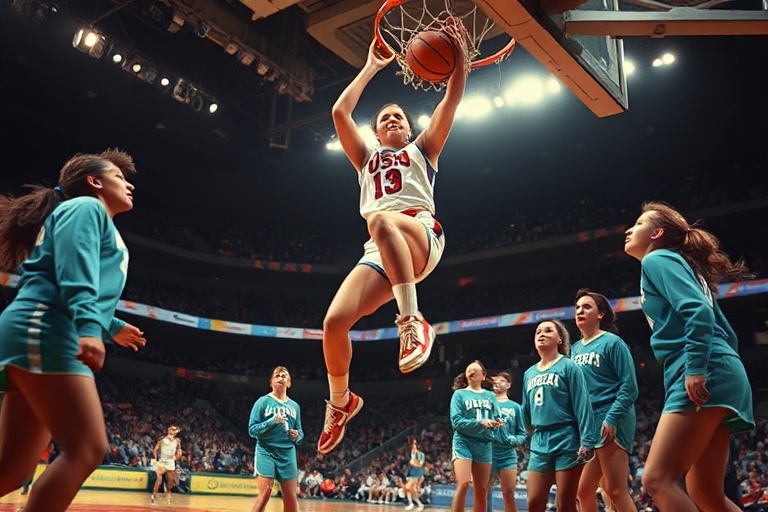
Few names in sports history carry the weight of Cheryl Miller. Born in 1964 in Riverside, California, she emerged as a basketball prodigy at a time when women’s sports struggled for visibility. Miller didn’t just play the game—she transformed it, setting records, breaking barriers, and inspiring generations of athletes. Her career, spanning high school, college, and international play, remains a benchmark for excellence in women’s basketball.
Miller’s influence extended far beyond the court. She became a cultural icon, challenging stereotypes about female athletes and paving the way for future generations. Even decades after her retirement, her legacy endures in the foundations of women’s basketball. This is the story of a pioneer who didn’t just play the game—she changed it forever.
The Rise of a Basketball Prodigy
Miller’s journey began at Riverside Polytechnic High School, where she quickly established herself as one of the most dominant players in the country. By her senior year in 1982, she had already become a household name, averaging 32.8 points and 15 rebounds per game. Her performances drew national attention, including a record-breaking 105-point game—a feat that still stands as one of the most jaw-dropping moments in high school basketball history.
Her high school dominance wasn’t just about numbers. Miller’s athleticism, leadership, and competitive fire set her apart. She led her team to three consecutive state championships and was named the Naismith National High School Player of the Year in 1982. Scouts and coaches took notice, and it was clear that Miller was destined for greatness.
Her college career at the University of Southern California (USC) only solidified her status as a legend. Between 1982 and 1986, Miller dominated the women’s game, averaging 22.3 points and 9.6 rebounds per game. She led USC to two NCAA championships (1983, 1984) and was a three-time All-American. Her impact was immediate, and her rivalry with rival players became the stuff of legend, drawing crowds and media attention to women’s basketball.
The Global Influence of Cheryl Miller
Miller’s impact wasn’t confined to the United States. She represented the U.S. on the international stage, playing a crucial role in the 1984 Olympic Games in Los Angeles, where women’s basketball made its debut. The U.S. team, featuring Miller alongside stars like Anne Donovan and Lynette Woodard, won the gold medal, cementing her place in Olympic history.
Her international success helped elevate the profile of women’s basketball globally. At a time when women’s sports were often sidelined, Miller’s performances on the world stage proved that female athletes could command attention and respect. She became a symbol of excellence, inspiring young girls in countries like Australia, France, and Japan to take up the sport.
The 1980s were a transformative decade for women’s basketball, and Miller was at the forefront of that change. The sport was evolving from a niche activity to a mainstream phenomenon, thanks in large part to players like her. Her ability to captivate audiences with her skill and charisma helped shift perceptions about women’s athletics.
Breaking Barriers in a Male-Dominated Landscape
Miller didn’t just play in a different era—she played in a different world. Women’s basketball in the 1980s lacked the resources, media coverage, and financial support that men’s sports enjoyed. Yet, Miller thrived in this environment, using her platform to advocate for greater recognition and investment in women’s basketball.
She was vocal about the disparities she witnessed, from unequal pay to limited opportunities for female athletes. Her advocacy extended beyond words; she became a mentor to younger players, encouraging them to demand more from institutions and sponsors. Miller’s efforts contributed to the gradual shift in attitudes toward women’s sports, laying the groundwork for future generations.
Her influence can be seen in the careers of athletes like Lisa Leslie, Diana Taurasi, and Candace Parker, all of whom have cited Miller as an inspiration. Her legacy is not just in the records she set but in the doors she opened for women in sports.
Life After the Court: A Lasting Legacy
Miller retired from professional basketball in 1995, but her contributions to the sport were far from over. She transitioned into coaching, serving as the head coach at USC from 1993 to 1997, where she led the team to another NCAA tournament appearance. Her leadership style, characterized by discipline and high expectations, mirrored the intensity she brought to her playing days.
In addition to coaching, Miller became a prominent commentator and analyst for women’s basketball, working with networks like ESPN and Turner Sports. Her insights and expertise helped bring the game to a broader audience, further cementing her role as a bridge between the past and the future of women’s basketball.
Miller’s post-playing career also included roles in broadcasting and sports administration. She served as the director of player personnel for the WNBA’s Phoenix Mercury and later became a key figure in the Women’s Basketball Hall of Fame, where she was inducted in 1999. Her involvement in these organizations ensured that her voice continued to shape the direction of the sport.
The Cultural Impact of Cheryl Miller
Beyond her athletic achievements, Miller became a cultural icon. She challenged traditional gender roles, proving that women could excel in a sport often dominated by men. Her confidence, style, and unapologetic competitiveness made her a role model for girls and young women across the globe.
Miller’s influence extended into fashion and media as well. She was known for her bold fashion choices, both on and off the court, which helped redefine the image of female athletes. Her presence in magazines, commercials, and talk shows brought women’s basketball into living rooms, making it a topic of conversation in households everywhere.
She was also a vocal advocate for social issues, using her platform to speak out against racism and sexism. Her willingness to challenge the status quo made her a figure of admiration and respect, not just in sports but in broader discussions about equality and justice.
Why Cheryl Miller’s Legacy Still Matters Today
In an era where women’s basketball is more popular than ever, it’s easy to forget the pioneers who made it possible. Cheryl Miller was one of those pioneers. Her career spanned a pivotal moment in the sport’s history, and her contributions helped lay the foundation for the WNBA, the NCAA women’s tournament, and the global growth of women’s basketball.
Today, players like Brittney Griner, Breanna Stewart, and A’ja Wilson stand on the shoulders of giants like Miller. Her legacy is evident in the increased visibility, investment, and respect that women’s basketball now enjoys. Yet, challenges remain, from pay equity to media coverage, reminding us that Miller’s fight for equality is still ongoing.
Miller’s story is a reminder of the power of perseverance. She didn’t just play the game—she changed it. Her impact on the court, in the media, and in the broader cultural conversation about women’s sports is a testament to her enduring influence.
As the women’s basketball landscape continues to evolve, Cheryl Miller’s legacy serves as both a benchmark and an inspiration. For young athletes dreaming of greatness, her story is proof that with talent, determination, and courage, anything is possible.
In a sport that has grown exponentially since her playing days, Cheryl Miller remains a towering figure—a reminder of where women’s basketball has been and a beacon for where it’s headed.
For more on the history of women’s basketball and its pioneers, explore our Sports category.
Discover how today’s stars are building on the foundations laid by legends like Cheryl Miller in our Analysis section.