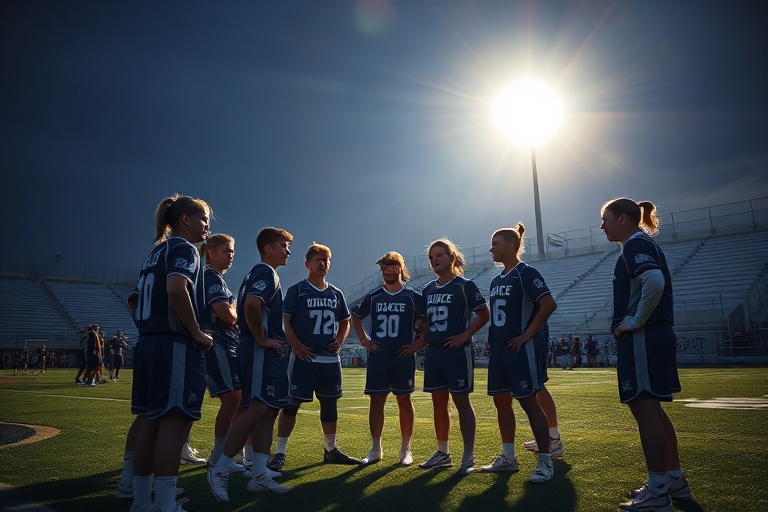
The Duke Lacrosse Scandal: A Case Study in Media, Justice, and Cultural Fault Lines
The Duke lacrosse case remains one of the most polarizing episodes in American sports history, exposing deep fractures in media ethics, legal accountability, and institutional trust. In 2006, what began as a late-night party at a team captain’s house spiraled into a national scandal after a stripper accused three Duke University lacrosse players of sexual assault. The subsequent media frenzy, prosecutorial misconduct, and eventual exoneration of the accused players revealed systemic failures that transcended the courtroom.
Beyond the headlines, the case became a cultural touchstone, reflecting broader anxieties about race, class, and gender in college athletics. Nearly two decades later, its legacy endures as a cautionary tale about the dangers of confirmation bias in both journalism and law enforcement. This is the story of how a local incident became a global reckoning—and what it reveals about the fragility of justice in the digital age.
The Night That Changed Everything
On March 13, 2006, members of Duke University’s lacrosse team hired two women to perform at a team party in Durham, North Carolina. The event, held at the off-campus home of team captains Dave Evans and Dan Flannery, was intended as a private celebration. Within days, however, the Durham Police Department received a call from Crystal Mangum, one of the dancers, alleging she had been raped by three white players. The accusation ignited immediate controversy, fueled by racial tensions and preexisting skepticism about the lacrosse team’s reputation for rowdy behavior.
The Durham County District Attorney, Mike Nifong, took personal control of the investigation, a decision that would later be deemed unethical by the North Carolina State Bar. Nifong’s public statements—including his claim that the players were “a bunch of hooligans”—prejudiced the case from the outset. The media amplified these narratives, with outlets like The New York Times and The Duke Chronicle framing the players as privileged athletes insulated from consequences. The narrative of wealthy, white lacrosse players assaulting a Black woman resonated with contemporary debates about systemic racism in elite institutions.
A Global Media Storm
Within weeks, the Duke lacrosse scandal had become an international story. Major news networks dissected the case, often relying on sensationalized language that presupposed guilt. Headlines emphasized race and class divides, portraying the players as emblematic of systemic privilege. The Washington Post described the team as “arrogant and entitled,” while The Guardian framed the incident as part of a broader pattern of athlete misconduct on college campuses.
Social media accelerated the spread of misinformation. Viral posts on platforms like MySpace and early Twitter accused the players of heinous crimes, with some users calling for their expulsion or even violence. The digital mob mentality mirrored real-world consequences: the players faced death threats, their families received hate mail, and Duke University suspended the team indefinitely. Even after DNA evidence failed to link the accused to the alleged assault, public opinion remained entrenched. The case underscored how quickly justice can be derailed by online outrage and partisan framing.
Key moments in the media’s coverage included:
- The New York Times’ initial report, which relied heavily on anonymous sources and framed the players as guilty before all evidence was reviewed.
- The Duke Chronicle’s editorials, which called for the team’s disbandment and criticized the university’s handling of the case.
- Televised punditry from figures like Nancy Grace, who declared the players guilty on air before the trial even began.
Legal Failures and the Path to Exoneration
The legal proceedings that followed were marked by procedural errors, prosecutorial misconduct, and a stunning lack of evidence. Despite Nifong’s insistence that the case was airtight, forensic tests revealed no DNA matches between the accuser and the accused players. The North Carolina State Bureau of Investigation later concluded that Mangum’s account was inconsistent and that her injuries were not indicative of a sexual assault. Yet Nifong pressed forward, refusing to drop the charges even as his case unraveled.
In December 2006, a state superior court judge dismissed all charges against the three players—Reade Seligmann, Collin Finnerty, and David Evans—citing “a manifest injustice.” The ruling was a scathing indictment of Nifong’s conduct. The judge condemned the prosecution for withholding exculpatory evidence, including a photo that placed Mangum at the party but not in the same room as the accused. Nifong was later disbarred for his role in the case, a rare sanction that underscored the severity of his misconduct.
The players, who had been vilified globally, were finally vindicated—but the damage was done. Their academic careers were derailed, their reputations scarred, and their trust in institutions shattered. The case raised troubling questions about how often wrongful accusations succeed in the court of public opinion, regardless of the evidence.
Cultural Reckoning: Race, Power, and Perception
The Duke lacrosse case was never just about a party gone wrong. It became a flashpoint for debates about race, gender, and power in America. Mangum, a Black woman from a working-class background, was portrayed alternately as a victim of systemic oppression and a symbol of false accusations. Meanwhile, the players—privileged, white, and male—were cast as beneficiaries of unchecked entitlement. The binary framing obscured the complexities of the case, reducing it to a morality tale that suited preexisting narratives.
In the years since, scholars and activists have revisited the case through multiple lenses. Some argue that the media’s rush to judgment reflected broader anxieties about elite institutions failing marginalized communities. Others point to the role of racial stereotypes in shaping public perception, noting that Black women’s testimonies about sexual violence have historically been met with skepticism or disbelief. The case also highlighted the double standards in how college athletes are treated, particularly in sports like lacrosse, which were (and remain) predominantly white and affluent.
Internationally, the case resonated in countries with similar debates about race and justice. In the UK, commentators drew parallels to the 2005 death of Brazilian electrician Jean Charles de Menezes, who was mistaken for a terrorist by British police. Both cases illustrated how institutional bias can distort perceptions of guilt. In France, the scandal was framed as an example of American “cancel culture” run amok, while in India, it sparked discussions about the treatment of women in sexual assault cases.
Lessons from the Scandal
The Duke lacrosse case offers several enduring lessons, particularly in an era where social media and 24-hour news cycles amplify narratives before facts are established. The first lesson is the danger of prosecutorial overreach. Nifong’s eagerness to secure a conviction, regardless of the evidence, demonstrates how power can corrupt the pursuit of justice. The second is the media’s responsibility to avoid sensationalism, especially in cases involving race and class. Headlines that presuppose guilt can have real-world consequences, from ruined lives to civil unrest.
For institutions like universities and sports teams, the case underscores the need for transparency and accountability. Duke University faced criticism for its delayed response to the crisis, while the lacrosse team’s reputation suffered irreparable harm. The third lesson is the importance of context. The Duke lacrosse case did not occur in a vacuum; it was shaped by broader cultural tensions about race, gender, and privilege. Understanding those contexts is essential to avoiding similar mistakes in the future.
Today, the Duke lacrosse scandal remains a cautionary tale for journalists, legal professionals, and citizens alike. It reminds us that justice is not just about verdicts—it’s about the process, the evidence, and the willingness to challenge our own biases. In a world where misinformation spreads faster than truth, the case is a stark example of how quickly a community can fracture when fear and prejudice take precedence over facts.
For those interested in exploring similar cases of legal and media misconduct, explore our News and Analysis sections for deeper insights into justice, accountability, and the power of narrative.