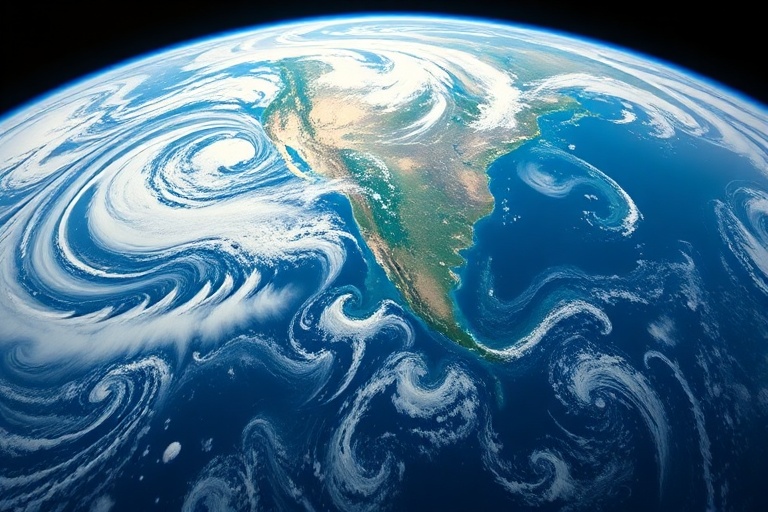
Earth’s atmosphere is more than just the air we breathe. It is a complex, dynamic system that shields life from harmful radiation, regulates temperature, and enables weather patterns that sustain ecosystems worldwide. Composed primarily of nitrogen and oxygen, with trace amounts of other gases, this gaseous envelope extends hundreds of kilometers above the planet’s surface. Its structure and behavior are critical to understanding climate change, air quality, and even the potential for life on other planets.
The Structure of Earth’s Atmosphere
The atmosphere is divided into distinct layers, each with unique characteristics and functions. These layers are defined by changes in temperature, pressure, and chemical composition. From the surface upward, the layers are the troposphere, stratosphere, mesosphere, thermosphere, and exosphere. The boundaries between these layers are known as pauses—tropopause, stratopause, mesopause, and thermopause—where temperature gradients shift.
The troposphere is the layer closest to Earth’s surface, extending up to about 10 kilometers at the poles and 15 kilometers at the equator. It contains approximately 75% of the atmosphere’s total mass and is where nearly all weather phenomena occur. Temperature decreases with altitude in this layer, creating the conditions for cloud formation and precipitation. Above the troposphere lies the stratosphere, which extends up to 50 kilometers. Unlike the troposphere, the stratosphere warms with altitude due to the absorption of ultraviolet (UV) radiation by the ozone layer. This layer is home to the ozone layer, which plays a crucial role in absorbing harmful UV radiation from the sun.
Beyond the stratosphere, the mesosphere extends up to 85 kilometers. In this layer, temperatures drop again, reaching as low as -90°C. It is also where most meteorites burn up upon entering Earth’s atmosphere, creating the phenomenon known as shooting stars. The thermosphere stretches from 85 kilometers to 600 kilometers and is characterized by extremely high temperatures, which can exceed 1,500°C due to the absorption of highly energetic solar radiation. Despite these high temperatures, the thermosphere would feel cold to humans because of the extremely low density of molecules. Finally, the exosphere is the outermost layer, extending from 600 kilometers to 10,000 kilometers. In this layer, atoms and molecules are so far apart that they can travel hundreds of kilometers without colliding with one another, gradually transitioning into the vacuum of space.
Composition: The Building Blocks of Air
Earth’s atmosphere is primarily composed of nitrogen (78%) and oxygen (21%), with the remaining 1% consisting of trace gases such as argon, carbon dioxide, neon, helium, methane, and hydrogen. While these trace gases make up a small fraction of the atmosphere, they play significant roles in regulating climate, supporting life, and influencing weather patterns.
Carbon dioxide (CO₂), for example, is a critical greenhouse gas that traps heat in the atmosphere, maintaining Earth’s average surface temperature at around 15°C. Without this natural greenhouse effect, Earth’s temperature would plummet to around -18°C, making it uninhabitable for most life forms. However, human activities such as burning fossil fuels and deforestation have significantly increased CO₂ concentrations, leading to global warming and climate change. Methane (CH₄), another potent greenhouse gas, is over 25 times more effective at trapping heat than CO₂ over a 100-year period. It is released through natural processes like wetland decomposition and human activities such as livestock farming and rice cultivation.
Water vapor is another essential component of the atmosphere, varying in concentration from nearly zero in polar regions to about 4% in tropical areas. It plays a crucial role in the water cycle, forming clouds and precipitation that distribute water across the planet. Ozone (O₃), primarily found in the stratosphere, absorbs the majority of the sun’s harmful UV radiation, protecting life on Earth from DNA damage and other harmful effects.
Trace Gases and Their Roles
- Argon (Ar): A noble gas that makes up about 0.93% of the atmosphere. It is chemically inert and has no significant impact on weather or climate.
- Neon (Ne), Helium (He), and Krypton (Kr): Noble gases that are present in trace amounts. They are used in various industrial applications, such as lighting and welding.
- Aerosols: Tiny solid or liquid particles suspended in the atmosphere, including dust, soot, and sea salt. They can influence climate by reflecting sunlight (cooling effect) or absorbing it (warming effect), and they also serve as nuclei for cloud formation.
- Nitrous Oxide (N₂O): A greenhouse gas produced by agricultural and industrial activities, as well as the burning of fossil fuels. It is nearly 300 times more effective at trapping heat than CO₂ over a 100-year period.
How the Atmosphere Supports Life
The atmosphere is indispensable to life on Earth, providing the oxygen necessary for respiration, the carbon dioxide required for photosynthesis, and the protection from harmful solar radiation. It also plays a critical role in maintaining the planet’s energy balance, distributing heat through atmospheric circulation patterns such as trade winds, westerlies, and polar easterlies. These wind patterns, driven by the uneven heating of Earth’s surface and the Coriolis effect, help regulate global temperatures and drive weather systems.
Photosynthesis, the process by which plants convert sunlight into chemical energy, relies on carbon dioxide from the atmosphere. This process not only produces oxygen as a byproduct but also forms the foundation of the food chain. Without the atmosphere, Earth would resemble the barren landscapes of Mars or the scorching surface of Venus, where temperatures are either too cold or too hot to support life as we know it.
The atmosphere also acts as a buffer against extreme temperature fluctuations. During the day, it absorbs and scatters solar radiation, preventing the surface from becoming too hot. At night, it traps heat, slowing the rate at which the surface cools. This natural insulation effect is crucial for maintaining stable temperatures that support biodiversity.
Human Impact and the Future of Earth’s Atmosphere
Human activities have profoundly altered the composition and dynamics of Earth’s atmosphere, primarily through the emission of greenhouse gases, aerosols, and ozone-depleting substances. The burning of fossil fuels—coal, oil, and natural gas—releases vast amounts of carbon dioxide and other pollutants into the atmosphere, contributing to global warming and climate change. Since the Industrial Revolution, atmospheric CO₂ concentrations have increased by over 50%, from approximately 280 parts per million (ppm) to over 420 ppm in 2023.
Deforestation has further exacerbated the problem by reducing the number of trees that can absorb CO₂ from the atmosphere. According to the World Wildlife Fund, an estimated 10 million hectares of forest are lost each year due to logging, agricultural expansion, and other human activities. This loss of vegetation not only reduces the planet’s capacity to sequester carbon but also disrupts ecosystems and reduces biodiversity.
Agricultural practices, particularly livestock farming, contribute to methane and nitrous oxide emissions. Cows, for example, produce methane during digestion, and the manure they produce emits additional greenhouse gases. Nitrous oxide is released through the use of synthetic fertilizers in agriculture. These emissions, combined with industrial activities, have led to a significant increase in greenhouse gas concentrations, driving global temperatures higher.
Ozone depletion, primarily caused by the release of chlorofluorocarbons (CFCs) and other ozone-depleting substances, has also had a profound impact on the atmosphere. CFCs were once widely used in refrigeration, air conditioning, and aerosol propellants. When released into the atmosphere, they break down ozone molecules in the stratosphere, thinning the ozone layer and increasing the amount of harmful UV radiation reaching Earth’s surface. The Montreal Protocol, an international treaty signed in 1987, has successfully reduced CFC emissions, leading to the gradual recovery of the ozone layer.
Mitigation and Adaptation Strategies
Addressing the challenges posed by human-induced changes to the atmosphere requires a combination of mitigation and adaptation strategies. Mitigation efforts focus on reducing greenhouse gas emissions and enhancing carbon sinks, such as forests and oceans. This can be achieved through the transition to renewable energy sources, such as solar, wind, and hydroelectric power, as well as improvements in energy efficiency and the adoption of sustainable agricultural practices.
International agreements, such as the Paris Agreement, aim to unite countries in their efforts to limit global temperature rise to well below 2°C above pre-industrial levels. As of 2023, 195 countries have ratified the agreement, and many have implemented policies to reduce their carbon footprints. However, achieving these goals will require unprecedented global cooperation and innovation.
Adaptation strategies involve adjusting to the impacts of climate change that are already occurring or are inevitable. This includes developing infrastructure that can withstand extreme weather events, implementing water conservation measures, and enhancing agricultural resilience through drought-resistant crops and sustainable farming practices. Communities around the world are already taking steps to adapt, from building flood defenses in coastal areas to relocating entire villages threatened by rising sea levels.
Exploring the Atmosphere: Research and Discoveries
Scientists continue to study Earth’s atmosphere to better understand its complexities and predict future changes. Advances in technology, such as satellite observations and climate models, have provided invaluable insights into atmospheric dynamics and the impacts of human activities. For example, NASA’s Aura satellite has been instrumental in monitoring ozone depletion and air quality, while the European Space Agency’s Copernicus program provides real-time data on atmospheric composition and climate variables.
Researchers are also exploring the potential for geoengineering as a means of mitigating climate change. Geoengineering involves large-scale interventions in Earth’s natural systems to counteract the effects of global warming. One proposed method is solar radiation management, which involves reflecting a portion of sunlight back into space using aerosols or mirrors. Another approach is carbon dioxide removal, which aims to capture CO₂ from the atmosphere and store it underground or in other reservoirs. While these technologies hold promise, they also pose significant risks and ethical dilemmas, making further research and international dialogue essential.
Understanding Earth’s atmosphere is not only crucial for addressing climate change but also for the search for life on other planets. By studying the atmospheres of exoplanets, scientists can identify potential bios