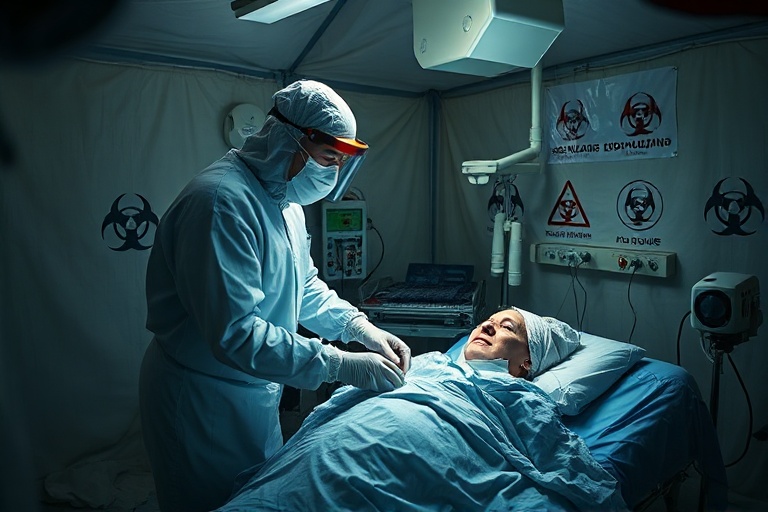
The Ebola Outbreak: A Historical Perspective and Modern Challenges
The Ebola virus, first identified in 1976 near the Ebola River in what is now the Democratic Republic of Congo, has emerged as one of the most feared pathogens in modern medicine. Its high fatality rate—often exceeding 50% in past outbreaks—has made containment a global priority. The virus spreads through direct contact with bodily fluids, creating a daunting challenge for public health officials. While outbreaks have historically been localized, the 2014-2016 West Africa epidemic demonstrated how quickly Ebola could spiral into a regional crisis.
Understanding the virus’s origins provides critical context for its behavior. Fruit bats are considered the natural host, with humans and other primates serving as accidental hosts. The virus’s ability to mutate has further complicated efforts to develop effective treatments and vaccines. Researchers continue to study these genetic variations to predict future outbreaks and refine medical responses.
The 2014-2016 West Africa Epidemic: A Turning Point
The most devastating Ebola outbreak in history began in Guinea in December 2013 before spreading to Liberia, Sierra Leone, and beyond. By the time the World Health Organization (WHO) declared the epidemic over in 2016, more than 28,000 cases and 11,000 deaths had been recorded. The rapid transmission overwhelmed healthcare systems in affected countries, where infrastructure was already fragile.
Several factors contributed to the outbreak’s severity. Weak public health systems, cultural practices involving close contact with the deceased, and widespread distrust of government authorities all hindered containment efforts. International aid organizations, including medical response teams, played a crucial role in scaling up treatment centers and training local workers. The crisis also exposed gaps in global preparedness, prompting reforms in how outbreaks are managed.
The epidemic’s impact extended beyond health. Economies in the region contracted, schools closed for months, and social structures frayed under the strain. Survivors faced stigma, while healthcare workers battling the virus became targets of misinformation and violence. The psychological toll was immense, leaving lasting scars on communities.
Modern Advances in Ebola Treatment and Prevention
In the years following the West Africa outbreak, significant progress has been made in combating Ebola. The development and deployment of vaccines, such as Ervebo (approved in 2019), marked a turning point in outbreak response. These vaccines have been used in “ring vaccination” strategies, targeting contacts of confirmed cases to create a protective barrier around outbreaks.
Treatment protocols have also evolved. Monoclonal antibody therapies, like mAb114 and REGN-EB3, have shown promise in reducing mortality rates when administered early. These advances are part of a broader shift toward equitable access to medical countermeasures, ensuring that vulnerable populations are not left behind during outbreaks.
- Vaccination: Ervebo remains the only licensed Ebola vaccine, with efforts underway to expand its production and distribution.
- Therapeutics: Two antibody treatments received FDA approval in 2020, offering new hope for patients.
- Surveillance: Early detection systems, including mobile labs and community health workers, are critical for rapid response.
- Community Engagement: Educating the public about transmission risks and prevention strategies reduces stigma and improves cooperation.
Despite these improvements, challenges persist. Vaccine hesitancy, logistical hurdles in remote areas, and funding gaps threaten to undermine progress. The 2022 outbreak in Uganda, caused by the Sudan strain of Ebola, highlighted the need for broader vaccine development, as Ervebo is ineffective against this variant.
Lessons Learned and the Path Forward
The Ebola outbreaks of the past decade have taught invaluable lessons about global health security. The 2014 crisis revealed the dangers of complacency, sparking initiatives like the WHO’s Health Emergencies Programme and the Coalition for Epidemic Preparedness Innovations (CEPI). These organizations aim to accelerate research, stockpile medical supplies, and improve coordination between nations.
Another key takeaway is the importance of local leadership. Communities must be at the forefront of outbreak response, with culturally sensitive approaches that respect traditions while prioritizing safety. International aid must complement—not replace—local expertise, ensuring sustainable solutions.
The COVID-19 pandemic further underscored the need for robust health systems capable of handling multiple crises simultaneously. While Ebola and COVID-19 are distinct diseases, their shared challenges—misinformation, vaccine inequity, and healthcare worker burnout—demand a unified global response.
Preparing for the Next Outbreak
As climate change and deforestation alter ecosystems, the risk of zoonotic spillover events—where viruses jump from animals to humans—is rising. Ebola serves as a stark reminder of our interconnected world, where a localized outbreak can quickly become a global threat. Strengthening surveillance in high-risk regions, investing in research, and fostering international cooperation are essential steps.
For travelers and residents in Ebola-prone areas, awareness is critical. The U.S. Centers for Disease Control and Prevention (CDC) provides guidelines for reducing exposure, including avoiding contact with wild animals and practicing rigorous hygiene. While the risk of Ebola in non-endemic countries remains low, preparedness saves lives.
The fight against Ebola is far from over. Yet, with each outbreak, the world gains new tools and insights to confront the virus. The challenge now is to maintain momentum, ensuring that progress does not fade once the headlines disappear. Public health is not a sprint but a marathon, and the lessons of Ebola must guide us toward a safer future.