Eid al-Adha 2026: Date, Traditions, and Global Observances
As the Islamic lunar calendar advances, Eid al-Adha 2026 approaches with its annual significance for over 1.8 billion Muslims globally. Unlike fixed-date holidays based on the Gregorian calendar, Eid al-Adha’s timing shifts each year due to the moon-sighting method determining the start of Dhul Hijjah, the final month of the Islamic year. For 2026, astronomical projections indicate the holiday will likely fall on or around June 29, though local moon sightings may adjust the exact date by a day.
The Religious and Historical Context of Eid al-Adha
Eid al-Adha, often called the “Festival of Sacrifice,” commemorates the willingness of Prophet Ibrahim (AS) to sacrifice his son Ismail (AS) in obedience to Allah, only to be replaced with a ram at the last moment. This story, shared across Islamic, Jewish, and Christian traditions, reinforces themes of faith, submission, and divine mercy. The holiday coincides with the conclusion of Hajj—the fifth pillar of Islam—which is obligatory for Muslims who are physically and financially able to perform it.
Beyond its spiritual roots, Eid al-Adha serves as a time for communal reflection and charity. One of its defining rituals is Qurbani, or the sacrificial slaughtering of an animal, with the meat distributed equally among family, friends, and those in need. This practice underscores the holiday’s emphasis on gratitude, sharing, and social equity.
Global Observances and Cultural Variations
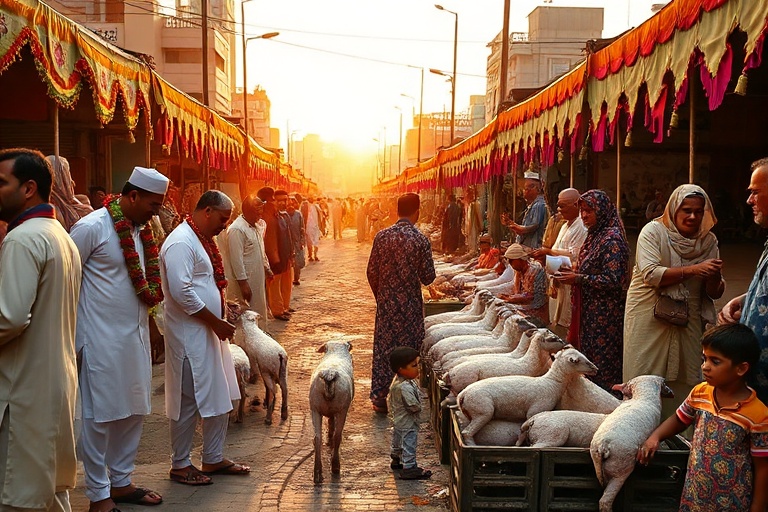
While the core rituals remain consistent, Eid al-Adha’s observance varies widely across regions due to cultural traditions and local interpretations. In Saudi Arabia, the heart of Hajj, the holiday is marked by large congregational prayers at Masjid al-Haram in Mecca, followed by family gatherings and feasts. In Turkey, families often gather for a traditional breakfast of cheese, olives, and börek, while in Pakistan, the streets come alive with cattle markets in the days leading up to Eid.
The holiday also holds unique significance in diaspora communities. In the United States, for example, Muslim Americans blend traditional practices with local customs, sometimes hosting interfaith potlucks or organizing charity drives to honor the holiday’s spirit. Similarly, in the United Kingdom, mosques and Islamic centers host large Eid prayers, with families exchanging gifts and visiting relatives.
Here are some key observances and traditions associated with Eid al-Adha 2026:
- Hajj Pilgrimage: Over 2 million Muslims from 180+ countries will gather in Mecca for the annual pilgrimage, culminating in Eid prayers on the plains of Arafat.
- Qurbani Distribution: Charitable organizations worldwide will facilitate meat distribution to vulnerable populations, ensuring the holiday’s ethos of sharing reaches global communities.
- Eid Prayers: Congregational Eid prayers, known as Salat al-Eid, will be held in mosques, open fields, and community centers, often followed by sermons addressing unity and compassion.
- Cultural Feasts: Traditional dishes like biryani in South Asia, couscous in North Africa, and baklava in the Middle East will feature prominently in festive meals.
- Family and Community Gatherings: Extended families will reunite, often traveling long distances, to celebrate with shared meals, prayers, and gift exchanges.
Eid al-Adha 2026: Logistics and Preparations
For those planning to celebrate Eid al-Adha in 2026, several logistical considerations come into play. The Islamic lunar calendar is approximately 10–12 days shorter than the Gregorian year, meaning Eid al-Adha occurs earlier each year. In 2026, the holiday’s proximity to the summer solstice in the Northern Hemisphere could impact travel plans, particularly for Hajj pilgrims, who must account for extreme heat in Saudi Arabia.
Muslims in non-Muslim majority countries often face challenges securing time off work or school, as Eid is not a public holiday in most Western nations. Advocacy groups continue to push for greater recognition of Eid in school and workplace calendars, citing the growing Muslim population and the importance of religious inclusivity. In countries like Canada and the UK, some provinces and cities have begun recognizing Eid as an official holiday, though progress remains uneven.
For Hajj pilgrims, early registration with approved travel agencies is essential, as quotas limit the number of visas issued annually. The Saudi government has been expanding infrastructure to accommodate growing numbers, but demand still far outstrips supply. Meanwhile, Muslims outside Hajj zones must ensure they purchase animals for Qurbani from reputable sources, adhering to ethical slaughtering practices and local regulations.
The Broader Implications of Eid al-Adha in a Globalized World
Eid al-Adha serves as a reminder of Islam’s global reach and the diversity within the Muslim ummah. In an era of rising Islamophobia and political polarization, the holiday offers an opportunity for interfaith dialogue and cultural exchange. Many non-Muslim communities now participate in Eid celebrations, whether through shared meals, visits to mosques, or charitable initiatives.
Economically, Eid al-Adha drives significant spending, particularly in sectors like retail, livestock, and travel. In 2026, the holiday’s timing could amplify its impact on global markets, especially in countries with large Muslim populations. The demand for sacrificial animals, for instance, creates a temporary boom in local economies, while retailers promote Eid-specific fashion and gift items.
Environmental concerns also come into focus during Eid al-Adha, particularly regarding the carbon footprint of Qurbani practices. Some communities are adopting sustainable alternatives, such as plant-based sacrifices or digital Qurbani platforms that facilitate donations to charitable causes. These innovations reflect a growing awareness of environmental stewardship within Islamic traditions.
For younger generations, Eid al-Adha represents both a connection to heritage and an evolving tradition. Many Muslim millennials and Gen Z individuals are reimagining how they celebrate, blending digital experiences with traditional rituals. Social media platforms will likely feature Eid-themed content, from live-streamed prayers to virtual family gatherings, catering to a tech-savvy audience.
Conclusion: A Festival of Faith, Unity, and Adaptation
Eid al-Adha 2026 arrives at a time of both continuity and change for the global Muslim community. As families prepare for the holiday, they will honor age-old traditions while navigating modern challenges—from climate change to cultural integration. The festival’s emphasis on sacrifice, gratitude, and sharing offers a timely counterpoint to the individualism of contemporary society.
For those outside the Muslim faith, Eid al-Adha presents an opportunity to learn, engage, and celebrate diversity. Whether through participating in a local Eid event or simply learning about its significance, the holiday invites broader society to reflect on shared values of compassion and community.
As the Islamic world looks ahead to Eid al-Adha 2026, the occasion reminds us all of the power of tradition to unite, inspire, and adapt in an ever-changing world.
For more insights into global religious observances and cultural trends, visit Dave’s Locker Culture and Dave’s Locker Analysis.