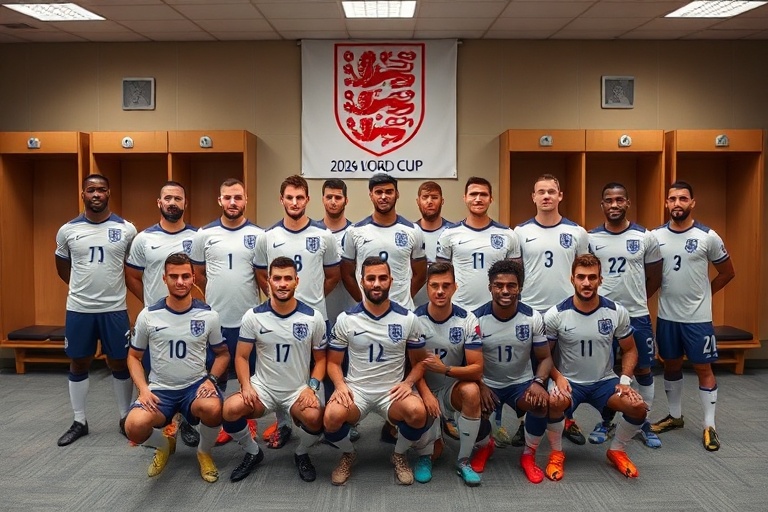
England’s World Cup 2026 Squad: A Global Stage for New Heroes
The countdown to the 2026 FIFA World Cup has begun, and England’s footballing faithful are already speculating about the squad that will represent the Three Lions on the world’s biggest stage. With the tournament expanding to 48 teams, the stakes have never been higher. This isn’t just another qualification campaign—it’s an opportunity for a new generation of English talent to etch their names into history alongside legends like Kane, Bellingham, and Maguire.
The road to North America in 2026 will test England’s depth, adaptability, and mental resilience. With domestic and European competitions growing more congested, Gareth Southgate and his successor will need to balance experience with youthful exuberance. The squad’s composition will reflect not just the current state of English football but also the cultural shifts reshaping the game globally.
The Core of Experience Meets the Promise of Youth
England’s 2026 World Cup ambitions rest on a foundation of established stars, but the real intrigue lies in how Southgate—or a new manager—will integrate the next wave of talent. The current crop of players has matured under intense scrutiny, and their performances at Euro 2024 have only heightened expectations.
Key figures like Harry Kane, now in his early 30s, will likely be tasked with mentoring younger forwards. His ability to lead by example, especially in high-pressure moments, remains invaluable. Meanwhile, Jude Bellingham’s evolution into a complete midfield maestro has already redefined England’s creative identity. His partnership with Declan Rice provides a dynamic axis that could dominate midfields across the tournament.
The defense, often England’s Achilles’ heel, has seen promising developments. Luke Shaw’s resurgence under Southgate has been a bright spot, while the emergence of young full-backs like Rico Lewis and Destiny Udogie adds depth. The center-back pairing will be critical, with John Stones and Levi Colwill offering a blend of experience and athleticism that could stifle even the most potent attacking sides.
A Tactical Evolution for a Global Tournament
The 2026 World Cup will be unlike any previous edition. The expansion to 48 teams means more matches, more fatigue, and more tactical battles. England’s approach must adapt to the demands of a tournament that could see them face a wider range of opponents, from traditional powerhouses to underdog nations making their debut.
Southgate’s tenure has often been defined by pragmatism, but the 2026 squad has the potential to play with greater fluidity. The rise of versatile forwards like Jarrod Bowen and Ivan Toney suggests England can deploy flexible formations that disrupt defensive structures. The midfield, anchored by Bellingham and Rice, can transition quickly from defense to attack, exploiting spaces left by high-pressing opponents.
Set-piece situations will also play a pivotal role in a tournament where margins are razor-thin. England’s recent struggles in dead-ball situations have been well-documented, but the squad’s technical quality offers hope. Players like Phil Foden, with his ability to deliver pinpoint crosses, could become key assets in these moments.
Cultural Shifts and the Role of English Football’s Identity
Beyond tactics and talent, England’s 2026 World Cup squad reflects broader cultural changes in the sport. The Premier League’s global reach has transformed the development pathways for young English players. Clubs are increasingly prioritizing homegrown talent, and the success of players like Kobbie Mainoo and Curtis Jones signals a shift toward a more technically gifted and confident breed of footballer.
This evolution is not just about individual skill but also about how these players represent the diverse fabric of modern England. The squad’s multicultural makeup mirrors the country’s changing demographics, with players of Caribbean, African, and Middle Eastern heritage contributing to a rich tapestry of talent. This diversity isn’t just a strength on the pitch—it’s a reflection of England’s identity in an increasingly interconnected world.
The media’s role in shaping narratives around the squad cannot be understated. The rise of platforms like Dave’s Locker has democratized football coverage, allowing fans to engage with the game in new ways. The 2026 World Cup will be dissected not just by traditional outlets but by independent voices who can offer fresh perspectives on England’s journey.
The Road to Qualification and Beyond
Qualifying for the 2026 World Cup presents its own set of challenges. England’s campaign will begin in a competitive UEFA group, where teams like Italy, Ukraine, and potentially Turkey or Sweden await. The mental toll of navigating such a demanding schedule cannot be ignored, especially as players juggle club commitments with international duties.
The squad’s depth will be tested repeatedly, with injuries and fatigue likely to disrupt even the best-laid plans. Southgate’s ability to rotate effectively without sacrificing cohesion will be crucial. The inclusion of players like Eberechi Eze and Anthony Gordon could provide the attacking impetus needed to secure results in tight games.
As the tournament approaches, the debate over England’s squad selection will intensify. Should Southgate prioritize experience or reward form? Will young stars like Mainoo and James Trafford earn their place among the established names? These questions will dominate fan discussions until the final squad is announced.
Conclusion: A Tournament of Opportunity
The 2026 World Cup represents more than just another chance for England to compete for glory. It’s an opportunity to redefine what it means to be a footballing nation in the modern era. With a blend of seasoned professionals and exciting young talent, England has the ingredients to make a deep run. However, the path to success will require more than just talent—it will demand unity, resilience, and a willingness to embrace the unknown.
The global stage of 2026 offers a chance for England to write a new chapter in their footballing history. Whether they can rise to the occasion remains to be seen, but one thing is certain: the eyes of a nation—and the world—will be watching.