Windsor Castle stands not only as a symbol of British monarchy but also as a high-profile target requiring robust security measures. As the oldest and largest occupied castle in the world, it welcomes over a million visitors annually while serving as an official residence of the King. This dual role creates a unique security challenge—balancing public access with the protection of royal assets and personnel.
The castle’s defenses have evolved significantly over centuries, from medieval battlements to modern counterterrorism protocols. Today, its security framework integrates physical barriers, surveillance technology, and intelligence coordination with law enforcement agencies. Understanding how these layers function provides insight into how one of the world’s most iconic sites maintains safety without compromising its historic character.
The Physical Perimeter: From Medieval Walls to Modern Barriers
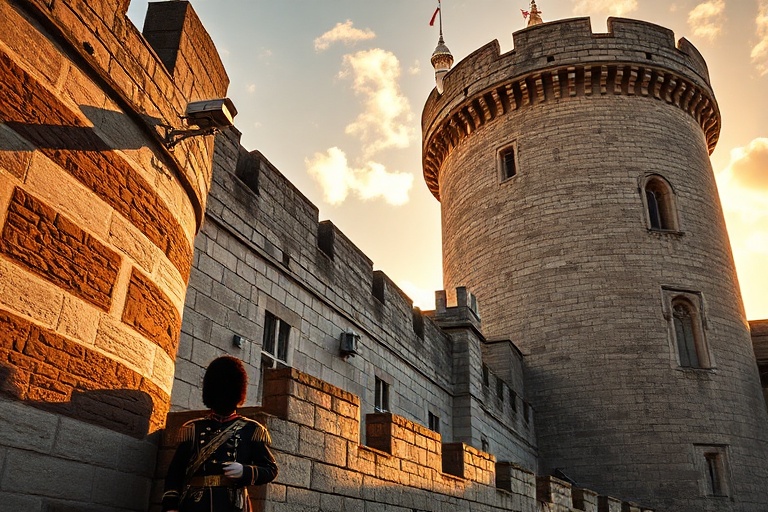
Windsor Castle’s physical security begins with its formidable stone walls, constructed in the 11th century under William the Conqueror. These ancient ramparts still form the outer boundary, but they are now complemented by controlled access points and layered defensive zones.
The main approach to the Upper Ward passes through the Norman Gate, a fortified entrance that serves as a primary security checkpoint. Visitors are screened using walk-through metal detectors and bag searches, a process that has become standard at high-risk sites following global security incidents. The deployment of portable explosive detection devices further enhances screening efficiency during peak visitor seasons.
Beyond the gate, the State Entrance leads to the Quadrangle, where access becomes more restricted. This area is monitored by armed police officers from the Metropolitan Police’s Royalty and Diplomatic Protection Department, who work in close coordination with the Castle’s own security team. The integration of uniformed and plainclothes officers ensures both visible deterrence and covert monitoring capabilities.
Key Access Points and Security Zones
- Norman Gate: Primary pedestrian entrance with mandatory screening.
- State Entrance: Vehicle screening zone for official and VIP access.
- King Henry VIII Gate: Secondary pedestrian route with enhanced surveillance.
- Private Royal Apartments: Restricted access with biometric verification for authorized staff.
These zones are not static. Security arrangements adjust based on threat levels, with rapid deployment teams and counter-sniper units positioned on rooftops during high-profile events such as the State Opening of Parliament or royal weddings. The castle’s elevation above the surrounding town provides a tactical advantage, allowing security personnel to monitor approaches from multiple vantage points.
Technology and Surveillance: Eyes Everywhere
Modern security at Windsor Castle relies heavily on integrated surveillance systems. High-definition cameras with night vision capabilities are strategically placed across the grounds, covering courtyards, gardens, and external perimeters. These systems are monitored 24/7 by a dedicated control room staffed by trained security personnel.
In 2021, the Royal Household invested in facial recognition pilot programs, testing the effectiveness of AI-driven identification tools at key access points. While not yet fully deployed across the estate, these systems are used during major events to flag individuals of interest from watchlists maintained by intelligence agencies. The technology is calibrated to respect privacy protocols, with clear signage and data retention policies in place.
Ground-penetrating radar and vibration sensors are embedded along the castle’s underground service tunnels, which have been exploited in past intrusion attempts. These tunnels, used historically for smuggling and covert access, are now monitored with a network of microphones and motion sensors that trigger immediate alerts if breached.
The integration of these systems is overseen by the Metropolitan Police’s Specialist Operations directorate, ensuring that technology aligns with national counterterrorism and policing strategies. This collaboration extends to regular joint exercises, where police, military, and castle staff simulate scenarios such as chemical attacks, hostage situations, or drone incursions.
Human Intelligence and Threat Mitigation
No security system is complete without human oversight. Windsor Castle benefits from a dedicated security detail that includes not only police officers but also private security personnel trained in royal protection protocols. These teams undergo rigorous background checks and receive ongoing training in conflict de-escalation and emergency response.
Intelligence sharing plays a critical role. The castle receives real-time threat assessments from MI5, particularly during periods of heightened risk, such as international summits or anniversaries of significant historical events. These assessments inform deployment decisions, such as increasing armed patrols or restricting vehicle access in sensitive areas.
A notable example occurred in 2015, when a drone was flown over the castle grounds during a royal event. The incident prompted a rapid response from the Metropolitan Police’s Counter Terrorism Command, supported by castle staff who secured the area and coordinated with air traffic control to identify the operator. The event led to enhanced drone detection protocols, including the deployment of radio frequency jamming systems at key sites.
Training and Preparedness Initiatives
- Annual Counter Terrorism Drills: Simulated attacks involving armed assailants and improvised explosives.
- First Aid and Trauma Response: Staff trained in tourniquet application and mass casualty management.
- Crowd Management: Protocols for rapid evacuation and lockdown during emergencies.
- Cybersecurity Awareness: Training for staff on phishing, social engineering, and secure communication.
The castle’s security model also emphasizes psychological preparedness. Staff participate in regular debriefings following drills or incidents, ensuring that lessons learned are incorporated into future planning. This culture of continuous improvement reflects the castle’s dual identity—as both a heritage site and a functioning royal residence.
Balancing Openness and Protection
Windsor Castle’s greatest paradox lies in its public accessibility. Unlike many government buildings or military installations, it must remain open to visitors while maintaining the highest security standards. This balance is achieved through subtle design choices and adaptive management.
For instance, the castle’s gardens and public areas are designed to allow large crowds to disperse quickly in an emergency, with multiple exit routes and clearly marked assembly points. Signage is minimalist and unobtrusive, avoiding the visual clutter that could detract from the historic atmosphere while still providing essential safety information.
During the COVID-19 pandemic, security measures adapted to include health screening alongside traditional checks. Visitors were required to wear face coverings and maintain social distancing, while staff used thermal imaging cameras to detect elevated temperatures. These adaptations demonstrated the flexibility of the castle’s security framework, which continues to evolve in response to new threats.
The castle also collaborates with local authorities to manage external risks. The Royal Borough of Windsor and Maidenhead maintains a dedicated team to monitor public spaces near the castle, coordinating with police on crowd control and event management. This regional partnership ensures that security is not confined to the castle walls but extends across the surrounding community.
Lessons from Global Precedents
Windsor Castle’s security model draws on international best practices, particularly from sites such as the Louvre in Paris and the Vatican Museums. However, its integration of historic architecture with modern counterterrorism measures offers a unique case study. The castle’s security team regularly engages with counterparts at other royal residences, including Buckingham Palace and Holyrood Palace, to share insights on emerging threats such as drone incursions or cyber espionage targeting royal communications.
One key lesson has been the importance of public cooperation. The castle encourages visitors to report suspicious behavior through discreet channels, and staff are trained to respond empathetically to concerns. This approach has proven effective in preventing incidents before they escalate, reinforcing the idea that security is a shared responsibility.
Looking Ahead: The Future of Windsor Castle Security
As technology advances, so too will the threats facing Windsor Castle. The rise of autonomous drones, deepfake disinformation campaigns, and AI-driven cyberattacks present new challenges that require proactive adaptation. The castle’s security team is already exploring the use of blockchain for secure credentialing and quantum encryption for sensitive communications.
Sustainability is also a growing consideration. The Royal Household has committed to reducing the carbon footprint of its operations, including security systems. This has led to the testing of solar-powered surveillance cameras and electric patrol vehicles, which reduce reliance on fossil fuels while maintaining operational effectiveness.
Ultimately, the security of Windsor Castle reflects a broader evolution in how nations protect their symbols of heritage and power. It is not merely about preventing breaches but about preserving the integrity of a site that embodies centuries of history. Through layered defenses, technological innovation, and human vigilance, Windsor Castle remains both a welcoming landmark and a fortress.
As the monarchy continues to adapt to modern realities, so too will its approach to security. The castle’s story is one of resilience—of ancient stones standing firm against both the passage of time and the threats of the present day.
For those interested in the broader context of royal protection, visit our News section for updates on security developments across royal residences. To explore the intersection of technology and heritage, check out our Analysis category.