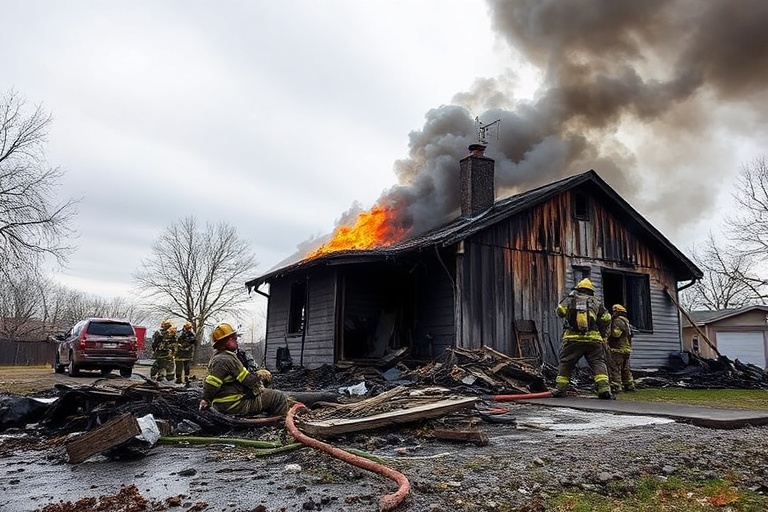
On a quiet evening in June 2023, the small town of Flanders, Minnesota, became the epicenter of a crisis that would ripple across the state. A fire at the Flanders Community Center, a hub for local gatherings and youth programs, left one person dead and three others hospitalized. The incident exposed gaps in local emergency preparedness and ignited a broader conversation about rural infrastructure, volunteer firefighting resources, and community resilience.
The Fire That Changed Flanders
The fire began around 7:45 PM on a Tuesday, when a faulty electrical panel in the basement sparked flames that spread rapidly through the aging wooden structure. By the time volunteer firefighters arrived, the building was engulfed in smoke, making it difficult to assess the situation. Despite their swift response, the fire’s intensity overwhelmed the small-town crew, leading to a prolonged battle that lasted nearly four hours.
The tragedy struck hardest when a local volunteer firefighter, 28-year-old Jake Reynolds, lost his life while attempting a rescue inside the burning building. His death became a rallying point for the community, which had long relied on the selfless dedication of volunteers like him. The loss underscored the vulnerabilities of rural emergency services, where resources are often stretched thin.
Key Factors Behind the Disaster
- Outdated Infrastructure: The Flanders Community Center, built in the 1960s, had not undergone significant electrical upgrades in decades. Investigators later determined that the fire originated from an overloaded circuit in the basement electrical room.
- Limited Firefighting Resources: Flanders, a town of just 350 residents, relies entirely on a volunteer fire department. With only 12 active members, response times can vary, and equipment shortages are common.
- Lack of Modern Safety Protocols: The community center lacked a sprinkler system, and its fire alarms were not connected to a central monitoring service, delaying the initial emergency response.
- Community Dependence: The center served as a critical space for events, youth sports, and senior gatherings. Its destruction left residents without a gathering place, amplifying the emotional toll of the fire.
Statewide Repercussions and Policy Shifts
The Flanders fire did more than devastate a small town—it exposed systemic issues in Minnesota’s approach to rural emergency services. In the months following the tragedy, state legislators and local leaders began advocating for reforms to better support volunteer fire departments and upgrade aging community infrastructure.
One of the most immediate changes came in the form of an emergency grant program, announced by Governor Tim Walz, to fund fire safety upgrades in rural community centers. The program allocated $5 million to towns with populations under 1,000, prioritizing buildings that served as emergency shelters or gathering spaces. Flanders was among the first recipients, receiving $120,000 to install a new electrical system and a modern sprinkler network.
Beyond financial support, the fire prompted discussions about statewide training standards for volunteer firefighters. Minnesota currently has over 400 volunteer fire departments, many operating with limited resources. Advocates pushed for increased state funding to provide better equipment, ongoing training, and mental health support for first responders—a need highlighted by Jake Reynolds’ death.
The Human Cost and Community Revival
While policy changes are critical, the emotional scars of the Flanders fire remain. For the town’s residents, the loss of the community center was more than the loss of a building—it was the loss of a shared identity. The center had hosted everything from bingo nights to Little League banquets, making it a cornerstone of Flanders’ social fabric.
In the fire’s aftermath, the town rallied in unexpected ways. Local businesses donated funds to rebuild, and former residents who had moved away returned to help. A grassroots campaign, Rebuild Flanders, raised over $250,000 in crowdfunding, demonstrating the community’s resilience. Architects and engineers volunteered their time to design a new, safer facility, incorporating modern fire-resistant materials and expanded emergency exits.
“This fire wasn’t just about a building—it was about who we are. Flanders has always been about coming together, and that’s exactly what we did.” — Mara Olson, Flanders Town Council Member
The new community center, slated for completion in late 2024, will include a dedicated memorial space for Jake Reynolds, ensuring his legacy is honored. The design also incorporates lessons learned from the fire, such as wider hallways for evacuation and a backup generator to power essential systems during emergencies.
Broader Implications for Rural America
The Flanders fire is part of a larger narrative affecting rural communities across the United States. According to the National Fire Protection Association, rural areas experience fire-related fatalities at twice the rate of urban areas, largely due to delayed emergency response times and limited resources. The issue is compounded by aging infrastructure, a shrinking tax base, and a declining volunteer workforce.
National organizations, such as the Rural Community Assistance Partnership and Volunteer Firefighter Alliance, have taken note of Flanders’ story. They argue that the town’s experience is a microcosm of a national crisis—one that demands federal attention. Proposed solutions include:
- Increased federal funding for rural fire departments, with a focus on volunteer retention and training.
- Legislation to incentivize infrastructure upgrades in small-town community centers and public buildings.
- Partnerships between rural towns and nearby municipalities to share firefighting resources during large-scale emergencies.
- A national database to track aging infrastructure in rural areas, prioritizing high-risk buildings for upgrades.
For Flanders, the road to recovery is still long. But the town’s response—both in grief and in action—offers a blueprint for other rural communities facing similar challenges. The fire may have taken a life and a building, but it also ignited a movement. One that proves even the smallest towns can drive change when they stand together.
As the new community center rises from the ashes, Flanders is not just rebuilding a structure. It’s rebuilding hope—and proving that resilience often begins in the places we least expect.