What Defines a Housing Estate?
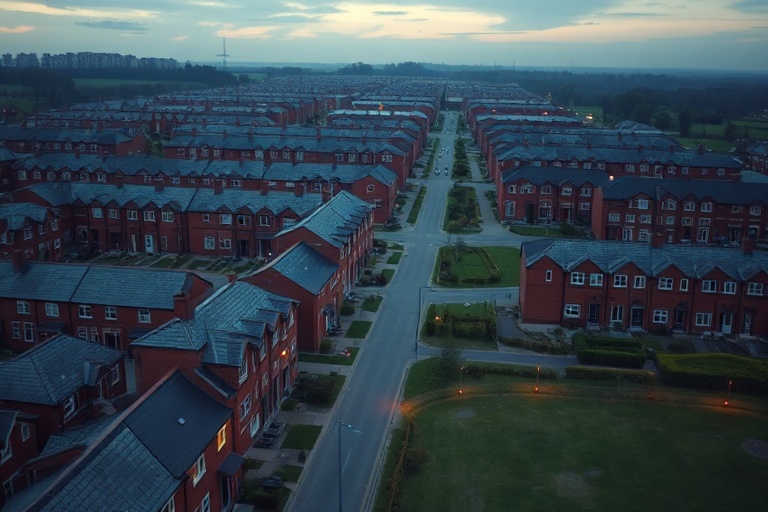
A housing estate represents more than just a cluster of homes—it reflects economic priorities, social structures, and urban planning philosophies. Typically planned by governments or developers, these estates consist of multiple residential units built to accommodate growing populations. They vary widely in design, from high-rise apartment blocks in dense cities to sprawling suburban neighborhoods with single-family houses.
Historically, housing estates emerged during the industrial revolution when rapid urbanization created urgent housing needs. Early examples, like London’s early 20th-century council estates, were designed to provide affordable shelter for workers. Over time, the concept evolved into a global phenomenon, adapting to local cultures, climates, and economic conditions. Today, housing estates can be found in nearly every country, each telling a story about the values and challenges of its time.
Global Variations: From Public Housing to Gated Communities
The form a housing estate takes often depends on who builds it and why. In Europe and parts of Asia, large-scale public housing estates are common, serving as social safety nets for low-income families. These developments often prioritize communal spaces, green areas, and accessibility to public transport. Scandinavian countries, for instance, are known for their high-quality social housing estates that blend functionality with aesthetics.
In contrast, countries like the United States and Australia have seen a rise in private, gated housing estates. These are typically marketed to middle- and upper-class residents seeking exclusivity, security, and amenities like golf courses or private parks. The shift toward privatized communities reflects broader trends in urban development, where public space is increasingly commercialized and controlled. This divide highlights a global tension between housing as a public good and housing as a private commodity.
Elsewhere, informal housing estates—often built without official approval—dominate the landscape in rapidly growing cities across Africa, Latin America, and South Asia. These settlements, sometimes called slums or favelas, highlight the gap between housing demand and formal supply. Governments and NGOs often struggle to integrate these areas into urban planning, leading to ongoing debates about infrastructure, land rights, and social equity.
Cultural and Social Impacts of Housing Estates
The design and layout of a housing estate can shape community dynamics in profound ways. In some cultures, communal courtyards and shared facilities encourage social interaction and collective identity. For example, the traditional kommunalka apartments of Russia or the hdb estates of Singapore foster intergenerational living and neighborly bonds. These designs reflect cultural values around family, community, and privacy.
In other cases, poorly planned estates can lead to isolation and social fragmentation. High-rise estates in the mid-20th century, such as those in the UK’s post-war era, became synonymous with crime and alienation. Critics argue that their design—lacking ground-floor activity and green spaces—contributed to a sense of disconnection. These lessons have influenced modern urban planning, which increasingly emphasizes mixed-use development and walkability.
Housing estates also serve as microcosms of broader societal issues. Gentrification often begins in older estates, displacing long-term residents as property values rise. Meanwhile, climate change presents new challenges for estate design, with flood-prone areas and extreme heat requiring innovative solutions. The way societies address these challenges will determine whether housing estates become engines of opportunity or symbols of inequality.
The Future of Housing Estates: Innovation and Challenges
As urban populations swell, the future of housing estates will likely be shaped by technology, sustainability, and policy. Smart housing estates are already emerging, integrating IoT devices to optimize energy use, security, and resident services. In places like Amsterdam and Singapore, pilot projects are testing modular housing designs that can adapt to changing family needs over time.
Sustainability is another driving force. Many new estates incorporate renewable energy sources, rainwater harvesting, and green roofs to reduce environmental impact. The Netherlands, for instance, has pioneered floating housing estates to address both housing shortages and rising sea levels. These innovations demonstrate how housing estates can evolve beyond mere shelter to become part of broader ecological and social systems.
Yet challenges remain. Affordability crises in cities like Berlin, San Francisco, and Mumbai have made it clear that traditional estate models may no longer suffice. Innovative financing models, such as community land trusts and cooperative housing, are gaining traction as alternatives. These approaches prioritize long-term affordability and resident control, offering a counterpoint to speculative development.
For those interested in the intersection of urban design and policy, our News section regularly covers housing reforms and infrastructure projects worldwide. Meanwhile, Analysis articles delve deeper into the economic and social implications of urban planning decisions.
Conclusion: Beyond Bricks and Mortar
A housing estate is more than a collection of buildings—it is a living ecosystem shaped by history, culture, and policy. Whether designed for the working class, the wealthy, or the urban poor, these estates reflect the priorities and failures of the societies that create them. As cities grow and climate pressures intensify, the way we plan and inhabit housing estates will define the quality of life for generations to come.
The best estates do more than provide shelter; they foster connection, resilience, and opportunity. The worst become cautionary tales, highlighting the consequences of neglect and inequality. Moving forward, the challenge will be to balance density with dignity, innovation with inclusivity, and progress with sustainability. In doing so, housing estates can evolve from mere residential zones into vibrant, thriving communities.