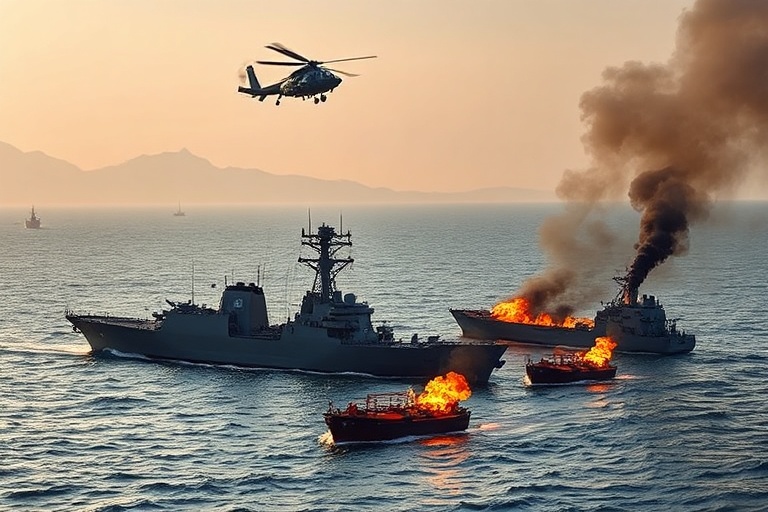
iran war hormuz
“`html
Iran War Threat: What’s at Stake in the Strait of Hormuz
The Strait of Hormuz, a narrow waterway between Oman and Iran, has long been a flashpoint in global geopolitics. This 21-mile-wide passage connects the Persian Gulf to the Gulf of Oman and, ultimately, the Arabian Sea. It is the world’s most critical chokepoint for oil transportation, with nearly 20% of the world’s petroleum supply passing through it daily. Recent escalations in regional tensions have brought renewed focus to the area, raising concerns about a potential military confrontation involving Iran.
In this analysis, we examine the strategic importance of the Strait of Hormuz, the history of conflict in the region, and the potential consequences of a wider war. We also explore the roles of key players, including Iran, the United States, and regional allies, and what this could mean for global energy markets and security.
The Strategic Importance of the Strait of Hormuz
The Strait of Hormuz is more than just a maritime route; it is a linchpin of the global economy. According to the U.S. Energy Information Administration, about 17 million barrels of crude oil and other petroleum products pass through the strait each day. This accounts for roughly one-third of the world’s seaborne traded oil. Disruptions in this flow could send shockwaves through energy markets, driving up prices and destabilizing economies.
Beyond oil, the strait is a critical corridor for liquefied natural gas (LNG) shipments, particularly from Qatar, the world’s largest LNG exporter. The region’s energy infrastructure is highly vulnerable. Key facilities, such as oil terminals and desalination plants, are concentrated along the Persian Gulf coast, making them potential targets in any conflict. Iran has repeatedly threatened to close the strait in response to sanctions or perceived threats, underscoring its leverage in the region.
- Oil Transit Volume: Approximately 17 million barrels per day, or 20% of global oil supply.
- LNG Dependence: Qatar exports nearly all its LNG through the strait, totaling about 77 million tons annually.
- Chokepoint Vulnerability: The strait’s narrow width (21 miles) and shallow depth (200 feet at its narrowest) make it susceptible to blockades or attacks.
A History of Tensions and Past Conflicts
The Strait of Hormuz has been a site of contention for decades. During the 1980s Iran-Iraq War, both sides targeted oil tankers in the Persian Gulf, leading to a prolonged period of maritime insecurity. The so-called “Tanker War” saw hundreds of ships attacked or damaged, with the U.S. and other nations forced to intervene to protect shipping lanes. This period demonstrated the strait’s vulnerability and the high stakes involved in any disruption.
More recently, tensions have flared over Iran’s nuclear program, its ballistic missile development, and its support for proxy groups across the Middle East. The Trump administration’s withdrawal from the 2015 nuclear deal in 2018 and the reimposition of sanctions on Iran exacerbated these tensions. In 2019, attacks on Saudi oil facilities and the seizure of international tankers near the strait highlighted Iran’s willingness to use asymmetric tactics to project power and pressure its adversaries.
In January 2020, the U.S. drone strike that killed Iranian General Qasem Soleimani further escalated tensions, prompting Iran to retaliate with missile strikes on Iraqi bases housing U.S. troops. While a full-scale war was avoided, the incident underscored the fragility of the situation in the Strait of Hormuz. Iran’s military doctrine emphasizes the use of “swarm tactics” with fast boats and anti-ship missiles, making it difficult for conventional navies to counter without risking escalation.
The Current Threat Landscape: What Could Spark a Conflict
Several factors are currently raising the risk of a military confrontation involving the Strait of Hormuz. One of the most pressing is Iran’s nuclear program. Despite negotiations to revive the 2015 nuclear deal, Iran has continued to enrich uranium to near weapons-grade levels, reducing the time it would need to develop a nuclear weapon. Israel and the U.S. have warned that they are prepared to take military action to prevent this, which could draw Iran into a wider conflict.
Another flashpoint is the ongoing proxy wars in Yemen, Syria, and Lebanon, where Iran supports groups like the Houthis and Hezbollah. These groups have repeatedly targeted Saudi Arabia and the UAE, both of which are key U.S. allies and major oil producers. Attacks on Saudi oil facilities in 2019 and 2022 were attributed to Iranian-backed militias, demonstrating the potential for indirect escalation.
Additionally, the presence of international naval forces in the region adds another layer of complexity. The U.S. Fifth Fleet, based in Bahrain, patrols the Persian Gulf and Strait of Hormuz to deter Iranian aggression. Meanwhile, Iran conducts frequent military exercises, showcasing its ability to disrupt shipping lanes. In 2021, Iran seized a South Korean tanker in retaliation for frozen assets, and in 2023, it briefly held a U.S. unmanned surface vessel, further testing the resolve of Western powers.
The potential triggers for a wider conflict include:
- Iran’s Nuclear Breakout: If Iran crosses the threshold to nuclear weapons capability, Israel or the U.S. may launch preemptive strikes.
- Proxy Attacks: A major attack by Iranian-backed militias on U.S. or allied targets could trigger a direct military response.
- Miscalculation: A naval incident, such as a collision or accidental shooting, could spiral into a larger confrontation.
- Sanctions Escalation: If the U.S. imposes stricter sanctions or seizes Iranian oil shipments, Iran may retaliate by targeting shipping in the strait.
Global Consequences: Energy Markets, Alliances, and Security
A conflict in the Strait of Hormuz would have far-reaching implications. The most immediate impact would be on global energy prices. Oil prices could spike to over $150 per barrel, depending on the severity and duration of the disruption. This would strain economies still recovering from the COVID-19 pandemic and the inflationary pressures of recent years. Countries heavily dependent on oil imports, such as India and Japan, would face severe economic challenges.
Geopolitically, a war in the strait could redraw alliances in the Middle East. Gulf states like Saudi Arabia and the UAE, which have sought to normalize relations with Israel, might find themselves drawn into a broader conflict. Meanwhile, China and Russia, which have deepened ties with Iran, could exploit the crisis to expand their influence in the region. The U.S. would likely face pressure to respond decisively, but its ability to project power in the Persian Gulf could be constrained by other global commitments.
Militarily, the strait’s unique geography would make any conflict unpredictable. Iran’s asymmetric capabilities, including mines, anti-ship missiles, and fast-attack boats, would pose a significant challenge to conventional navies. The U.S. and its allies have invested in mine countermeasures and missile defense systems, but the risk of a prolonged disruption remains high. International efforts to reopen the strait would likely involve complex negotiations, potentially mediated by neutral parties like Oman or the United Nations.
For the average consumer, the ripple effects would be felt in daily life. Higher fuel prices would increase transportation costs, leading to higher prices for goods and services. Air travel could become more expensive due to fuel surcharges, and industries reliant on energy-intensive processes, such as manufacturing and agriculture, would face increased costs. The economic fallout could extend to financial markets, with increased volatility in energy stocks and related sectors.
Pathways to De-escalation: Can Diplomacy Prevail?
Despite the high stakes, there are pathways to avoid a full-blown conflict in the Strait of Hormuz. Diplomatic efforts, such as the revival of the 2015 nuclear deal, could reduce tensions by addressing Iran’s nuclear ambitions and easing sanctions. However, the prospects for such a deal remain uncertain, given the lack of trust between Iran and Western powers.
Another potential avenue for de-escalation is the establishment of crisis communication channels between Iran and the U.S. to prevent miscalculations. In 2013, the U.S. and Iran held secret talks that led to the nuclear deal, demonstrating that even adversaries can find common ground when faced with mutual risks. Confidence-building measures, such as joint naval exercises or maritime security agreements, could also help reduce the likelihood of accidental confrontations.
Regional players, particularly Gulf states, have a vested interest in preventing a conflict. Countries like the UAE and Qatar have called for dialogue and have sought to mediate disputes between Iran and its neighbors. Their efforts highlight the importance of collective security frameworks in the Persian Gulf, where shared economic interests could outweigh political differences.
Ultimately, the future of the Strait of Hormuz will depend on the actions of key players and their willingness to prioritize stability over confrontation. The risks of a wider war are real, but so too are the opportunities for diplomacy. The world must remain vigilant and proactive in addressing the underlying grievances that fuel tensions in the region.
Conclusion: A Delicate Balance
The Strait of Hormuz remains one of the world’s most critical and volatile maritime chokepoints. Its strategic importance to global energy markets and regional security cannot be overstated. While the threat of a wider conflict is real, the consequences of such a war would be catastrophic—not just for the countries directly involved, but for the entire world. Energy prices would skyrocket, economies would falter, and geopolitical alliances would shift in unpredictable ways.
For now, the focus must be on diplomacy and deterrence. The international community must work to prevent miscalculations and reduce tensions through dialogue and confidence-building measures. At the same time, the U.S. and its allies must maintain a strong military presence to deter aggression and protect shipping lanes. The balance is delicate, but the stakes could not be higher.
As the situation in the Strait of Hormuz continues to evolve, the world must remain engaged and proactive. The lessons of history show that conflicts in this region can spiral out of control, with global repercussions. The time to act is now—before the next crisis