Marseille vs Rennes: The Cultural Battle Behind French Football
Football Beyond Borders: The Marseille vs Rennes Rivalry
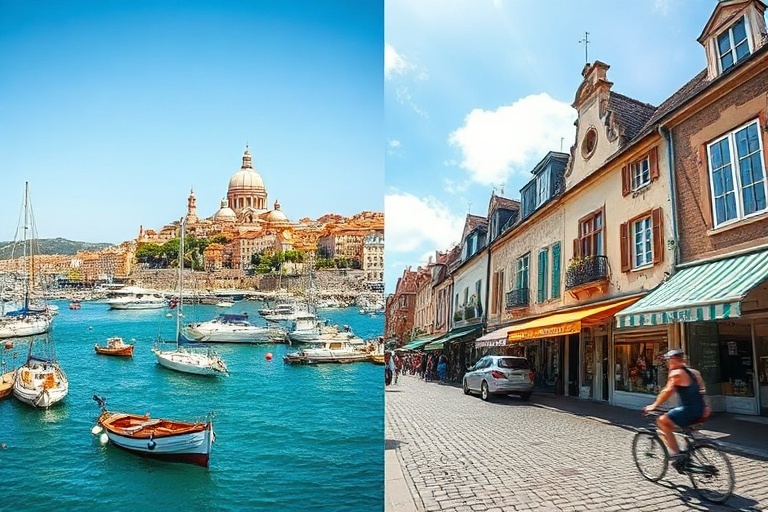
The clash between Olympique de Marseille and Stade Rennais FC isn’t just a football match; it’s a collision of cultures, histories, and fanaticism. While the French Ligue 1 often plays second fiddle to Europe’s elite leagues, these two clubs represent distinct philosophies that resonate far beyond their respective cities. Marseille, with its Mediterranean swagger and working-class roots, stands in stark contrast to Rennes, the intellectual capital of Brittany with its Celtic soul.
The rivalry gained particular intensity during the 2022-23 season when both clubs fought for European qualification. Their head-to-head encounters became microcosms of French football’s broader tensions between tradition and innovation, passion and pragmatism. This matchup offers more than just sporting drama—it provides insight into how football shapes and reflects regional identities across France.
The Marseille Factor: Mediterranean Passion Meets Global Ambition
Olympique de Marseille isn’t just a football club; it’s an institution that has transcended sport to become a symbol of Marseille itself. Founded in 1899 by English merchant Jules Rimet (who later created the World Cup trophy), OM has always been more than a team. It’s a beacon of hope for a city that has historically been marginalized within France despite its global significance.
The club’s 1993 Champions League triumph remains the only time a French club has won Europe’s premier competition. That victory, achieved with players like Basile Boli and Rudi Völler, cemented Marseille’s place in football lore. The Vélodrome stadium, with its distinctive “Marseille” graffiti and thunderous atmosphere, has become one of Europe’s most intimidating venues.
Culturally, Marseille represents France’s multicultural reality. The club’s fanbase reflects the city’s North African, Italian, and Corsican communities, creating a unique blend of chants that mix Arabic, Italian, and French. This diversity extends to the pitch, where players from across Africa and Europe have made their mark. The club’s global appeal is evident in its international fan clubs, particularly in North Africa where OM is often the most supported foreign team.
Rennes: Brittany’s Intellectual Football Experiment
While Marseille embodies the Mediterranean soul, Stade Rennais FC represents the cerebral, forward-thinking approach to football. Founded in 1901, Rennes has historically been the smaller club in Brittany, overshadowed by the region’s rugby culture. However, in recent years, the club has positioned itself as a hub for innovative football development in France.
Rennes’ rise has been closely tied to its academy system, which has produced talents like Ousmane Dembélé and Eduardo Camavinga, both of whom became record-breaking transfers. The club’s philosophy emphasizes technical development and progressive football, making it a favorite among football purists. This approach has earned Rennes comparisons to clubs like Ajax and Borussia Dortmund for their commitment to youth development.
Culturally, Rennes sits at the intersection of Brittany’s Celtic heritage and modern France. The city’s annual Transmusicales festival showcases cutting-edge music while maintaining ties to traditional Breton folk culture. Rennes FC reflects this duality—rooted in its region yet constantly looking forward. The club’s fanbase, while passionate, is known for its intellectual approach to supporting the team, often engaging in political and social discussions at matches.
Head-to-Head: Tactical and Historical Contrasts
The tactical battle between these two clubs reveals much about their contrasting philosophies. Marseille, under managers like Rudi Garcia and Jorge Sampaoli, has often employed a high-pressing, physical style that suits their passionate fanbase. The team’s direct approach reflects the city’s “no-nonsense” attitude, where results matter more than aesthetics.
Rennes, meanwhile, has thrived under managers like Julien Stéphan and Bruno Génésio who prioritize possession and positional play. Their 3-4-3 formation under Stéphan became particularly effective, allowing them to control games against bigger clubs. This tactical contrast was evident in their 2022-23 league meeting, where Rennes dominated possession but Marseille’s counterattacks proved decisive.
The historical context adds another layer to this rivalry. While Marseille’s history is filled with triumph and scandal (including the infamous bribery case that stripped them of the 1992-93 title), Rennes has experienced more consistent but less glamorous success. Their 2019 Coupe de France victory was their first major trophy in 48 years, a stark contrast to Marseille’s 10 Coupe de France wins.
Beyond the Pitch: Fan Cultures and Global Implications
The fan cultures of these two clubs offer fascinating insights into how football fandom operates across different cultural contexts. Marseille’s supporters are known for their intensity, often traveling in massive numbers across Europe. The club’s ultras, particularly the Commando Ultra 84, have a reputation for creating some of the most electric atmospheres in football.
Their chants, often political in nature, reflect Marseille’s working-class identity. Songs about immigration, colonialism, and local pride are common, making each match a cultural statement as much as a sporting event. This has sometimes led to controversy, with Marseille’s fans frequently in the news for incidents involving racism or violence.
Rennes’ fanbase presents a different picture. While still passionate, their support is characterized by a more measured approach. The club’s ultras, like Roazhon Celtic Kop, maintain strong ties to Breton identity, often incorporating Celtic symbols and chants into their displays. This reflects Brittany’s distinct cultural heritage and its historical resistance to French centralization.
Both clubs have significant followings abroad. Marseille’s global appeal is particularly strong in North Africa and the Middle East, where the club’s multicultural identity resonates. Rennes, meanwhile, has developed a niche following among football purists who appreciate their progressive approach to the game.
What This Rivalry Reveals About Modern French Football
The Marseille vs Rennes matchup encapsulates several key trends in contemporary French football. First, it highlights the growing divide between clubs that prioritize results (like Marseille) and those focused on development and style (like Rennes). This reflects broader debates about the purpose of football clubs—are they entertainment businesses or social institutions?
Second, the rivalry shows how regional identities continue to shape football in France. While Paris Saint-Germain dominates the national conversation, clubs like Marseille and Rennes represent the diverse cultural landscape of France beyond the capital. Their success or failure often carries political and social implications for their respective regions.
Finally, this matchup illustrates France’s role in the global football economy. Both clubs serve as bridges between different football cultures—Marseille connecting France to Africa and the Mediterranean, Rennes linking Brittany to broader European football trends. Their encounters on the pitch become cultural exchanges off it.
As French football continues to evolve, the Marseille vs Rennes rivalry remains a vital barometer of the sport’s direction. It challenges the dominance of Parisian football, questions traditional models of club ownership, and showcases the cultural richness of French football beyond the global superstar narrative.
For fans, these matches offer more than just three points—they provide insights into what football can be when it’s deeply rooted in local culture yet connected to global conversations. As the 2023-24 season approaches, anticipation builds for another chapter in this compelling rivalry that transcends sport.