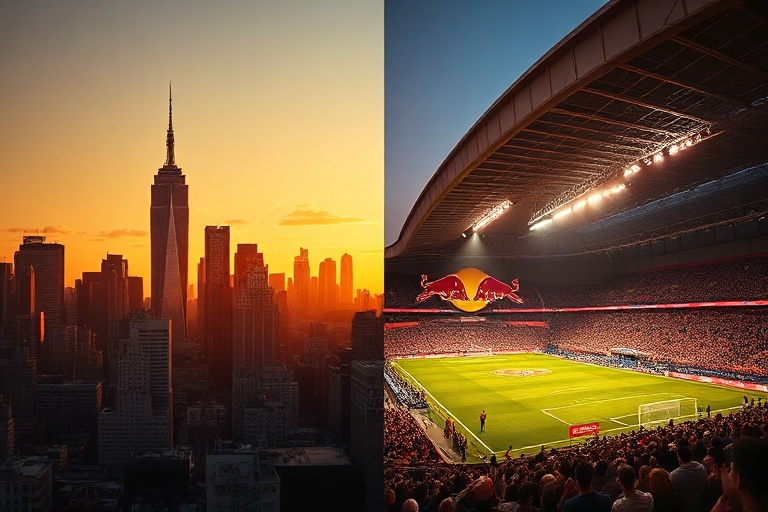
New York’s soccer landscape is defined by two distinct philosophies embodied by its MLS teams. On one side sits New York City FC, a franchise built on star power and global ambition. On the other, the New York Red Bulls represent a model rooted in development, structure, and long-term growth. These two teams don’t just compete for points; they represent competing visions of how soccer should be played and sustained in a market as complex and competitive as New York.
The Foundations: How Each Team Was Built
New York City FC entered MLS in 2015 as the league’s 20th team, backed by the financial might of the City Football Group (CFG), which also owns Manchester City. This affiliation brought immediate star power—David Villa, Andrea Pirlo, and Frank Lampard were early icons. The strategy was clear: leverage global brand recognition to rapidly establish a presence in a crowded market. The result was instant relevance, but also higher expectations and higher costs.
The Red Bulls, by contrast, have been in MLS since 1996 and became known for their soccer-first approach under Austrian coach Ralf Ragnick in the late 2000s. Under ownership by Red Bull GmbH, the team prioritized youth development, tactical discipline, and a clear identity built around pressing and high-intensity play. They avoided the temptation of chasing marquee names, instead focusing on building a sustainable model from within.
This contrast reflects a broader debate in American soccer: whether to import stars to create buzz or nurture talent to build a lasting foundation. NYCFC leaned toward the former, while the Red Bulls chose the latter.
On-Field Contrasts: Style and Identity
The difference in playing styles between the two teams is stark and reflects their organizational DNA. NYCFC has historically favored possession-based, technically fluid soccer with creative players in key roles. Their midfield often features playmakers who operate in half-spaces, looking to unlock defenses with through balls and quick combinations.
The Red Bulls, meanwhile, play a high-pressing, transition-heavy style. They win the ball back quickly and look to attack in waves, often using long balls to target speedy wingers or through balls to isolated strikers. This approach values work rate and collective effort over individual brilliance, a reflection of their European-influenced development model.
These contrasting styles lead to fascinating tactical battles. When the two teams meet—dubbed the “Hudson River Derby”—fans aren’t just watching a soccer match; they’re witnessing a clash of philosophies. The Red Bulls often frustrate NYCFC’s possession game with aggressive pressing. NYCFC, in turn, tries to break down a disciplined defensive block with patient buildup.
Key Tactical Differences
- Possession vs. Pressing: NYCFC prioritizes ball retention and positional play, while the Red Bulls win the ball back quickly and attack in transition.
- Player Recruitment: NYCFC often signs established stars, while the Red Bulls focus on young, hungry players with high upside.
- Coaching Philosophy: NYCFC has cycled through high-profile coaches, while the Red Bulls have maintained a consistent identity under a single technical staff for years.
- Youth Integration: The Red Bulls have a strong academy system that feeds directly into the first team, while NYCFC’s academy remains in development.
Off-Field Impact: Culture and Community
Beyond the pitch, the two teams shape New York’s soccer culture in different ways. NYCFC, with its global branding, has attracted a diverse, cosmopolitan fanbase. Their supporters’ groups, like the Third Rail supporters’ section at Yankee Stadium, bring energy and creativity, often blending soccer culture with New York’s urban vibe. The team’s presence at a major stadium also gives it visibility in a city where soccer competes with baseball, basketball, and American football for attention.
The Red Bulls, playing at Red Bull Arena in Harrison, New Jersey, have carved out a different kind of identity. Their fanbase is more locally rooted, with a strong core of supporters who value authenticity over glamour. The stadium experience is intimate and fan-focused, with standing sections and vocal supporters creating a European-style atmosphere. Their community programs, especially in underserved areas, have helped grow the game at the grassroots level.
This divergence highlights a broader tension in American soccer: the balance between global appeal and local authenticity. NYCFC leans into its global brand, while the Red Bulls emphasize community connection. Both approaches have merit, but they cater to different segments of the market.
Broader Implications for MLS and American Soccer
The rivalry between NYCFC and the Red Bulls isn’t just a local story; it’s a microcosm of the challenges and opportunities facing MLS as it matures. The league has long debated whether to prioritize star power or developmental rigor. NYCFC’s model, while expensive, has helped raise the league’s profile. But it also risks creating a two-tier system where a handful of teams can afford global stars while others struggle to compete.
The Red Bulls’ model, meanwhile, offers a blueprint for sustainability. By investing in youth development and maintaining a clear tactical identity, they’ve built a team that competes year after year without relying on marquee signings. This approach aligns with MLS’s long-term goals of becoming a self-sustaining league with homegrown talent.
Yet, the Red Bulls’ model isn’t without risks. Their reliance on European-style tactics can sometimes clash with the physicality and pace of MLS. And while their academy is strong, it hasn’t yet produced a world-class player who could command a global transfer fee—a key benchmark for true success in youth development.
For NYCFC, the challenge is balancing ambition with pragmatism. The team has struggled at times to convert its star power into consistent success, particularly in the playoffs. Injuries, tactical rigidity, and the pressure to perform have exposed the limitations of a star-studded but sometimes disjointed approach.
Together, these teams represent two viable paths forward for MLS. One prioritizes spectacle and star power; the other values process and identity. Both are necessary for the league’s growth, but the question remains: Can both models coexist in a single market without diluting the product?
The Future of the Hudson River Derby
As MLS continues to expand and professionalize, the rivalry between NYCFC and the Red Bulls will likely intensify. The league’s decision to add a second New York team (New York City FC in 2015) and now a new stadium for the Red Bulls (planned for 2026) underscores the importance of the market. But with limited playoff spots and increasing competition, only one team can rise to the top in a given season.
For fans, this rivalry offers something rare in American soccer: a true derby with history, passion, and tactical depth. It’s not just about bragging rights; it’s about what kind of soccer New York—and MLS—will become.
Conclusion: More Than Just a Soccer Match
The Hudson River Derby is more than a game between two teams. It’s a reflection of the broader evolution of soccer in the United States. NYCFC and the Red Bulls embody different philosophies, different approaches to building a team, and different visions for the future of the sport. Their rivalry challenges fans to think critically about what they value in a soccer experience.
Whether you prefer the glamour and star power of NYCFC or the grit and purpose of the Red Bulls, one thing is clear: New York’s soccer landscape is richer for having both. As MLS continues to grow, the lessons from this rivalry will shape the league’s identity for years to come.
For now, the debate rages on—on the pitch, in the stands, and in the front offices. And that’s exactly how it should be.
Explore more sports analysis on Dave’s Locker or dive into latest news coverage.