Omer Bartov: The Historian Who Exposed War’s Human Cost
Who Is Omer Bartov? The Historian Who Shaped Our Understanding of War and Genocide
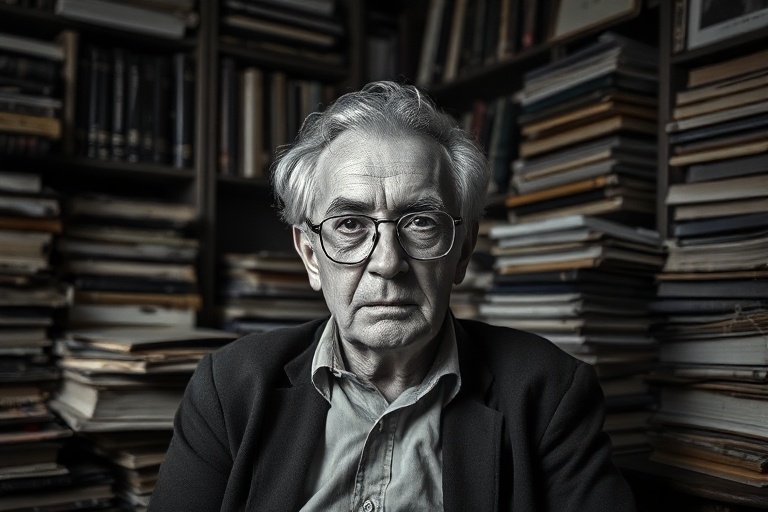
Omer Bartov is one of the most influential voices in the study of modern warfare, genocide, and the human consequences of violence. As a professor of history at Brown University, Bartov has spent decades examining how war reshapes societies, identities, and individual lives. His work bridges military history with cultural and social analysis, offering a nuanced perspective on the 20th century’s most devastating conflicts.
Born in Israel in 1954, Bartov grew up surrounded by the lingering effects of the Holocaust and the ongoing Arab-Israeli conflict. These early experiences shaped his academic focus, leading him to explore how historical narratives are constructed—and who gets to tell them. His research has challenged simplistic portrayals of war, emphasizing the role of propaganda, ideology, and everyday complicity in mass violence.
The Early Years: From the Battlefield to the Archive
Bartov’s career began with a deep dive into the Eastern Front of World War II, where he studied the German army’s role in the Holocaust. His 1985 book Hitler’s Army: Soldiers, Nazis, and War in the Third Reich was groundbreaking. It dismantled the myth of the “clean Wehrmacht,” proving that the German military was deeply complicit in Nazi atrocities.
This work was controversial at the time. Many historians clung to the idea that the Holocaust was solely the work of the SS and other fanatical units. Bartov’s meticulous research, however, showed that regular soldiers participated in massacres, rounding up Jews and other civilians for execution. His findings forced a reevaluation of how we understand the Holocaust’s mechanics—and the banality of evil in wartime.
Bartov’s approach was not just about military strategy. He focused on the psychological and cultural dimensions of war. He argued that soldiers were not just following orders but were also shaped by the racist and expansionist ideologies of the Nazi regime. This perspective humanized the perpetrators, making their actions feel less like abstract history and more like the choices of real people.
From the Holocaust to the Balkans: Expanding the Lens of Genocide
Bartov’s later work expanded beyond Nazi Germany to examine other cases of genocide and ethnic violence. His 2007 book Erased: Vanishing Traces of Jewish Galicia in Present-Day Ukraine explored the erasure of Jewish history in Eastern Europe. After the Holocaust, Jewish communities in cities like Lviv were not just killed—they were systematically written out of the region’s narrative.
This book highlighted how memory itself becomes a battleground. In post-Soviet Ukraine, Bartov found that Jewish history was often suppressed or co-opted to fit nationalist narratives. His research underscored how genocide doesn’t just destroy lives—it destroys the very records of those lives, making recovery and remembrance an ongoing struggle.
Bartov also turned his attention to the Yugoslav Wars of the 1990s. In Anatomy of a Genocide: The Life and Death of a Town Called Buczacz (2018), he examined how a single town in Galicia became a microcosm of the Holocaust. Through meticulous archival work, he traced the fates of Jews, Poles, and Ukrainians in Buczacz, showing how ethnic violence was not an inevitable outcome of ancient hatreds but the result of deliberate political manipulation.
His analysis of the Balkans reinforced a key theme in his work: genocide is not a spontaneous eruption of violence but a carefully orchestrated process. Propaganda, bureaucracy, and local collaborations all play a role in enabling mass killing. Bartov’s ability to connect historical patterns across different regions has made his scholarship indispensable for understanding modern atrocities.
The Method Behind Bartov’s Research: A Historian’s Toolkit
What sets Bartov apart is his interdisciplinary approach. He doesn’t just rely on traditional archives. He incorporates oral histories, personal testimonies, and even fictional literature to reconstruct the lived experiences of war. This method allows him to capture the emotional and psychological toll of violence in ways that dry military records cannot.
For example, in Genocide, Civil War, and the Collapse of Communism in Yugoslavia (2023), Bartov used survivor testimonies to illustrate how propaganda dehumanized victims before the first shots were fired. He also analyzed how war correspondents and international observers either amplified or downplayed atrocities, depending on their own biases.
Bartov’s work is also deeply collaborative. He has engaged with scholars from diverse fields, from anthropology to political science, to build a more comprehensive picture of wartime violence. This willingness to cross academic boundaries has made his research accessible to a wider audience beyond just historians.
His writing is clear and direct, avoiding the jargon that often alienates readers. This approach has earned him praise not just in academia but also in public forums. He has written for The New York Times, The Guardian, and Haaretz, bringing complex historical debates to a broader readership.
Why Bartov’s Work Matters Today
In an era where authoritarianism is resurgent and ethnic nationalism is on the rise, Bartov’s scholarship feels more urgent than ever. His work reminds us that the conditions that enabled the Holocaust and other genocides are not relics of the past. They are recurring patterns that demand vigilance.
One of Bartov’s key contributions is his emphasis on the role of ordinary people in enabling atrocities. Whether it’s soldiers on the Eastern Front or neighbors turning on each other in Bosnia, his research shows how complicity is not just the domain of leaders or fanatics. This idea challenges us to question how we, as individuals, might respond in similar circumstances.
Bartov has also been a vocal critic of historical revisionism. In his essays and public lectures, he has condemned attempts to whitewash the past, whether in Eastern Europe, Israel, or the United States. His insistence on confronting uncomfortable truths makes his work a vital corrective to nationalist mythmaking.
The Legacy of Omer Bartov: A Scholar Who Speaks Truth to Power
Omer Bartov’s career spans more than four decades, yet his influence shows no signs of waning. He continues to publish books, write essays, and teach the next generation of historians. His students often remark on his generosity—both in sharing his time and in encouraging them to challenge conventional wisdom.
Bartov’s work has also had a tangible impact on public memory. His research has informed museum exhibits, documentaries, and even legal proceedings. For instance, his findings about the Wehrmacht’s complicity have been cited in debates about German responsibility and reparations.
For anyone interested in understanding the mechanics of war, genocide, or historical memory, Bartov’s books are essential reading. They don’t just recount events—they force readers to confront the human choices that lead to both atrocity and resistance.
As we grapple with the legacies of the 20th century and the crises of the 21st, Bartov’s scholarship offers a roadmap for how to study, remember, and, hopefully, prevent future tragedies. His work is a testament to the power of history—not just as an academic discipline, but as a tool for justice and moral clarity.
For further reading on related topics, explore our History and Culture sections for deeper analysis and expert perspectives.