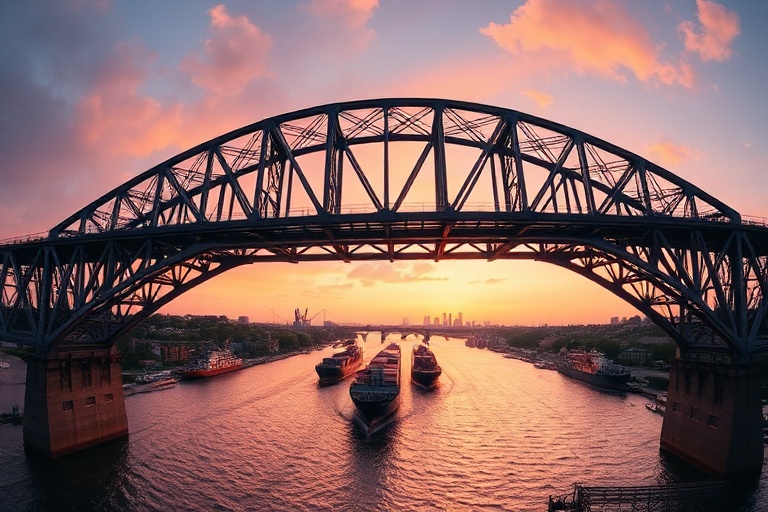
The Francis Scott Key Bridge, a monumental structure spanning the Patapsco River in Baltimore, Maryland, has long stood as both a practical thoroughfare and a symbol of engineering prowess. Completed in 1977 and named after the author of The Star-Spangled Banner, the bridge served as a critical artery for commercial and passenger traffic for nearly five decades. Its collapse in March 2024 following a collision with a cargo ship sent shockwaves through the region and raised urgent questions about infrastructure resilience, maritime safety, and urban logistics.
A Bridge of Significance: Engineering and History
The Francis Scott Key Bridge was no ordinary structure. Designed as a continuous-through-truss bridge, it featured a main span of 1,200 feet and carried Interstate 695 across the Patapsco River. Its construction was a feat of 1970s engineering, completed at a cost of $110 million—a significant investment at the time. The bridge facilitated the movement of over 30,000 vehicles daily and was a key link in the Port of Baltimore’s supply chain, handling millions of tons of cargo each year.
Beyond its practical function, the bridge carried historical weight. Named in honor of Francis Scott Key, who penned the U.S. national anthem during the War of 1812, the structure connected layers of American identity: industry, defense, and patriotism. Its collapse did not just disrupt traffic; it severed a vital economic and cultural link.
The Collapse: What Happened and Why It Matters
On the morning of March 26, 2024, a massive container ship, the Dali, experienced a power failure while departing the Port of Baltimore. With no control over its engines, the vessel drifted off course and struck one of the bridge’s supporting piers. The impact caused an immediate structural failure, and the bridge collapsed into the river within seconds. Miraculously, no vehicles were on the span at the time, but six construction workers who were on the bridge performing road maintenance lost their lives.
The incident exposed vulnerabilities in both maritime and infrastructure safety protocols. Investigations revealed that the Dali had experienced electrical issues earlier in its voyage, yet continued sailing—a decision that has since prompted calls for stricter vessel inspection and communication protocols. The bridge’s design, while robust, was not built to withstand the force of a fully loaded cargo ship traveling at speed, highlighting a gap between modern maritime realities and mid-20th-century engineering standards.
Key Factors in the Collapse
- Electrical failure aboard the Dali: The ship’s propulsion and steering systems failed due to a blackout, leaving it adrift.
- Inadequate protective barriers: The bridge lacked modern fender systems capable of absorbing or redirecting the impact of a large vessel.
- Human error and communication lapses: Miscommunication between the ship’s crew and local maritime authorities contributed to the vessel’s continued movement.
- Outdated infrastructure standards: The bridge was designed in an era when cargo ships were significantly smaller than today’s massive container vessels.
Broader Implications: Infrastructure, Economy, and Policy
The collapse of the Francis Scott Key Bridge has reverberated far beyond Baltimore. It has become a case study in the fragility of aging infrastructure and the urgent need for modernization. The U.S. has over 600,000 bridges, and nearly 40% are more than 50 years old. Many were not designed to accommodate today’s heavier traffic loads or the colossal dimensions of modern cargo ships.
Economically, the bridge’s closure has had immediate and severe consequences. The Port of Baltimore, one of the busiest in the nation for automobile imports and a major hub for coal, sugar, and farm equipment, was forced to suspend operations. Ships were rerouted to other ports, causing delays and increased costs for businesses. Analysts estimate the port handles about 50 million tons of cargo annually, and disruptions could ripple across supply chains for months.
Environmentally, the collapse also posed risks. The bridge’s debris and the ship’s fuel created hazardous conditions in the Patapsco River, requiring extensive cleanup efforts. The incident highlighted the intersection of industrial activity, environmental stewardship, and public safety—a balance that must be carefully managed in densely populated coastal regions.
The Path Forward: Rebuilding and Reform
As recovery efforts begin, Baltimore faces a dual challenge: rebuilding the bridge and rethinking how such critical infrastructure is designed, protected, and maintained. The federal government has pledged $60 million in immediate relief, and discussions are underway about constructing a new, more resilient bridge—one that incorporates modern safety features such as enhanced collision protection and real-time structural monitoring.
But the lessons extend beyond Baltimore. Policymakers are now scrutinizing maritime regulations, bridge design codes, and emergency response protocols. Some advocates are calling for mandatory ship tracking systems, improved pilotage requirements, and stricter penalties for vessels that fail safety inspections. Others argue for a national infrastructure overhaul, with targeted investments in bridges, tunnels, and ports that serve as economic lifelines.
There is also a human dimension to consider. The families of the six workers who perished in the collapse are seeking answers, and communities around the port are grappling with the economic fallout. The tragedy has underscored the need for transparency in investigations and compassion in recovery efforts.
What Comes Next?
- Emergency repairs and debris removal: Teams are working to clear the river channel and assess the damage to the riverbed.
- Designing a new bridge: Engineers are exploring options that include wider lanes, better lighting, and advanced warning systems for vehicles.
- Legislative action: Congress is reviewing bills that would increase funding for bridge inspections and mandate stricter maritime safety rules.
- Community support: Local organizations are providing resources to affected workers and businesses, ensuring the region’s recovery is inclusive and sustainable.
The Francis Scott Key Bridge may be gone, but its story is far from over. It serves as a reminder that progress is not just about building new things—it’s about maintaining what we have, learning from failure, and ensuring that future generations inherit a world that is safer, stronger, and more connected.
For those interested in the intersection of infrastructure and policy, follow updates on Dave’s Locker News, where our team covers the latest developments in urban planning and public safety. For deeper analysis on maritime trends and their global impact, visit our Analysis section.