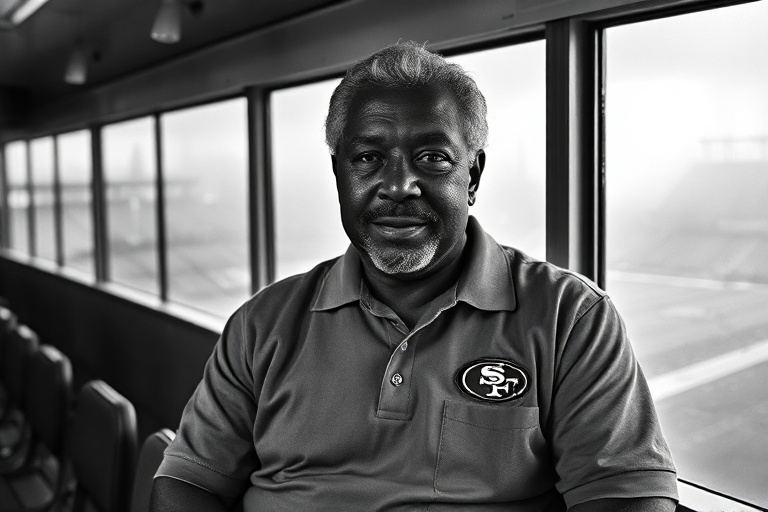
Sherman Lewis: How One Coach Redefined NFL Offenses Forever
Sherman Lewis didn’t just coach football—he reshaped it. Over a career spanning five decades, Lewis became one of the most influential offensive minds in the history of the sport, leaving an indelible mark on the NFL and college football alike. His contributions as a coach, strategist, and mentor elevated offensive football to new heights, blending precision, creativity, and adaptability.
The Early Years: From Player to Coach
Born on August 28, 1942, in Chicago, Illinois, Sherman Lewis grew up with football in his blood. He played as a halfback at Michigan State University, where he earned All-American honors in 1963. His playing career included stints with the San Francisco 49ers, but it was his transition to coaching that would define his legacy.
Lewis began his coaching journey at his alma mater, Michigan State, in 1967. His early years were spent refining his understanding of offensive systems, with a particular focus on the West Coast offense—a system that emphasized timing, rhythm, and precision passing. This foundation would later become the cornerstone of his coaching philosophy.
By the 1980s, Lewis had already established himself as a rising star in the coaching ranks. His work with the San Francisco 49ers as a running backs coach under Bill Walsh solidified his reputation as a tactician who could maximize talent through innovative schemes.
The San Francisco 49ers Era: Building a Dynasty
Lewis joined the 49ers in 1987 as the running backs coach, but his influence quickly expanded. Under head coach Bill Walsh, he played a pivotal role in one of the most dominant offensive systems in NFL history. The West Coast offense, with its emphasis on short, high-percentage passes and misdirection running plays, became the backbone of the 49ers’ success.
During his tenure, the 49ers won three Super Bowls (XXIII, XXIV, XXIX). Lewis’s ability to develop players like Roger Craig, a three-time Pro Bowl running back, was instrumental in the team’s offensive firepower. His work with Craig, particularly in perfecting the art of the “dollar bill” play—a misdirection run that became a signature of the 49ers—showcased his creativity.
Lewis’s impact extended beyond the field. He was known for his ability to connect with players, fostering an environment of trust and collaboration. His mentorship under Walsh taught him the importance of adaptability, a lesson he carried with him throughout his career.
Key Contributions to the 49ers Offense
- West Coast Offense Mastery: Lewis refined the system, making it even more efficient by incorporating misdirection and play-action elements.
- Player Development: His work with running backs like Craig and later Garrison Hearst helped define an era of offensive dominance.
- Super Bowl Success: Three championships in four years (1988, 1989, 1994) cemented his legacy as one of the architects of the 49ers dynasty.
The Green Bay Packers: A New Challenge
In 1992, Lewis left the 49ers to become the offensive coordinator for the Green Bay Packers under head coach Mike Holmgren. This move presented a new challenge: transforming a struggling offense into a championship-caliber unit. The Packers, at the time, were known more for their defensive prowess than their offensive firepower.
Lewis’s arrival coincided with the development of Brett Favre, one of the NFL’s most talented and durable quarterbacks. Under Lewis’s guidance, Favre flourished, throwing for over 4,000 yards in each of his first three seasons as a starter. The Packers’ offense became a well-oiled machine, blending the West Coast principles with a more vertical passing game.
Lewis’s tenure in Green Bay lasted five seasons, during which the Packers won Super Bowl XXXI. His ability to tailor the offense to Favre’s strengths—particularly his arm talent and improvisational skills—demonstrated his adaptability as a coach. The Packers’ victory in Super Bowl XXXI, a 35-21 win over the New England Patriots, was a testament to Lewis’s strategic brilliance.
“Sherman Lewis didn’t just coach an offense; he built a system that maximized the talents of his players. His ability to adapt and innovate was unmatched.” — NFL analyst Peter King
Legacy and Influence on Modern Football
Sherman Lewis retired from coaching in 2005, but his influence on the game endures. His work with the West Coast offense helped shape the NFL’s passing revolution of the 1990s and 2000s. Today, elements of his system can be seen in offenses across the league, from the San Francisco 49ers’ modern iteration to the passing-heavy schemes of teams like the Kansas City Chiefs.
Lewis’s coaching philosophy was built on three core principles: adaptability, player development, and innovation. He believed in tailoring offenses to the strengths of his players rather than forcing them into rigid systems. This approach not only produced results but also fostered long-term success.
In recognition of his contributions, Lewis was inducted into the Michigan State University Athletics Hall of Fame in 2010. His legacy is also celebrated in coaching circles, where he is often cited as a mentor by younger offensive coordinators who grew up studying his systems.
Sherman Lewis’s Coaching Tree
Lewis’s impact extended beyond his direct contributions. Many of his assistants went on to become head coaches or offensive coordinators in the NFL, including:
- Mike Holmgren: Former head coach of the Green Bay Packers and Seattle Seahawks.
- Jon Gruden: Super Bowl-winning head coach of the Tampa Bay Buccaneers.
- Mike McCarthy: Longtime head coach of the Green Bay Packers.
This coaching tree underscores Lewis’s role as a mentor and a builder of football minds. His emphasis on fundamentals, adaptability, and innovation has left an enduring mark on the sport.
Life After Coaching: A Lasting Impact
After retiring from coaching, Lewis remained involved in football through clinics, mentorship programs, and charitable work. He also lent his expertise to analysis pieces for sports media outlets, offering insights into the evolution of offensive football.
Lewis’s post-coaching life reflected his commitment to the game. He frequently spoke at coaching clinics, sharing his knowledge with the next generation of football minds. His emphasis on player development and offensive innovation continued to influence coaches at all levels, from high school to the NFL.
In 2018, Lewis was honored by the Pro Football Hall of Fame with the prestigious “Order of the Coif” award, recognizing his contributions to the game. This accolade was a fitting tribute to a career that spanned over five decades and left an indelible mark on football.
Conclusion: The Architect of Modern Offenses
Sherman Lewis’s career was defined by innovation, adaptability, and a relentless pursuit of excellence. From his early days at Michigan State to his Super Bowl victories with the 49ers and Packers, Lewis redefined what it meant to be an offensive coordinator. His work with the West Coast offense helped shape the NFL into the passing-dominated league it is today.
Beyond his strategic brilliance, Lewis was a mentor who inspired generations of coaches and players. His legacy is not just in the trophies and championships but in the lasting influence he had on the game. As football continues to evolve, Sherman Lewis’s contributions remain a benchmark for offensive innovation and player development.
For those looking to understand the evolution of football strategy, Lewis’s career offers a masterclass in adaptability and innovation. His story is a reminder that greatness in football is not just about Xs and Os—it’s about the people who bring those plays to life.