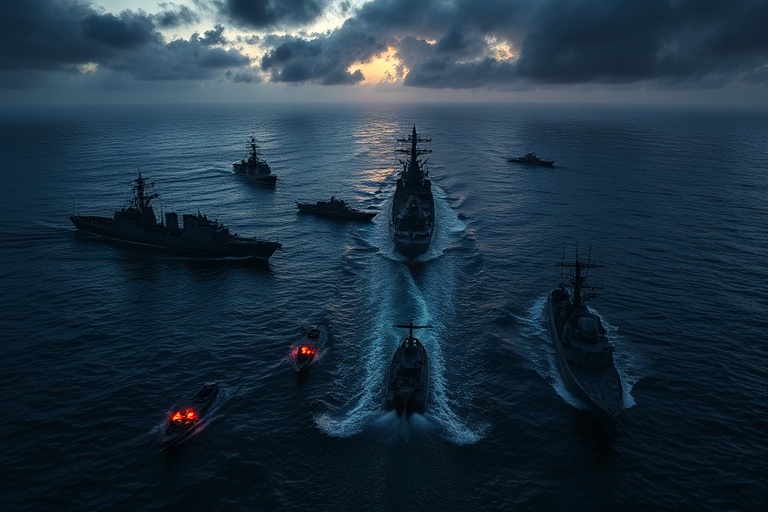
Strait of Hormuz: Why This Narrow Waterway Threatens Global Energy Security
The Strait of Hormuz: A Global Flashpoint in Modern Geopolitics
The Strait of Hormuz remains one of the world’s most strategically vital and volatile maritime chokepoints. Connecting the Persian Gulf to the Gulf of Oman and, by extension, the Arabian Sea, this narrow waterway sees nearly a third of the world’s seaborne oil pass through its waters every day. Its significance transcends mere geography; it is a symbol of geopolitical tension, economic leverage, and shifting power dynamics across the Middle East and beyond.
The strait is bordered by Iran to the north and the United Arab Emirates and Oman to the south. Its narrowest point is just 21 nautical miles wide, with a navigable channel of only 2 miles in each direction. Such a bottleneck creates immense strategic value—and vulnerability. For decades, the Hormuz Strait has been a focal point in discussions about energy security, military intervention, and diplomatic negotiation. Recent years have only intensified these concerns, as regional conflicts, sanctions, and shifting alliances converge around this critical waterway.
The Geopolitical Importance of Hormuz
The Hormuz Strait is often described as the “jugular vein” of the global oil industry. Approximately 21 million barrels of crude oil flow through it daily—roughly 20% of global supply. Any disruption, whether through conflict, sabotage, or blockades, sends immediate shockwaves through international energy markets. Prices for gasoline, jet fuel, and heating oil fluctuate in response to perceived threats in the region. This economic interdependence means that Hormuz is not just an Iranian issue or a Gulf issue—it is a global one.
For Iran, control over access to the strait is a matter of national security and regional influence. Since the 1979 Islamic Revolution, Iran has viewed the United States and its allies—particularly Saudi Arabia and Israel—as existential threats. The U.S. Fifth Fleet, based in Bahrain, patrols the waters of the Gulf, a presence Iran has long opposed. Tehran has repeatedly warned that it could close the strait in response to military threats or sanctions, a move that would trigger a regional crisis with worldwide consequences.
This standoff reflects a broader pattern in Middle Eastern geopolitics: the weaponization of energy infrastructure. Oil-rich nations leverage their resources as political tools, while global powers intervene to protect supply chains. The Hormuz Strait sits at the heart of this dynamic, making it a flashpoint where local ambitions intersect with international interests.
A History of Tension and Escalation
The modern history of Hormuz is marked by cycles of tension and de-escalation. One of the most dramatic episodes occurred during the Iran-Iraq War (1980–1988), when both sides targeted oil tankers in the Persian Gulf. The so-called “Tanker War” saw hundreds of vessels attacked, disrupting global oil markets and prompting U.S. intervention under Operation Earnest Will. The presence of American naval forces in the Gulf during this period established a precedent for military engagement in the region.
In 2019, the situation flared again when Iran seized several tankers in the strait, including the British-flagged Stena Impero. The incident followed the U.S. withdrawal from the Iran nuclear deal and the imposition of sweeping sanctions. Iran’s actions were framed as retaliation, but they also demonstrated its capacity to disrupt maritime traffic. Analysts viewed the seizures as a signal: Iran could inflict economic pain without engaging in full-scale war.
More recently, tensions have risen amid escalating proxy conflicts involving Israel and Iran. Reports of Israeli strikes on Iranian positions in Syria and Iran’s support for militant groups like Hezbollah have raised fears of a broader confrontation. The Hormuz Strait remains a potential trigger, with both sides carefully calibrating their responses to avoid direct military clashes.
The following incidents over the past decade highlight the persistent volatility of the region:
- 2018: Two Saudi oil tankers were sabotaged near the strait, an attack widely attributed to Iran.
- 2019: Drones struck key Saudi oil facilities at Abqaiq and Khurais, temporarily halving the kingdom’s oil production.
- 2021: A drone attack on an Israeli-operated tanker near Oman killed two crew members, raising concerns about maritime security.
- 2023: Iran seized an oil tanker near the strait, allegedly in retaliation for the detention of an Iranian vessel in Greece.
Global Responses and Strategic Calculations
The international community has responded to Hormuz-related threats with a mix of deterrence, diplomacy, and economic measures. The United States maintains a robust naval presence in the region, including the Fifth Fleet and periodic deployments of aircraft carriers. These forces serve as a deterrent against Iranian aggression but also risk provoking further escalation. European nations, while dependent on Gulf oil, have pursued a more cautious approach, emphasizing dialogue and sanctions relief.
China and India, two of the world’s largest oil importers, have adopted a pragmatic stance. Both countries rely heavily on Gulf oil and have sought to balance their relationships with Iran against their broader economic and strategic interests. China, in particular, has deepened its ties with Iran through oil deals and infrastructure investments, even as it maintains trade relations with Gulf states. This balancing act reflects a growing multipolar dynamic in the region, where traditional U.S. dominance is increasingly challenged.
Meanwhile, Gulf Cooperation Council (GCC) states—led by Saudi Arabia and the UAE—have pursued a policy of normalization with Israel, partly to counter Iran’s influence. The Abraham Accords (2020) signaled a shift in regional alliances, creating a potential coalition to counter Iranian threats. However, the effectiveness of this bloc remains uncertain, especially given ongoing conflicts in Yemen and Syria.
Economic sanctions have also played a central role in shaping the dynamics around Hormuz. U.S. sanctions on Iran’s oil exports, reimposed after the withdrawal from the nuclear deal, have forced Tehran to rely on smuggling and covert shipping. This has increased the risk of maritime incidents, as Iranian vessels attempt to bypass restrictions or are intercepted by foreign navies.
The Human and Environmental Costs
Beyond geopolitics and economics, the Hormuz Strait carries profound human and environmental consequences. The region is home to fragile marine ecosystems, including coral reefs and endangered species like the hawksbill turtle. Oil spills, whether from accidents or deliberate acts, can devastate these habitats for decades. The Gulf’s shallow waters and high temperatures make recovery particularly slow.
The local populations—fishermen, sailors, and port workers—bear the brunt of instability. Their livelihoods depend on the strait’s stability, yet they often find themselves caught in the crossfire of regional conflicts. Piracy, smuggling, and accidents add to the risks, creating a precarious environment for those who call the Gulf home.
Environmental organizations have warned that even minor disruptions could have outsized impacts. The strait’s waters are already stressed by pollution from oil refining and industrial activity. A major spill or military confrontation could trigger an ecological catastrophe, with ripple effects across the Indian Ocean and beyond.
Navigating the Future of Hormuz
The future of the Strait of Hormuz remains uncertain, shaped by a complex interplay of military posturing, economic pressures, and diplomatic maneuvering. One possible scenario is a gradual de-escalation, driven by renewed negotiations over Iran’s nuclear program or a shift in U.S. policy under a new administration. However, given the deep mistrust and competing interests at play, this outcome is far from guaranteed.
Another possibility is the continued militarization of the strait, with regional and global powers expanding their naval presence to protect their interests. Such a scenario could lead to more frequent incidents, further destabilizing the region and driving up energy prices. The risk of miscalculation—whether through a misfired missile or a misinterpreted naval maneuver—remains a constant threat.
Ultimately, the fate of Hormuz will depend on whether the stakeholders involved can find a balance between asserting their interests and avoiding catastrophic conflict. For the global community, the strait is a reminder of how interconnected modern geopolitics has become. A crisis in Hormuz is not just a regional issue—it is a global one, with consequences that ripple across economies, supply chains, and security frameworks.
As the world watches, one thing is clear: the Strait of Hormuz remains a powder keg, and its fuse is getting shorter. Whether through diplomacy, deterrence, or sheer luck, the international community must find a way to defuse the tensions before the next explosion occurs.
For those interested in the broader implications of Middle Eastern conflicts, Dave’s Locker’s News section offers in-depth analysis and reporting on regional dynamics. To understand the economic impact of energy disruptions, explore our Finance category, where geopolitical risks are dissected alongside market trends.