What Is a Ceasefire? Understanding Its Role in Conflict and Peace
The word “ceasefire” has echoed through headlines for decades, often tied to moments of tension or conflict resolution. But what does it truly signify beyond the immediate pause in violence? A ceasefire is more than a temporary halt—it is a fragile bridge between war and peace, a moment where diplomacy and desperation collide. Its implications stretch far beyond the battlefield, influencing politics, economics, and the lives of ordinary people caught in the crossfire.
Defining the Ceasefire: Beyond the Surface
A ceasefire is a formal agreement between opposing parties to stop fighting for a set period. Unlike a peace treaty, which aims for a lasting resolution, a ceasefire is often a tactical pause—one that can last hours, days, or even years. Historically, ceasefires have served multiple purposes: allowing for humanitarian aid, providing time to negotiate, or simply exhausting one side’s resources.
Consider the 1918 Armistice during World War I. It wasn’t a peace treaty but a ceasefire that ended active hostilities. The war resumed months later, proving how temporary such agreements can be. Yet, even failed ceasefires can reshape conflicts, pushing parties toward eventual compromise or escalation. The key lies in the terms set during the pause—who controls the narrative, who gains leverage, and who is left behind.
The Human Cost: Lives Hanging in the Balance
Behind every ceasefire is a human story. Civilians trapped in war zones face the most immediate risks when fighting halts. Food shortages, destroyed infrastructure, and psychological trauma don’t disappear with a ceasefire—they often worsen. Aid organizations rely on these pauses to deliver critical supplies, but access is never guaranteed. In Syria, for example, ceasefires brokered by international powers frequently collapsed, leaving millions in limbo.
The psychological toll is equally devastating. Children who grow up knowing only war learn to associate silence with danger. Families separated by frontlines pray for reunions that may never come. Even when a ceasefire holds, the scars remain. The 2020 Nagorno-Karabakh ceasefire, which ended six weeks of brutal fighting, left thousands displaced and communities divided. The agreement’s terms favored Azerbaijan’s territorial gains, but the human cost—over 6,000 lives lost—was irreversible.
Key Takeaways on Ceasefires and Human Impact
- Temporary relief, not permanent peace: Ceasefires freeze conflict but rarely resolve underlying issues.
- Civilian vulnerability: Aid access and safety depend on the parties’ commitment to the terms.
- Unequal consequences: Some groups benefit from ceasefires while others face prolonged suffering.
- Psychological scars: Trauma lingers long after the guns fall silent.
The Political Chessboard: Who Wins and Who Loses?
Ceasefires are rarely neutral. They are shaped by power dynamics, international pressure, and domestic agendas. Governments and rebel groups use them to regroup, rearm, or rebrand. A ceasefire can become a propaganda tool, portraying one side as reasonable while the other is branded as obstinate.
Take the 2023 ceasefire between Israel and Hamas. Egypt and Qatar brokered the deal, but its success hinged on Israel’s willingness to ease blockades and Hamas’s ability to enforce the terms. Both sides had incentives: Israel sought to reduce civilian casualties amid global scrutiny, while Hamas needed a reprieve to regroup. Yet, the agreement collapsed within days, highlighting how ceasefires can be weaponized to buy time rather than secure peace.
International actors play a crucial role. The United Nations often mediates, but its influence is limited by geopolitical interests. The U.S. and Russia, for instance, have used ceasefires in Syria as proxies for their own strategic goals. When these powers disagree, ceasefires become fragile, serving as temporary lulls rather than stepping stones to resolution.
Economic Ripples: The Cost of Pauses and Persistence
War is expensive, but so is stopping it. Ceasefires disrupt economies dependent on conflict—arms dealers, militias, and even some governments thrive in prolonged instability. When fighting pauses, these groups may seek alternative revenue streams, often turning to crime or exploitation. Meanwhile, nations ravaged by war face astronomical reconstruction costs. Lebanon’s 1975–1990 civil war left the country with a debt-to-GDP ratio exceeding 150%, a burden that persists decades later.
On the flip side, ceasefires can unlock economic potential. Post-conflict regions often experience a surge in investment once stability returns. Colombia’s 2016 peace accord with the FARC guerrilla group sparked renewed interest in rural development, though challenges remain in implementing the promises. The lesson is clear: a ceasefire’s economic impact depends on whether it leads to lasting change or just another chapter in the cycle of violence.
A Fragile Hope: Can Ceasefires Lead to Peace?
History offers mixed lessons. The 1994 ceasefire in Rwanda, enforced by French troops, prevented further massacres but did little to address the genocide’s root causes. The 1998 Good Friday Agreement in Northern Ireland, however, transformed a decades-long conflict into a fragile but enduring peace. What separates success from failure?
Three factors stand out:
- Inclusivity: Ceasefires that involve all stakeholders—including marginalized groups—are more likely to hold.
- Enforcement: Strong third-party monitoring (e.g., UN peacekeepers) increases compliance.
- Vision for the future: Ceasefires tied to broader peace processes (like power-sharing agreements) have higher success rates.
Yet, even the most inclusive ceasefires can fail. The 2015 Minsk agreements aimed to end the war in Eastern Ukraine, but sporadic clashes continue. The problem isn’t just the terms—it’s the lack of trust. Without genuine reconciliation, any pause in fighting is just a prelude to the next round.
Conclusion: The Ceasefire as a Mirror
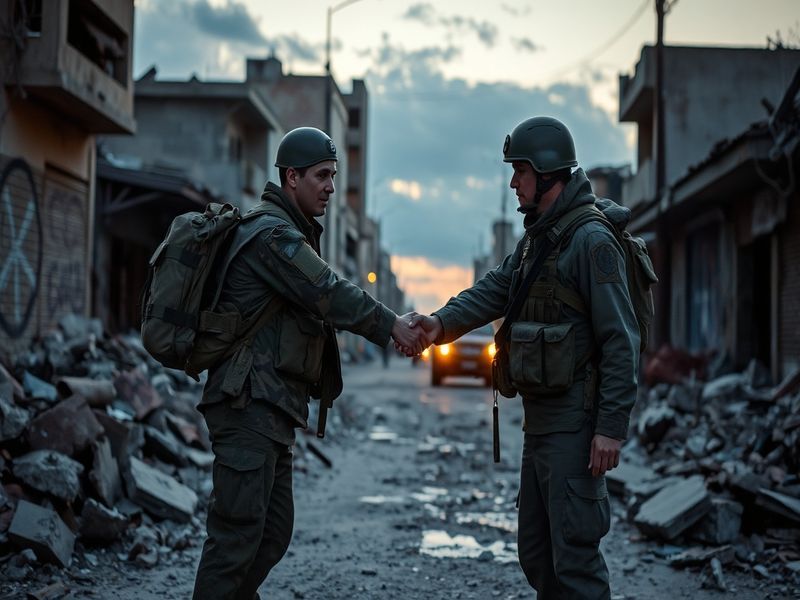
A ceasefire is not a solution; it is a reflection of the conflict’s unresolved tensions. It exposes the power imbalances, the human toll, and the economic disruptions that define modern warfare. Whether it becomes a stepping stone to peace or another broken promise depends on the choices made during those fragile moments of silence. For the families waiting for news in Gaza, the soldiers patrolling Nagorno-Karabakh, or the aid workers navigating Syrian rubble, the ceasefire is both a lifeline and a reminder of how far the world still has to go.
One thing is certain: the next ceasefire will come, and with it, the same questions. Will it be a pause or a turning point? The answer lies not in the agreement itself, but in the will of those who shape it.
For deeper analysis on conflict resolution and historical ceasefires, explore our Analysis and Politics sections.