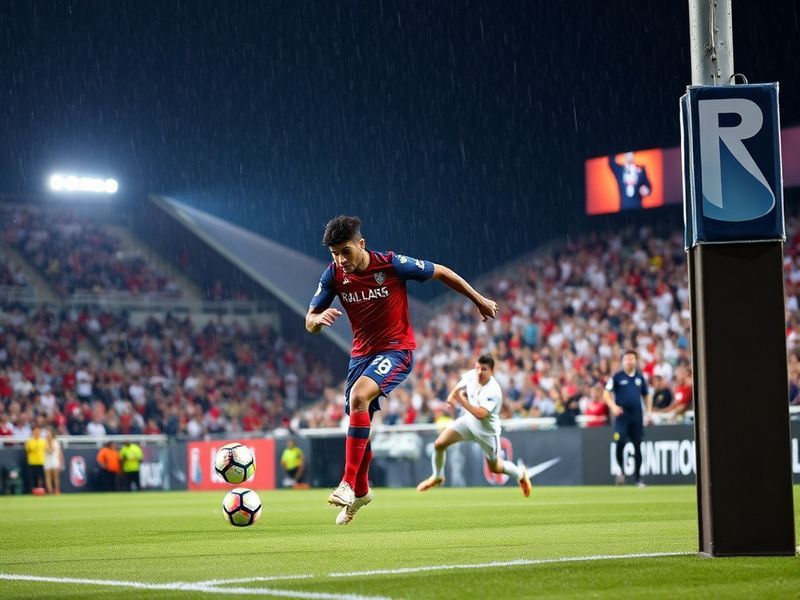
Real Salt Lake vs Inter Miami: A Clash of Soccer Philosophies
“`html
Real Salt Lake vs Inter Miami: A Clash of Cultures and Styles
The meeting between Real Salt Lake and Inter Miami on the soccer pitch is more than a match between two teams. It’s a collision of philosophies, cultures, and ambitions that reflects broader trends in modern soccer. On one side stands a club rooted in local identity and community values. On the other, a franchise designed to project global prestige and star power. This contrast offers a fascinating lens through which to view the evolution of the sport itself.
Founded in 2004, Real Salt Lake emerged from the American soccer landscape as a club deeply tied to its region. Utah’s strong cultural identity—shaped by its Mormon heritage, outdoor lifestyle, and growing urban centers—infused the club with a sense of authenticity. The team’s name itself nods to Spain’s storied Real Madrid, but the connection was more about aspiration than imitation. Salt Lake City, once seen as a soccer desert, became home to a team that played with grit, humility, and a clear sense of place.
The Philosophy Behind Real Salt Lake’s Identity
Real Salt Lake’s approach has always emphasized youth development and local talent. While global stars occasionally passed through Rio Tinto Stadium, the club built its reputation on homegrown players and tactical discipline. This model resonated with American fans tired of seeing top-tier leagues dominated by foreign imports. The team’s 2009 MLS Cup victory, achieved with a largely domestic roster, became a symbol of what a club could achieve through patience and principle.
In contrast, Inter Miami was born with a different DNA. Launched in 2018 as part of MLS’s expansion into Florida, the club was designed from the start to attract international attention. Spearheaded by David Beckham’s ownership group and marketed as a destination for global superstars, Inter Miami positioned itself as a bridge between North American soccer and the glamour of European football. The club’s name, logo, and even its pink-and-black color scheme were crafted to stand out in a crowded market.
This difference in philosophy reflects a broader divide in modern soccer. On one hand, clubs like Real Salt Lake prioritize sustainability, community engagement, and long-term growth. On the other, franchises like Inter Miami embrace spectacle, branding, and immediate impact. The tension between these models is not unique to MLS—it mirrors debates happening in leagues across Europe, where clubs like Brentford balance pragmatism with ambition, while others chase global recognition at any cost.
Star Power vs. Team Spirit: The Inter Miami Advantage
Inter Miami’s roster has consistently featured some of the most recognizable names in soccer. Lionel Messi’s brief but transformative tenure in 2023 catapulted the club into global headlines. His presence, along with other stars like Sergio Busquets and Jordi Alba, turned every match into an international spectacle. This star-driven approach has undeniably elevated the profile of MLS, drawing casual fans and media attention from every continent.
Yet, the reliance on individual brilliance also invites criticism. Some argue that Inter Miami’s performances can be inconsistent when key players are absent or when the squad lacks cohesion. The club’s early seasons were marked by tactical struggles and defensive frailties, prompting questions about whether the star power alone could sustain success. The arrival of Messi brought immediate results—including the 2023 Leagues Cup—but the long-term sustainability of such a model remains unproven.
Real Salt Lake, meanwhile, has thrived on the opposite end of the spectrum. The club’s success has come through collective effort, tactical organization, and a clear identity. Players like Javier Morales and Jamison Olave became icons not for their fame outside Utah, but for their loyalty and impact on the field. The team’s style—pragmatic, hardworking, and often understated—has earned respect within MLS, even as it lacks the global cachet of Inter Miami.
Key Moments in Recent Encounters
The two clubs have met sporadically in recent years, but each matchup has carried narrative weight. In the 2023 Leagues Cup, Inter Miami’s star-studded lineup faced Real Salt Lake in a tightly contested affair. Messi’s brilliance was on full display, but Real Salt Lake’s disciplined defense nearly pulled off an upset. The match ended in a draw, a result that highlighted both the gap in star power and the competitive spirit of the underdog.
Earlier in the same tournament, Real Salt Lake had stunned another star-laden side, LAFC, with a tactical masterclass. That result underscored a broader truth: even in an era dominated by individual talent, teamwork and strategy can still dictate outcomes. When Real Salt Lake faced Inter Miami later, the contrast was stark. One team played with the fluidity of a well-oiled machine; the other relied on moments of individual magic.
What These Clashes Reveal About Soccer’s Future
The rivalry between Real Salt Lake and Inter Miami is, at its core, a microcosm of soccer’s evolving identity. On one side is a club that values process, community, and sustainable growth. On the other is a franchise built for spectacle, designed to captivate audiences and sell the game to new demographics. This duality is reshaping MLS and, by extension, the global perception of American soccer.
For fans, the matchups offer more than just entertainment. They provide a window into the soul of the sport. Real Salt Lake represents the hope that soccer can flourish outside the traditional power centers of Europe and South America. Inter Miami embodies the ambition to make soccer a mainstream entertainment product in the United States, capable of drawing audiences from every corner of the globe.
The challenge for both models is balance. Clubs like Inter Miami must prove that star power can translate into sustained success, both on and off the field. Clubs like Real Salt Lake must demonstrate that their approach can compete with the financial might of teams built around global icons. The outcomes of these clashes will influence how MLS—and perhaps soccer in North America—develops in the coming decades.
The Global Perspective
From a global standpoint, the Real Salt Lake vs. Inter Miami dynamic reflects broader shifts in soccer’s cultural footprint. MLS has long been seen as a developmental league, a place where aging European stars went to extend their careers. But with clubs like Inter Miami investing in current world champions and Real Salt Lake proving that competitive soccer can thrive outside the spotlight, the league is carving out a new identity.
In Europe, where clubs are often burdened by financial inequality and fan disillusionment, the MLS model offers an alternative. The emphasis on community engagement, youth academies, and sustainable growth is something many European clubs are now trying to emulate. Meanwhile, the star-driven approach of Inter Miami reflects the commercial realities of modern soccer, where branding and entertainment value often outweigh traditional sporting values.
These contrasting philosophies also highlight soccer’s role as a cultural bridge. Real Salt Lake’s connection to Utah’s unique identity speaks to the way soccer can reflect and amplify local traditions. Inter Miami’s global ambitions show how soccer can transcend borders, bringing together fans from diverse backgrounds under a single banner. In this sense, the clash between the two clubs is not just about soccer—it’s about the role the sport plays in shaping cultural narratives.
Conclusion: Beyond the Scoreboard
The next time Real Salt Lake and Inter Miami take the field, the result will matter less than what the match represents. It will be a reminder that soccer is more than a game of stars and trophies. It is a cultural force, capable of reflecting the values of its communities while also reaching for the global stage. Real Salt Lake’s grit and Inter Miami’s glamour are not opposites, but complementary visions of what soccer can be.
As MLS continues to grow, the lessons from these encounters will be vital. Clubs must navigate the tension between authenticity and ambition, between community and spectacle. Whether through the disciplined play of Real Salt Lake or the dazzling displays of Inter Miami, soccer in America is finding its voice. And in that voice, there is room for both tradition and innovation.
Ultimately, the real victory may not belong to either team, but to the fans who recognize that soccer’s beauty lies in its diversity. Whether in the mountains of Utah or the beaches of Miami, the game belongs to everyone—and that is a future worth building.