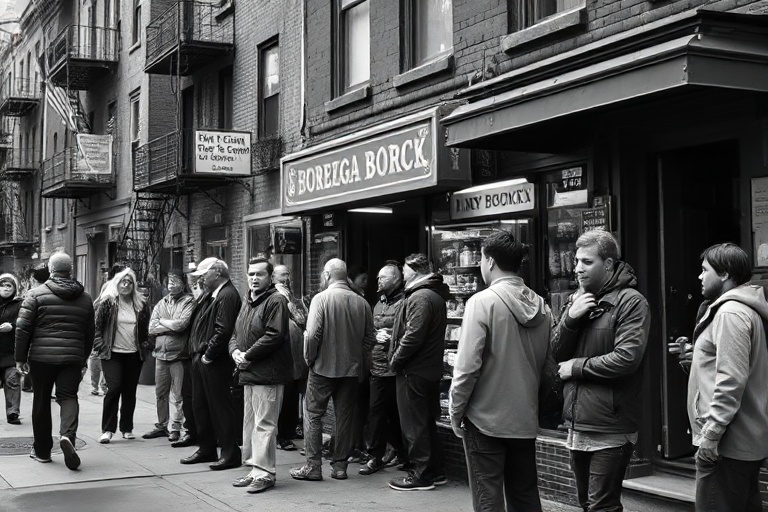
the boroughs
The Boroughs: Defining Urban Identity Across Continents
The term “borough” carries different meanings depending on geography and history. In the United States, it often refers to administrative divisions within cities like New York’s five boroughs—Manhattan, Brooklyn, Queens, the Bronx, and Staten Island. Each has evolved into a distinct cultural ecosystem. Meanwhile, in the United Kingdom, boroughs have roots in medieval governance and now represent diverse communities from London’s financial districts to Liverpool’s working-class neighborhoods.
Globally, boroughs serve as microcosms of urban identity. They reflect social stratification, economic development, and cultural adaptation. In Tokyo, the 23 special wards function similarly, each with its own personality—Shinjuku’s neon chaos contrasts with Setagaya’s suburban tranquility. These divisions are not just administrative; they shape daily life, from local cuisine to public transit preferences.
The Historical Evolution of Boroughs
The concept of boroughs dates back centuries. In medieval England, boroughs were fortified towns granted specific rights by the Crown. Over time, they became centers of trade and governance. The word itself comes from the Old English “burh,” meaning a fortified place. As cities expanded, boroughs adapted—some merged, others subdivided, and many absorbed surrounding areas.
New York’s borough system emerged from the 1898 consolidation of Greater New York. Before then, Brooklyn was an independent city, while Queens and Staten Island were rural. The merger created a unified metropolis but preserved each borough’s unique character. This tension between unity and diversity remains a defining feature of urban life in borough-based cities.
Cultural Identity in Borough-Based Cities
Boroughs often develop distinct cultural identities that influence everything from food to festivals. Consider London’s boroughs: Camden is synonymous with punk rock and street food, while Greenwich hosts the Royal Observatory and maritime history. These identities are not static; they evolve with migration, gentrification, and economic shifts.
In New York, the Bronx gave birth to hip-hop, a cultural movement that spread globally. Brooklyn’s Caribbean communities shape its vibrant food scene, with jerk chicken and rice and peas as staples. Meanwhile, Queens, one of the most ethnically diverse urban areas in the world, hosts over 190 languages. This diversity is reflected in its neighborhoods—Jackson Heights’ South Asian markets sit alongside Astoria’s Greek diners.
Such cultural distinctions are not unique to the U.S. and U.K. In Paris, the 20 arrondissements (administrative districts) each have their own flavor. The 11th arrondissement, for example, is known for its trendy cafés and LGBTQ+ nightlife, while the 16th exudes bourgeois elegance. These divisions highlight how urban geography shapes social identity.
Economic Disparities and Urban Planning
Boroughs often reveal stark economic contrasts within cities. In New York, Manhattan’s median household income exceeds $100,000, while the Bronx’s is under $40,000. These disparities are not accidental; they result from historical redlining, zoning policies, and investment patterns. Similarly, in London, boroughs like Kensington and Chelsea boast some of the highest property values in the world, while Barking and Dagenham face higher rates of deprivation.
Urban planning plays a crucial role in either bridging or deepening these divides. In Barcelona, the city’s “superblocks” initiative aims to reclaim streets from cars in densely populated boroughs like Eixample. The goal is to reduce pollution and improve quality of life by prioritizing pedestrians. Such projects demonstrate how boroughs can be laboratories for social and environmental innovation.
Public transit also reflects borough dynamics. In Tokyo, the Yamanote Line connects the city’s 23 wards, enabling seamless movement between boroughs. In contrast, New York’s subway system often struggles to serve outer-borough commuters efficiently. These infrastructure choices shape economic opportunities and social mobility.
The Role of Boroughs in Global Urbanization
As cities grow, boroughs become increasingly important in managing urban sprawl. In China, municipalities like Shanghai and Beijing have expanded their administrative divisions to include suburban boroughs. These areas often serve as economic engines, hosting industrial zones and new development projects. However, they also face challenges like unchecked construction and environmental degradation.
In Africa, rapidly urbanizing cities are adopting borough-like structures to manage growth. Nairobi’s counties function similarly, with each area developing its own economic and social priorities. This model allows for localized governance but also risks fragmentation if resources are unevenly distributed.
Boroughs also play a role in climate resilience. Coastal boroughs, such as those in Miami-Dade County, are on the front lines of rising sea levels. Their adaptation strategies—from flood barriers to mangrove restoration—offer lessons for other urban areas facing environmental threats.
Why Boroughs Matter in the 21st Century
In an era of globalization, boroughs serve as anchors of local identity. They allow cities to balance homogeneity with diversity, efficiency with community. As urban populations swell—projected to reach 68% of the global population by 2050—boroughs will become even more critical in shaping livable, equitable cities.
For policymakers, understanding borough dynamics is essential. Whether addressing housing shortages in Berlin’s boroughs or revitalizing post-industrial areas in Pittsburgh’s North Side, localized solutions often prove more effective than top-down approaches. Similarly, businesses must consider borough-specific trends when expanding, as consumer behavior varies widely even within a single city.
Culturally, boroughs offer a lens into urban evolution. They document migration patterns, economic shifts, and social movements. The Bronx’s hip-hop scene, for example, emerged from a borough grappling with deindustrialization and disinvestment. Today, it is a global cultural export worth billions.
Lessons from Borough-Based Cities
Cities around the world can learn from borough-based governance. Successful examples include:
- Melbourne, Australia: Its 31 local government areas (LGAs) allow for tailored urban planning, from the arts-focused City of Yarra to the family-oriented Boroondara.
- Mumbai, India: The city’s wards balance high-density housing with green spaces, though challenges like slum redevelopment persist.
- Berlin, Germany: Its boroughs (Bezirke) have significant autonomy, enabling grassroots initiatives in areas like Kreuzberg’s alternative culture scene.
These models highlight the importance of balancing centralization with local control. Boroughs that empower communities tend to foster resilience and innovation.
The Future of Boroughs
As cities become more complex, boroughs will need to adapt. Smart city technologies, for example, could enable borough-specific data collection to improve services. In Singapore, precinct-level planning integrates digital tools to enhance livability. Similarly, boroughs could become hubs for circular economies, where waste reduction and local production are prioritized.
Climate change will also reshape boroughs. Waterfront areas may need to relocate or adapt, while inland boroughs could see an influx of climate migrants. Cities like Rotterdam are already experimenting with floating neighborhoods to address rising sea levels.
Ultimately, boroughs remind us that cities are not monolithic. They are mosaics of history, culture, and ambition. By embracing this diversity, urban areas can build more inclusive and sustainable futures.
Conclusion: Boroughs as Laboratories of Urban Life
Boroughs are more than administrative divisions; they are living entities shaped by the people who inhabit them. From New York’s five boroughs to Tokyo’s 23 wards, these urban fragments tell stories of migration, resilience, and innovation. They reveal the tensions between global forces and local identity, between progress and preservation.
For residents, boroughs provide a sense of belonging. For outsiders, they offer a window into the soul of a city. As urbanization accelerates, the lessons of borough-based governance will become increasingly valuable. Whether through economic policy, cultural preservation, or environmental planning, boroughs will continue to define the rhythm of city life.
For those interested in exploring urban cultures further, consider diving into the vibrant scenes of Culture or the local stories covered in our News section. Each borough, after all, is a world unto itself.