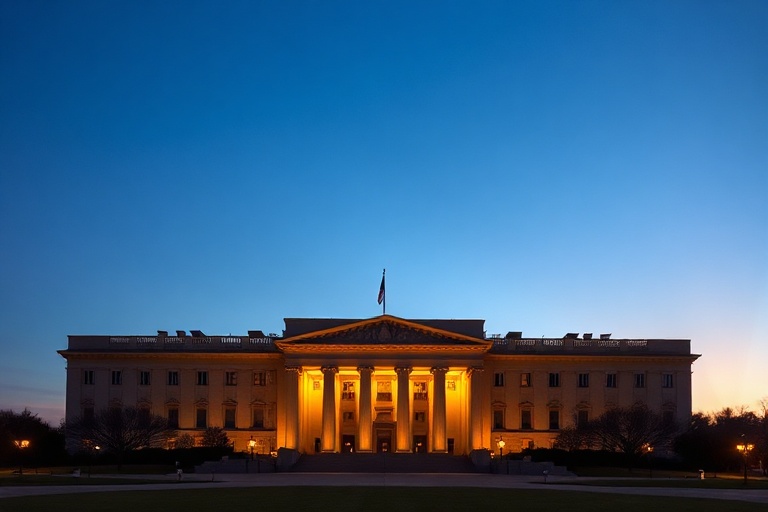
the pentagon
The Pentagon: More Than a Building, a Global Symbol
The Pentagon stands not just as a cornerstone of American military strategy but as an architectural and cultural landmark whose influence extends far beyond its five-sided walls. Completed in 1943, this colossal structure in Arlington, Virginia, was designed during World War II to consolidate the U.S. War Department’s operations under one roof. Yet its significance transcends its original purpose. The Pentagon has become a canvas for history, a target for global politics, and a subject of fascination in film, literature, and public imagination.
Its sheer size—covering 29 acres with over 17 miles of corridors—makes it one of the world’s largest office buildings. But its impact is measured not in square footage alone. The Pentagon embodies the intersection of power, bureaucracy, and public perception, a living monument to the machinery of modern governance. Whether viewed as a symbol of strength, a site of tragedy, or a bureaucratic behemoth, it remains one of the most scrutinized and mythologized structures on Earth.
The Architecture of Power: Design, Purpose, and Prestige
The Pentagon’s design emerged from necessity. In 1941, the War Department’s scattered offices across Washington, D.C., became untenable. A new headquarters was needed—fast. Architect George Bergstrom and engineer Colonel Leslie Groves (who later oversaw the Manhattan Project) devised a five-sided, five-story building arranged in concentric rings. The layout minimized walking distances between offices and maximized efficiency during wartime.
Construction took just 16 months, a feat of wartime logistics. The building used minimal steel due to wartime rationing, relying instead on reinforced concrete and innovative construction techniques. Its design also incorporated blast-resistant features, a prescient choice that would prove tragically relevant decades later.
Visually, the Pentagon is a study in symmetry and scale. Each of its five sides is 921 feet long, and the central plaza—known as “Ground Zero”—was intended as a public space. Yet security concerns have long restricted access, turning what was meant to be open space into a guarded zone. Over time, the Pentagon’s rigid geometry has come to mirror the inflexibility of the institution it houses: vast, unyielding, and slow to adapt.
A Site of Memory: The 9/11 Attacks and National Trauma
The Pentagon’s most searing moment in modern memory came on September 11, 2001. American Airlines Flight 77, hijacked by terrorists, struck the western side of the building at 9:37 a.m. The attack killed 184 people—59 on the plane and 125 in the building. It was the only of the four 9/11 strikes to target a military installation, making the Pentagon both a symbol and a victim of the assault.
In the aftermath, the damaged section was rebuilt and reinforced with a steel-and-glass “wedge” memorializing the lives lost. The Pentagon Memorial, dedicated in 2008, features 184 benches—one for each victim—arranged by age, from 3 to 71. The names are etched in stainless steel, and small lights illuminate the benches at night, creating a quiet, reflective space amid the building’s usual bustle.
This memorialization reflects a broader cultural shift: the Pentagon is no longer just a fortress of war, but a site of mourning and resilience. It has become a pilgrimage destination for families, veterans, and tourists alike, a place where the nation confronts both its vulnerabilities and its resolve.
The Pentagon in Global Imagination: From Film to Folklore
Few buildings have been as thoroughly mythologized as the Pentagon. In film and television, it often appears as a monolithic symbol of clandestine power. Movies like Dr. Strangelove, Top Secret!, and Iron Man depict it as a labyrinth of secrets, where generals and scientists conspire in windowless rooms. These portrayals tap into a deep cultural anxiety: that decisions made within its walls shape the fate of nations—and often in ways the public never sees.
Literature, too, has used the Pentagon as a metaphor for institutional inertia. In Thomas Pynchon’s Gravity’s Rainbow, the building looms as a symbol of bureaucratic absurdity. Even in video games like Call of Duty, the Pentagon serves as a backdrop for high-stakes military operations, reinforcing its image as the nerve center of American might.
Yet this cultural footprint is not limited to the West. In global media, the Pentagon is often depicted as an emblem of American overreach. In the Middle East, it is frequently referenced in political discourse as a symbol of military intervention. In Asia, its policies on China and North Korea are dissected in think tanks and newsrooms alike. The building’s very name has become shorthand—for better or worse—for American defense strategy.
The Pentagon’s Role in Shaping Modern Warfare
The Pentagon is not just a building; it is an ecosystem of power. Within its rings operate the Joint Chiefs of Staff, the Secretary of Defense, and thousands of civilian and military personnel. It coordinates global military operations, allocates billions in defense spending, and sets policies that ripple across continents.
Its influence extends into cyber warfare, space operations, and artificial intelligence. The Defense Advanced Research Projects Agency (DARPA), headquartered within its corridors, has pioneered technologies from the internet to drone warfare. The Pentagon’s reach is not confined to land or sea—it now extends into the digital and extraterrestrial domains.
Yet this power comes with criticism. The building has been accused of fostering a culture of secrecy, enabling military-industrial complexes, and perpetuating cycles of conflict. The phrase “Pentagon Papers” itself entered the lexicon as shorthand for government deception. Even its efficiency is questioned: the building’s labyrinthine layout has been blamed for communication breakdowns and bureaucratic delays.
Despite its flaws, the Pentagon remains indispensable. In an era of hybrid warfare—where threats are as likely to come from a server as from a battlefield—its role as a central command hub has only grown more vital. It is both a relic of the 20th century and a laboratory for the wars of the future.
A Legacy of Contradictions
The Pentagon defies easy definition. It is a symbol of democracy’s defense mechanisms, yet often operates in secrecy. It is a monument to American ingenuity, yet its policies have sparked global protests. It is a workplace for thousands, yet its corridors echo with the weight of decisions that affect millions.
Its legacy is written in concrete and memory, in policy papers and pop culture. It is a building that has survived wars, attacks, and scandals. It has been praised as a bastion of freedom and condemned as an instrument of empire. One thing is certain: the Pentagon will remain a focal point of global power for decades to come.
For those who work there, it is a daily reality. For the world, it remains a cipher—a structure both known and unknown, visible yet impenetrable. In the end, the Pentagon is not just a place. It is an idea: the idea that power must be housed somewhere, and that somewhere, for better or worse, is the Pentagon.
—