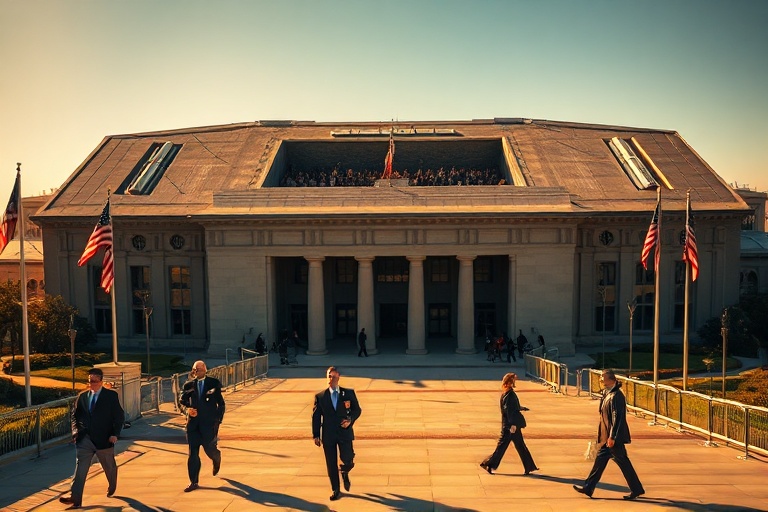
The Pentagon: America’s Military Heart and Global Influence
The Pentagon: America’s Iconic Seat of Military Power
The Pentagon stands as one of the most recognizable structures in the world, not just for its distinctive shape, but for its role as the nerve center of the United States’ military operations. More than a building, it symbolizes American defense strategy, global influence, and the complex machinery of modern warfare. Its history, architecture, and function reflect decades of geopolitical shifts, technological advancements, and cultural narratives about power and security.
Located in Arlington, Virginia, just across the Potomac River from Washington, D.C., the Pentagon was constructed in a remarkably short 16 months during World War II. The urgency of the project was driven by the need to consolidate the War Department’s scattered offices under one roof—a logistical challenge that led to an innovative five-sided design. The architect, George Bergstrom, and engineer Colonel Leslie Groves (who later oversaw the Manhattan Project) ensured the building could house over 20,000 workers while meeting strict budget constraints.
The Architecture of Power and Symbolism
The Pentagon’s design is a marvel of efficiency and symbolism. Its five concentric rings, five floors above ground, and two basement levels create a total floor area of 6.5 million square feet—enough space to fit the entire U.S. Capitol building inside. The structure’s geometric precision was no accident; each side of the pentagon is 921 feet long, and the building covers 28.7 acres of land. The interior corridors total 17.5 miles in length, a labyrinthine layout that has tested the orientation skills of even seasoned employees.
Beyond its functional aspects, the Pentagon’s architecture conveys authority. The building’s stark, utilitarian style—concrete and limestone facade, minimal ornamentation—embodies the no-nonsense ethos of military bureaucracy. Its massive scale and imposing presence are deliberate, designed to project strength and permanence. The central courtyard, known as “ground zero” during the Cold War, was originally intended as a helipad but now serves as a quiet space for reflection, surrounded by memorials to fallen service members.
The Pentagon’s Role in Global Security
The Pentagon is home to the Department of Defense (DoD), the largest employer in the world, with over 700,000 civilian and military personnel. It houses the Joint Chiefs of Staff, the Secretary of Defense, and the military branches’ headquarters, making it the operational heart of U.S. defense policy. From the Cuban Missile Crisis to the wars in Iraq and Afghanistan, the Pentagon has been the stage for decisions that shaped global history.
Its influence extends far beyond American borders. The DoD oversees a global network of bases, alliances, and operations that underpin U.S. foreign policy. The Pentagon’s budget—often exceeding $700 billion annually—funds not only the military but also research and development that drives technological innovation, from early GPS systems to advanced cyber warfare tools. This financial and strategic reach makes the Pentagon a key player in international relations, often dictating the terms of engagement in conflicts from Ukraine to the South China Sea.
Yet, the Pentagon’s role is not without controversy. Critics argue that its vast resources and bureaucratic inertia can lead to inefficiency, mission creep, and unintended consequences. The 2003 invasion of Iraq, for example, was planned within its walls, but the subsequent instability in the region raised questions about the long-term impact of military interventions. Scandals such as the 2010 WikiLeaks release of classified documents or the 2013 Edward Snowden revelations about NSA surveillance have also exposed vulnerabilities in the Pentagon’s security protocols.
Cultural Impact and Public Perception
The Pentagon’s cultural footprint is as significant as its military one. It has been immortalized in films like Top Gun and Iron Man, where it often represents the seat of power or a target of villainous plots. Television shows like Homeland frequently use the building as a backdrop for high-stakes political drama, reinforcing its image as a place where fateful decisions are made. Even video games like Call of Duty feature the Pentagon as a battleground or a hub of intelligence.
Public perception of the Pentagon is deeply polarized. For some, it is a symbol of protection, a guardian against threats to national security. For others, it embodies the militarization of American society, the erosion of civil liberties, and the financial burden of endless wars. Protests outside the Pentagon, such as those during the Vietnam War or the 2008 financial crisis, highlight its role as a flashpoint for dissent. Meanwhile, memorials like the Pentagon Memorial—a park with 184 benches dedicated to the 184 victims of the 9/11 attack—serve as sobering reminders of its human cost.
A Hub of Controversy and Transparency
The Pentagon’s operations have long been shrouded in secrecy, but recent years have seen increased calls for transparency. The 2016 audit of the DoD—its first ever—revealed $6.5 trillion in unsupported accounting adjustments, underscoring the challenges of oversight in such a massive institution. Whistleblowers and investigative journalists continue to expose waste, fraud, and abuse, from overpriced military equipment to unchecked surveillance programs.
In response, some reforms have been implemented. The Pentagon’s 1997 Freedom of Information Act (FOIA) reforms improved public access to some records, while initiatives like the Defense Digital Service have embraced Silicon Valley’s agile methodologies to modernize outdated systems. Yet, the tension between secrecy and accountability remains a defining feature of the Pentagon’s public image.
The Future of the Pentagon
As the 21st century unfolds, the Pentagon faces new challenges that will reshape its role. The rise of cyber warfare, artificial intelligence, and drone technology demands a shift from traditional combat to digital and hybrid conflicts. The Pentagon’s 2018 Cyber Strategy outlines plans to defend against attacks on critical infrastructure, while its AI initiatives aim to integrate machine learning into military decision-making.
Climate change also poses a threat to the Pentagon’s operations. Rising sea levels, extreme weather, and resource scarcity could disrupt military bases and supply chains, forcing the DoD to adapt. In 2019, the Pentagon released a report acknowledging climate change as a “threat multiplier,” highlighting how environmental instability could exacerbate global conflicts.
Meanwhile, the Pentagon’s cultural legacy continues to evolve. Memorials, museums, and educational programs like the National Museum of the U.S. Army (located near the Pentagon) seek to honor service members while educating the public about military history. These efforts aim to bridge the gap between the institution’s public image and its complex realities.
Conclusion: More Than Just a Building
The Pentagon is far more than a concrete fortress or a bureaucratic monolith. It is a living entity, shaped by history, politics, and technology, and it continues to shape the world in turn. Its story is one of ambition and failure, innovation and stagnation, secrecy and revelation. As America’s global role evolves, so too will the Pentagon—adapting to new threats, confronting old controversies, and redefining its place in the 21st century.
Whether viewed as a symbol of resilience or a relic of imperial overreach, the Pentagon remains a potent reminder of the costs and consequences of power. Its walls hold not just offices and meeting rooms, but the weight of decisions that have altered the course of nations. To understand the Pentagon is to grapple with the paradoxes of modern warfare: the balance between security and freedom, the clash of ideals and pragmatism, and the enduring question of what it means to defend a nation in an increasingly interconnected world.