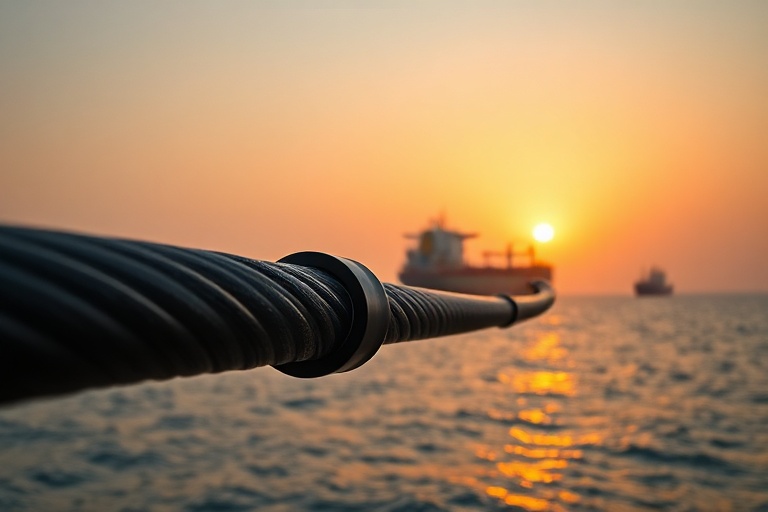
Why the Strait of Hormuz Is Critical for Global Internet Cables
The Strait of Hormuz: A Critical Chokepoint for Global Internet Cables
The Strait of Hormuz, a narrow waterway between Iran and Oman, has long been recognized as a vital artery for global oil trade. Less discussed, but equally critical, is its role as a conduit for the internet cables that power digital communication across Europe, Asia, and the Middle East. These undersea cables are the invisible backbone of the internet, carrying over 99% of international data traffic. Disruptions in this region can have far-reaching consequences, from slowed internet speeds to complete outages in entire countries.
The strategic importance of the Strait of Hormuz cannot be overstated. At its narrowest point, the strait is just 21 miles wide, with a shipping lane only 2 miles wide in each direction. This bottleneck makes it a prime location for both commercial shipping and undersea cable routes. According to the Technology section of Dave’s Locker, these cables are as essential to modern life as roads and power grids, yet they remain largely invisible to the public.
How Undersea Cables Shape Global Connectivity
Undersea cables are the unsung heroes of the internet. They transmit data between continents at speeds up to 200 terabits per second, enabling everything from video calls to financial transactions. The Strait of Hormuz is home to several key cable routes, including:
- FALCON (Flag Atlantic-1 Cable System): Connects the Middle East to Europe, passing through the Strait of Hormuz.
- MENA (Middle East North Africa Cable System): Links countries in the Gulf to Europe and Asia.
- PEACE (Pakistan and East Africa Connecting Europe): Runs from Pakistan to France, crossing the strait.
The sheer volume of data these cables carry underscores their importance. For example, the FALCON cable alone can handle over 5 terabits of data per second, enough to stream millions of high-definition videos simultaneously. Any disruption in this region could lead to significant delays or even blackouts in connectivity for countries reliant on these routes.
The Risks and Vulnerabilities of Cable Infrastructure
The physical nature of undersea cables makes them vulnerable to a range of threats. In the Strait of Hormuz, these risks are amplified by geopolitical tensions. Potential disruptions include:
- Accidental Damage: Ship anchors and fishing trawlers can snag and sever cables, a recurring issue in busy shipping lanes.
- Sabotage: Geopolitical conflicts in the region raise concerns about intentional attacks on critical infrastructure.
- Natural Disasters: Earthquakes and underwater landslides pose a threat to cable integrity.
- Maritime Security Threats: Piracy and unauthorized vessel activity increase the risk of damage.
In 2021, a cable near the Strait of Hormuz was damaged, disrupting internet services in parts of the Middle East and South Asia. Investigations suggested the damage was likely caused by a ship’s anchor, but the incident highlighted the fragility of the system. Such disruptions can cost millions of dollars in lost productivity and economic activity, as businesses and governments scramble to reroute traffic or repair the damage.
The Geopolitical Dimension: Tensions and Safeguards
The Strait of Hormuz is not just a chokepoint for trade and data—it is also a flashpoint for geopolitical tensions. Iran, which borders the strait, has repeatedly threatened to disrupt shipping lanes in response to sanctions and perceived provocations. While these threats have primarily targeted oil tankers, the potential for collateral damage to undersea cables is a growing concern.
To mitigate these risks, several measures have been implemented:
- Cable Protection Zones: Some countries have designated areas around cable routes as protected zones, restricting certain maritime activities.
- Enhanced Monitoring: Surveillance technologies, including underwater drones and sonar systems, are used to detect and respond to threats.
- Redundancy and Diversification: Cable operators are increasingly investing in alternative routes to reduce reliance on any single chokepoint.
Despite these efforts, the risk remains. A 2022 report by the News desk at Dave’s Locker noted that the geopolitical landscape in the region continues to evolve, with new threats emerging as old conflicts persist. The ongoing rivalry between Iran and Western powers, as well as tensions between Gulf states, adds layers of complexity to the challenge of protecting these critical assets.
The Economic Impact of Cable Disruptions
The economic consequences of a major cable disruption in the Strait of Hormuz could be severe. The Middle East and South Asia are home to some of the world’s fastest-growing economies, and their digital infrastructure is increasingly reliant on undersea cables. A prolonged outage could:
- Disrupt Financial Markets: Banks and financial institutions rely on low-latency data transfers for trading and transactions.
- Hinder E-Commerce: Online retail platforms, which depend on seamless connectivity, could face significant slowdowns.
- Affect Remote Work: The rise of remote work in the post-pandemic era has increased dependence on stable internet connections.
- Delay Critical Services: Healthcare, education, and government services that operate online would be severely impacted.
For example, in 2017, a cable cut in the Red Sea disrupted internet services in Somalia and Kenya for several weeks. The economic impact was estimated in the tens of millions of dollars, as businesses struggled to operate and humanitarian aid operations faced delays. A similar incident in the Strait of Hormuz could have even more widespread repercussions.
Looking Ahead: The Future of Cable Security in the Strait of Hormuz
The challenges facing undersea cables in the Strait of Hormuz are not insurmountable, but they require proactive solutions. Governments, cable operators, and international organizations must collaborate to enhance the resilience of this critical infrastructure. Some potential strategies include:
- Investing in New Technologies: Advances in AI and machine learning could improve threat detection and response times.
- Strengthening International Cooperation: Regional alliances and treaties could provide frameworks for protecting cables and resolving disputes.
- Public-Private Partnerships: Governments and private companies could share resources and expertise to safeguard infrastructure.
- Public Awareness Campaigns: Educating the public about the importance of undersea cables could garner support for their protection.
As the world becomes increasingly interconnected, the security of undersea cables will only grow in importance. The Strait of Hormuz, with its unique blend of geopolitical tensions and critical infrastructure, serves as a stark reminder of the vulnerabilities in our digital age. Addressing these challenges will require foresight, cooperation, and investment to ensure that the internet remains a reliable and resilient tool for global communication.
The stakes are high, but the solutions are within reach. By prioritizing the protection of undersea cables, we can safeguard the digital future of millions of people around the world.