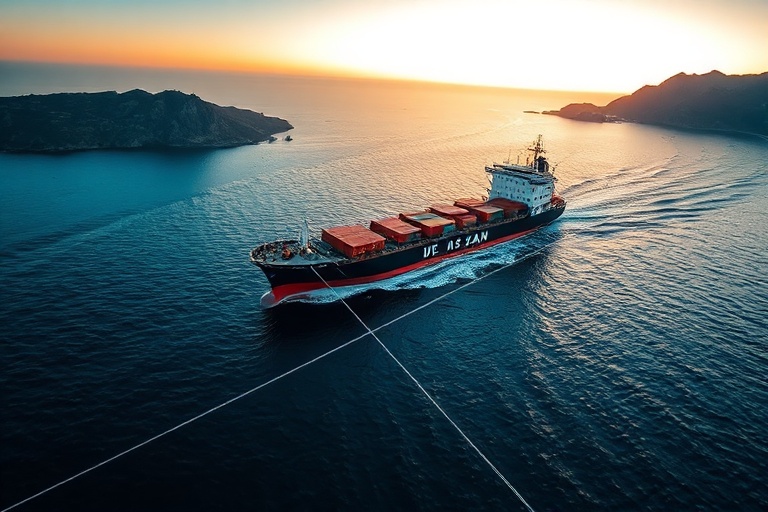
Global Trade Hinges on a Thin Wire Beneath the Waves
The Strait of Hormuz doesn’t just carry oil—it carries data. Beneath the same waters where tankers navigate one of the world’s most strategic chokepoints, a network of fiber-optic cables snakes across the seafloor, silently powering the internet connections between Asia, Europe, and Africa. These cables are the unsung arteries of the digital economy, and their vulnerability has made the region a flashpoint not just in geopolitics, but in the infrastructure of daily life for millions.
What happens when a cable is cut, whether by accident or design? The ripple effects are immediate and far-reaching. From delayed financial transactions in Mumbai to buffering video calls in Milan, the Strait of Hormuz’s internet cables are a critical but overlooked pillar of global connectivity. And as tensions rise in the region, so does the scrutiny on these fragile strands of glass and steel.
The Hidden Network Beneath the Waves
More than 99% of international internet traffic travels through undersea cables—over a million kilometers of fiber optics crisscrossing the planet’s oceans. The Strait of Hormuz, a narrow passage just 21 miles wide at its narrowest point, is a vital corridor for several of these cables. Among the most important are:
- FALCON (Fiber-Optic Link Around the Globe): A high-capacity cable system connecting the Middle East to Europe via the Red Sea and Mediterranean.
- MENA (Middle East North Africa): A key link between the Gulf states, Africa, and Southern Europe.
- Tata TGN-Eurasia: A cable that routes traffic from India and the Middle East into Europe, often carrying financial and corporate data.
These cables are no thicker than a garden hose, yet each fiber inside can transmit terabits of data per second. They are laid by specialized ships and buried in trenches to protect against ship anchors and fishing trawlers. But protection only goes so far. The seabed is a battleground of natural hazards and human interference.
A History of Disruptions and Their Global Impact
The Strait of Hormuz has seen its share of cable cuts—some accidental, others deliberate. In 2008, a ship’s anchor severed the FALCON cable off Dubai, disrupting internet and phone services across the Gulf for days. In 2021, multiple cables in the Red Sea were damaged, possibly by a ship’s anchor, causing widespread outages in Egypt and Sudan.
But deliberate sabotage has also been reported. In 2013, Egyptian authorities arrested suspects accused of cutting cables near Alexandria, allegedly to slow internet speeds for political reasons. More ominously, during periods of heightened tension between Iran and Western powers, there have been whispers—often unconfirmed—of planned cable disruptions as a form of retaliation or deterrence.
What makes these incidents so consequential is the concentration of cables in such a small area. Unlike transatlantic routes, where multiple cables spread across thousands of miles, the Strait of Hormuz’s cables are tightly clustered. A single incident can knock out connectivity for entire countries. When cables fail, traffic reroutes—but rerouting adds latency, slows speeds, and increases costs.
Geopolitics Meets Digital Infrastructure
The Strait of Hormuz is more than a maritime highway—it’s a geopolitical pressure point. Iran has long threatened to close the strait in response to sanctions or military actions, a move that would send oil prices soaring and disrupt global trade. Less discussed, but equally critical, is the threat to undersea cables. In 2019, Iranian officials hinted at targeting “enemy” infrastructure in the Gulf, raising concerns about whether fiber-optic cables could become collateral damage—or even targets—in future conflicts.
This creates a paradox: the same waters that fuel the global economy also host the cables that power its digital nervous system. Nations and corporations are increasingly aware of this vulnerability. In response, some are investing in redundant routes—land-based cables through Turkey and the Caucasus, or satellite internet as a backup. But redundancy is expensive, and for now, the Strait of Hormuz remains a bottleneck.
Meanwhile, digital sovereignty movements are gaining traction. Countries like Saudi Arabia and the UAE are investing in their own data centers and local internet exchanges to reduce reliance on foreign infrastructure. These efforts reflect a broader shift: as the world becomes more connected, nations are also seeking to control that connection.
The Human Cost of a Cut Cable
The impact of a cable disruption isn’t just technical—it’s human. In 2022, a cable cut near Pakistan caused internet outages in Sri Lanka, affecting everything from online banking to telemedicine services. In 2023, disruptions in the Red Sea led to hours-long outages in Djibouti, a critical hub for internet traffic to East Africa. For businesses, delays in transactions can mean lost revenue. For students, it means missed online classes. For families, it means disrupted video calls with loved ones abroad.
Beyond the immediate inconvenience, there’s a deeper concern: the digital divide. While Europe and North America have multiple backup options, many countries in Africa and South Asia rely almost entirely on a handful of cables. A single cut can plunge regions into digital darkness, exacerbating inequality in access to education, healthcare, and economic opportunity.
This vulnerability has led to calls for greater international cooperation. The International Cable Protection Committee, a global industry group, advocates for better monitoring, rapid repair protocols, and shared responsibility among nations. Yet, in an era of rising nationalism and cyber warfare, such cooperation is easier said than done.
Looking Ahead: A World Wired—or Unwired?
The future of the Strait of Hormuz’s internet cables will be shaped by three forces: technology, geopolitics, and economics. On the technology front, innovations like space-based internet (e.g., Starlink) and high-altitude balloons could provide alternatives, though they come with their own challenges—latency, cost, and regulatory hurdles.
Geopolitically, the risk of conflict—whether between Iran and the West, or between regional powers—looms large. Nations may seek to protect their digital infrastructure, but they also recognize its potential as a bargaining chip. Economic pressures will push some to diversify, while others may double down on the status quo.
One thing is clear: the world’s reliance on these cables is only growing. E-commerce, remote work, cloud computing, and the Internet of Things all depend on stable connections. The Strait of Hormuz, long a symbol of oil’s dominance, is now a silent guardian of the digital age—and its fragility is a reminder that the infrastructure of the future is just as vulnerable as the past.
As nations and corporations grapple with these challenges, one question remains unanswered: Will the world invest in resilience, or will it continue to gamble on a network that runs through some of the most volatile waters on Earth?
—
Further Reading
To explore how digital infrastructure intersects with global politics, visit our News section. For a deeper look at how technology shapes cultural and economic exchanges, check out our Technology category.