ilfracombe lifeboat dog rescue
The rugged coastline of North Devon is renowned for its dramatic cliffs and unpredictable tides, making it a landscape where both beauty and peril coexist. Among the many rescue missions conducted along this stretch of the English coast, one particular incident involving a stranded dog stands out for its emotional impact and the swift response of the Ilfracombe Lifeboat crew. These events highlight not only the bravery of the RNLI volunteers but also the deep bond between humans and their pets.
Rescues involving animals often capture public attention in ways that human-focused emergencies sometimes do not. The story of the Ilfracombe lifeboat dog rescue serves as a reminder of the RNLI’s broader mission: saving lives at sea, regardless of species. It also underscores the challenges faced by coastal communities and emergency services in responding to unpredictable situations where nature dictates the terms.
The Incident That Captured Attention
In early October 2023, reports emerged of a dog stranded on a rocky outcrop near Ilfracombe Harbour. Witnesses described the animal as visibly distressed, unable to find a safe path back to shore as the tide rapidly rose. The situation escalated quickly, prompting a call to the Ilfracombe Lifeboat Station, part of the Royal National Lifeboat Institution (RNLI).
The crew, consisting of experienced volunteers, launched the all-weather lifeboat within minutes. Their approach was methodical yet urgent. Using a combination of binoculars and local knowledge, they identified the dog’s location near Lee Bay, a notoriously treacherous stretch of coastline. The conditions were far from ideal—choppy waters and a strengthening wind added layers of complexity to an already delicate operation.
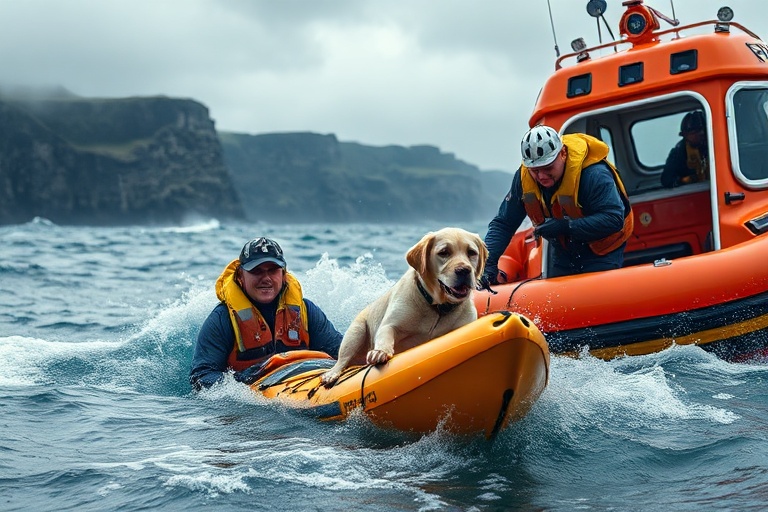
Upon arrival, the crew assessed the situation. The dog, later identified as a Border Collie named Moss, was clinging to a narrow ledge, surrounded by swirling waves. The team deployed a rescue sled, a piece of equipment typically used for human casualties, to carefully extract Moss without risking further harm to either the animal or the rescuers. The operation lasted approximately 20 minutes, culminating in Moss being safely brought aboard the lifeboat and returned to shore, where he was reunited with his overjoyed owner.
Why This Rescue Stands Out
While the RNLI conducts hundreds of rescues each year, this particular event resonated with the public for several reasons. First, it involved a domestic pet, an element that humanizes the rescue and evokes a strong emotional response. Videos shared on social media showed Moss wagging his tail as he was lifted from the lifeboat, a moment that quickly went viral. The clip amassed thousands of views within hours, illustrating how animal-related rescues often generate widespread engagement.
Second, the rescue highlighted the versatility of RNLI equipment and training. The use of a rescue sled, typically reserved for human casualties, demonstrated the crew’s adaptability in high-pressure situations. This adaptability is a cornerstone of the RNLI’s ethos, ensuring that volunteers are prepared for any scenario, regardless of how unconventional.
Third, the incident served as a reminder of the dangers posed by the North Devon coastline. The area’s rugged terrain and powerful tides are a constant challenge for both locals and visitors. Moss’s rescue was not an isolated case; it was part of a broader pattern of emergencies that the Ilfracombe Lifeboat Station handles annually. According to RNLI statistics, the station conducts an average of 30 rescues per year, with a significant portion involving animals or non-life-threatening incidents that require urgent intervention.
The Role of the Ilfracombe Lifeboat Station
The Ilfracombe Lifeboat Station is one of the oldest in the RNLI’s fleet, established in 1828. Over nearly two centuries, it has played a pivotal role in maritime safety along the North Devon coast. Today, the station operates two lifeboats: the Tamar-class all-weather boat, RNLB Margaret Elizabeth, and the D-class inshore lifeboat, RNLB Audrey L Jill. Each vessel is designed for specific conditions, ensuring the crew can respond effectively to a wide range of emergencies.
The station’s volunteers undergo rigorous training, covering everything from first aid to advanced navigation. Their commitment is unwavering, with many crew members balancing full-time jobs with their lifeboat duties. The Moss rescue was a testament to their skills and dedication, but it also underscored the physical and emotional demands of the role. Volunteers often describe the job as both rewarding and humbling, particularly when they witness the relief of those they rescue.
Beyond emergency responses, the Ilfracombe Lifeboat Station is deeply embedded in the local community. It regularly hosts open days, educational visits, and fundraising events to support its operations. These initiatives are crucial, as the RNLI relies entirely on donations and legacies to fund its lifeboats and training programs. The Moss rescue, therefore, not only showcased the station’s capabilities but also served as a reminder of the importance of community support in sustaining these vital services.
Lessons from the Rescue
The Moss rescue offers several key takeaways, both for pet owners and for those interested in maritime safety. For pet owners, the incident serves as a cautionary tale about the risks of allowing animals to roam unsupervised near cliffs or shorelines. The RNLI advises that pets should always be kept on a leash in such areas, particularly during high tide or in windy conditions. Additionally, owners are encouraged to familiarize themselves with local emergency numbers and the nearest lifeboat station.
For maritime enthusiasts and coastal communities, the rescue highlights the importance of preparedness. The Ilfracombe Lifeboat Station’s rapid response was a result of years of training and coordination. It also underscores the need for ongoing investment in lifeboat technology and infrastructure. Modern lifeboats are equipped with advanced communication systems, GPS, and medical kits, all of which played a role in Moss’s successful rescue.
The incident also sparked conversations about the broader role of animals in rescues. While the RNLI’s primary mission is to save human lives, the Moss rescue demonstrates that animals are not immune to the dangers of the sea. In some cases, such as during flood rescues or cliff rescues, animals may require assistance alongside humans. The RNLI has adapted its protocols to account for these scenarios, ensuring that both people and pets receive the help they need.
Community and Media Reaction
The aftermath of the Moss rescue saw an outpouring of support for the Ilfracombe Lifeboat Station. Local residents organized a fundraising event, donating over £2,000 to the RNLI. Social media played a significant role in amplifying the story, with hashtags like #MossTheRescueDog trending locally and even gaining traction nationally. The RNLI reported a surge in donations following the incident, reflecting the public’s appreciation for the volunteers’ efforts.
Moss himself became an unlikely celebrity, with local news outlets and animal welfare organizations sharing his story. The Border Collie’s owner, a resident of Ilfracombe, expressed gratitude for the lifeboat crew’s quick thinking and compassion. “Moss is part of the family,” the owner told reporters. “I don’t know what I would have done if anything had happened to him.”
The media coverage also sparked discussions about the emotional toll of rescue operations. While the outcome was positive, volunteers often grapple with the stress of high-pressure situations. The Moss rescue, though ultimately successful, was a reminder of the risks involved in maritime rescue work. The RNLI provides mental health support for its volunteers, emphasizing the importance of self-care alongside physical preparedness.
How to Support the RNLI and Coastal Safety
For those inspired by the Moss rescue and wishing to contribute to maritime safety, there are several ways to get involved. The RNLI relies on donations to fund its operations, and every contribution helps ensure that lifeboat stations like Ilfracombe can continue their work. Donations can be made directly through the RNLI’s website or by participating in local fundraising events.
Volunteering is another impactful way to make a difference. The RNLI welcomes individuals from all backgrounds, whether they are interested in crew roles, fundraising, or administrative support. Training is provided, and no prior experience is necessary. For those who live near the coast, becoming a volunteer lifeboat crew member is a deeply rewarding way to give back to the community.
Educating others about coastal safety is also crucial. The RNLI offers resources for schools, families, and outdoor enthusiasts, covering topics such as rip currents, cliff safety, and the importance of checking tide times. Sharing this information can help prevent emergencies before they occur, reducing the burden on lifeboat crews.
Finally, pet owners can take simple precautions to keep their animals safe. Keeping pets on a leash near cliffs, avoiding risky areas during high tide, and ensuring pets are microchipped are all steps that can make a significant difference. The Moss rescue serves as a reminder that preparedness extends to all members of the family, including our furry companions.
Conclusion
The Ilfracombe lifeboat dog rescue is more than just a heartwarming story; it is a snapshot of the broader challenges and triumphs faced by coastal communities and emergency services. It highlights the RNLI’s commitment to saving lives, the adaptability of its volunteers, and the deep connections between humans and animals. Moss’s rescue also serves as a call to action for pet owners and maritime enthusiasts alike, emphasizing the importance of preparedness and community support.
As the North Devon coastline continues to draw visitors and residents alike, the work of the Ilfracombe Lifeboat Station remains as vital as ever. Whether responding to human emergencies or animal rescues, the crew’s dedication ensures that the sea’s dangers are met with skill, courage, and compassion. Their story, exemplified by Moss’s rescue, is a testament to the enduring power of community and the lengths to which we go to protect one another.
For those interested in learning more about the RNLI or supporting its mission, visit the News section of Dave’s Locker or explore the Travel category for coastal safety tips and adventure guides.