Antoine Griezmann: Career, Legacy & Tactical Genius Explained
Antoine Griezmann occupies a rare space in football where artistry meets consistency. Over the past decade, the French forward has evolved from a promising talent into one of the most recognizable and versatile players of his generation. His journey—marked by technical brilliance, tactical intelligence, and an unshakable competitive spirit—reflects the changing demands of modern football.
Born on March 21, 1991, in Mâcon, France, Griezmann’s rise was anything but conventional. Rejected by several French academies as a teenager due to his slight build, he found a home in Spain, where he developed under the guidance of Real Sociedad’s youth system. That early adversity shaped his resilience, a trait that would later define his career in top European competitions and with the French national team.
A Career Defined by Versatility and Adaptability
Griezmann’s professional career is a study in adaptability. He began as a winger but gradually transitioned into a false nine, a role that allowed him to drop deep, link play, and exploit spaces behind defensive lines. This evolution culminated during his peak years at Atlético Madrid, where Diego Simeone deployed him as a dynamic forward capable of both scoring and creating.
His time at Atlético (2014–2019) remains one of the most celebrated periods in club football. Griezmann led the team to the 2016 Champions League final, scoring crucial goals along the way, including a memorable brace against Bayern Munich in the quarter-finals. Though Atlético fell to Real Madrid in the final, his performance solidified his reputation as a big-game player.
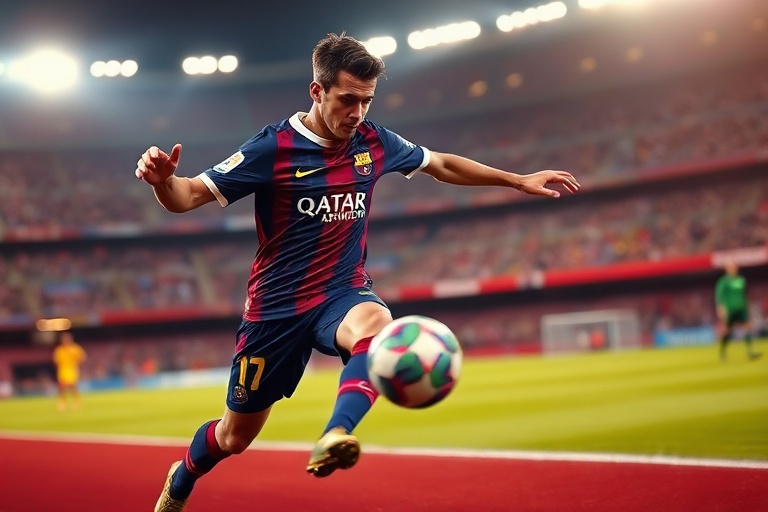
In 2019, he made a high-profile move to Barcelona for €120 million, a transfer that symbolized both ambition and pressure. While his tenure at Camp Nou was uneven—partly due to tactical misfits and injuries—Griezmann’s technical gifts never faded. He returned to Atlético on loan in 2021, a move that rejuvenated his career and reminded observers why he remains such a prized asset.
Key Career Milestones
- 2018 FIFA World Cup: Scored four goals and provided two assists as France won their second World Cup title. He was awarded the Silver Ball as the tournament’s second-best player.
- 2019 Ballon d’Or: Finished third, behind Lionel Messi and Virgil van Dijk, in one of his strongest individual seasons.
- UEFA Euro 2020: Despite France’s disappointing Round of 16 exit, Griezmann contributed with a goal and two assists, showcasing his leadership in tournament football.
- Atlético Madrid Return: Rejoined the club in 2021 and helped them reach the Champions League quarter-finals in 2022, proving his enduring quality.
Tactical Intelligence and Playing Style
What sets Griezmann apart is not just his dribbling or finishing, but his spatial awareness. He reads the game at a near-genius level, occupying pockets of space that most forwards ignore. His ability to combine short passes, make diagonal runs, and time his movements makes him a nightmare for defensive systems.
Under Simeone, Griezmann thrived in a system that demanded positional discipline and collective pressing. He wasn’t the fastest or strongest forward, but his football IQ compensated for those limitations. Today, even as he approaches his mid-30s, his vision and decision-making remain elite—traits that allow him to excel in deeper roles, such as a false nine or even a midfield creator.
His left foot is one of the most dangerous in football. Whether curling a shot from outside the box or delivering a pinpoint cross, Griezmann’s technique is both elegant and effective. He also possesses a rare psychological edge: a calm demeanor under pressure, which enables him to perform in high-stakes moments.
Off the Pitch: Personality and Influence
Beyond football, Griezmann has cultivated a multifaceted public persona. He is deeply involved in social causes, particularly children’s health and education. In 2018, he and his sister launched the Griezmann Foundation, supporting vulnerable youth in France and Spain. His activism extends to advocating for better conditions in football academies, reflecting his own early struggles.
Griezmann is also a fashion icon, known for his bold style choices and collaborations with brands like Gucci and Puma. His social media presence blends football clips with lifestyle content, making him one of the most followed athletes globally, with over 50 million followers across platforms.
Despite his fame, he maintains a grounded approach. He speaks openly about mental health, family, and the pressures of professional sport—topics often avoided in football discourse. This authenticity has endeared him to fans worldwide, particularly younger generations who see him as more than just a footballer.
Legacy and Future Outlook
At 33, Griezmann is in the twilight of his prime, yet his influence persists. He remains a key figure for both Atlético Madrid and the French national team, where he continues to wear the captain’s armband. His role has shifted from primary scorer to playmaker and mentor, guiding younger players like Eduardo Camavinga and William Saliba.
The question now is how much longer he will remain at the highest level. While he may no longer be the explosive forward of his Atlético days, his footballing intelligence ensures relevance. Clubs in Europe’s top leagues—particularly those needing a creative spark—will always consider him a viable option.
For France, his presence in the 2026 World Cup squad remains plausible, though competition is fierce. His leadership and experience could prove decisive in another title run, especially as a vocal figure in the dressing room.
Griezmann’s legacy is still being written. He has already secured a place among France’s all-time greats, alongside Zinedine Zidane, Thierry Henry, and Michel Platini. But his greatest contribution may be redefining what it means to be a modern forward—not just a goal scorer, but a complete footballer who influences every phase of play.
Final Thoughts
Antoine Griezmann’s career is a testament to adaptation, intelligence, and passion. He arrived in football as an underdog and transformed himself into a legend through sheer will and skill. In an era dominated by physicality and instant results, his style represents a return to football’s artistic roots.
Whether wearing the Atlético shirt or leading France into battle, Griezmann embodies the spirit of modern football: versatile, intelligent, and uncompromising in its pursuit of excellence.
As his career winds down, one thing is certain—football will remember him not just for his goals, but for the way he played the game.
For more insights into football legends and tactical analysis, visit our Sports and Analysis sections.