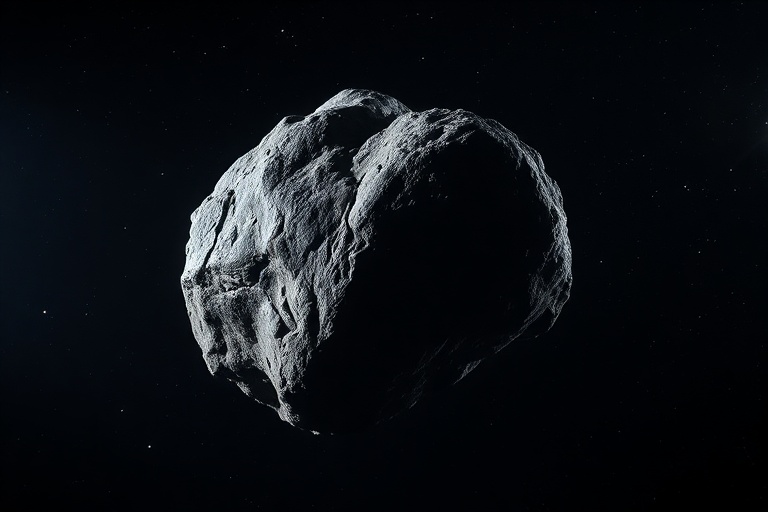
Asteroids: Ancient Rocks That Could Shape Earth’s Future
“`html
Asteriods: Cosmic Time Capsules Shaping Earth’s Future
Few objects in our solar system carry the weight of both scientific curiosity and existential contemplation quite like asteroids. These rocky remnants from the solar system’s formation 4.6 billion years ago drift silently through space, each one a frozen snapshot of the past. Yet their influence extends far beyond mere cosmic debris. From shaping planetary evolution to posing potential threats—and even offering resources for future space economies—asteroids represent a paradox of destruction and opportunity that demands our attention.
The Science Behind Asteroids: More Than Just Space Rocks
Asteroids are primarily composed of rock, metal, and sometimes ice, varying widely in size from a few meters across to nearly 1,000 kilometers in diameter. The largest, Ceres, is so massive it’s classified as a dwarf planet. Scientists categorize them based on composition: carbon-rich C-types, silicate-based S-types, and metallic M-types. This diversity reflects their origins in different regions of the early solar system.
Their study isn’t just academic. These celestial bodies preserve primordial material from the solar nebula, offering clues about the conditions that led to Earth’s formation. NASA’s OSIRIS-REx mission, for example, successfully returned samples from the carbonaceous asteroid Bennu in 2023, revealing high concentrations of water and organic molecules—key ingredients for life as we know it.
- Primordial archives: Asteroids contain pristine material from the solar system’s birth, undisturbed by geological processes.
- Compositional diversity: Their varied makeup reflects distinct formation zones and evolutionary histories.
- Scientific goldmines: Missions like Hayabusa2 and OSIRIS-REx have redefined our understanding of these objects.
Earth’s Relationship With Asteroids: A History of Collisions
Earth bears the scars of its encounters with asteroids. The most infamous collision occurred 66 million years ago when a 10-15 km-wide asteroid struck the Yucatán Peninsula, triggering the Cretaceous-Paleogene extinction that wiped out the dinosaurs. This event reshaped life on Earth, paving the way for mammals to dominate.
Smaller impacts are more frequent. The 2013 Chelyabinsk meteor, a 20-meter-wide asteroid, exploded over Russia with the force of 30 Hiroshima bombs, injuring over 1,500 people. Events like this underscore the unpredictable nature of near-Earth objects (NEOs). NASA’s Center for Near-Earth Object Studies (CNEOS) tracks over 34,000 such objects, with new ones discovered weekly.
Yet not all interactions are catastrophic. Some scientists propose that asteroid impacts may have delivered water and organic compounds to early Earth, essentially seeding the planet for life. This duality—destruction and creation—defines humanity’s complex relationship with these celestial wanderers.
Asteroids as Resources: The Next Frontier in Space Exploration
The growing interest in asteroid mining reflects a shift in how we view these objects—not just as threats, but as valuable assets. A single metallic asteroid could contain billions of dollars’ worth of iron, nickel, and rare metals like platinum. Companies like Planetary Resources and AstroForge are already developing technologies to extract these resources.
Beyond metals, water-rich asteroids could serve as interplanetary gas stations. Water can be split into hydrogen and oxygen for rocket fuel, making asteroids critical for sustainable deep-space travel. The lunar and Martian missions of the coming decades may rely on asteroid-derived resources to reduce launch costs and extend mission durations.
- Mining potential: Metallic asteroids could supply rare earth metals for Earth’s tech industries.
- Fuel depots: Water from carbonaceous asteroids could be converted into rocket propellant.
- Habitat construction: Asteroid materials could be used to build structures in space, reducing the need for Earth-launched resources.
The Future of Asteroid Defense and Exploration
As our technological capabilities expand, so do our strategies for managing asteroid threats. NASA’s Double Asteroid Redirection Test (DART) mission in 2022 successfully altered the orbit of the asteroid Dimorphos by crashing a spacecraft into it, proving that deflection is possible. This milestone represents a turning point in planetary defense, offering a viable method to protect Earth from future impacts.
Meanwhile, ambitious missions like NASA’s Psyche spacecraft, en route to the metallic asteroid 16 Psyche, aim to study a planetary core up close. Such missions not only advance our understanding of asteroids but also push the boundaries of robotic exploration.
Looking ahead, international collaborations—such as the Asteroid Impact and Deflection Assessment (AIDA) mission—are essential for developing coordinated defense strategies. The European Space Agency’s Hera mission will follow up on DART, providing detailed data on the effects of the impact.
On the commercial front, asteroid mining could revolutionize space economies. Luxembourg, a pioneer in space resource legislation, has already established a legal framework for private companies to claim asteroid resources. This sets the stage for a new era of economic activity beyond Earth’s atmosphere.
Key Takeaways for Policymakers and the Public
The story of asteroids is one of duality: they are both relics of the past and gateways to the future. Their study enriches our understanding of the solar system while also presenting tangible challenges and opportunities. As we advance technologically, the decisions we make today—about defense, resource utilization, and exploration—will shape humanity’s relationship with these cosmic neighbors for centuries to come.
For those interested in following developments, Dave’s Locker Science and Technology sections provide regular updates on asteroid missions, scientific breakthroughs, and space industry trends.