Braves vs Marlins: A Clash of Styles and Strategies
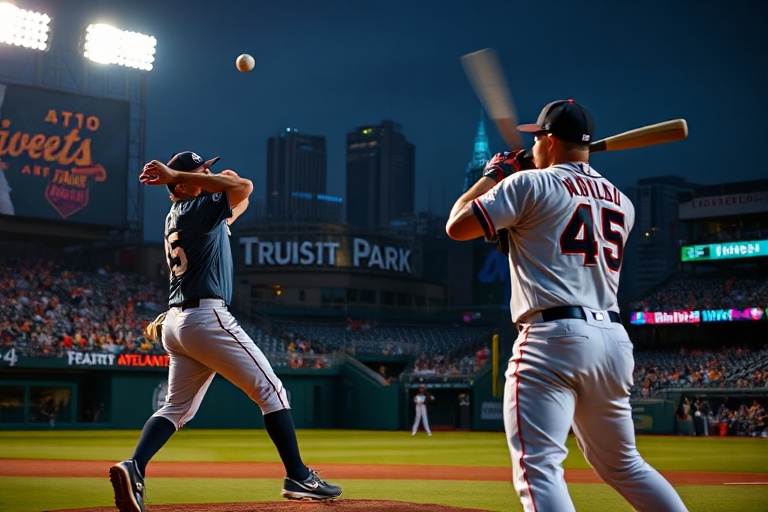
The Atlanta Braves and Miami Marlins entered the 2024 season with contrasting narratives. The Braves, perennial contenders with a roster stacked with All-Star talent, were expected to challenge for another National League East title. The Marlins, meanwhile, were seen as underdogs—young, rebuilding, and eager to prove they belonged among baseball’s elite. When these two teams met in Miami for a three-game series in April, the clash wasn’t just between teams but between philosophies: veteran experience versus youthful energy, power hitting versus pitching depth.
The series unfolded with the kind of unpredictability that makes baseball compelling. The Marlins, despite their rebuilding status, pushed the Braves to the brink, forcing late-inning heroics and strategic decisions that kept fans on the edge of their seats. For baseball purists, the matchup highlighted the evolving nature of the sport—where analytics meet instinct, and tradition collides with innovation.
The Braves’ Blueprint: Power and Precision
The Atlanta Braves have long been a model franchise, blending high-ceiling talent with shrewd front-office decisions. Their offense revolves around a core of sluggers—Ronald Acuña Jr., Matt Olson, and Austin Riley—who can change a game with a single swing. The Braves’ approach is straightforward: overwhelm opponents with home runs and rely on their pitching staff, anchored by Max Fried and Spencer Strider, to limit damage.
This strategy has yielded consistent success, but it’s not without risks. When the Marlins’ young arms stifled Atlanta’s power hitters in the first two games, it exposed a potential vulnerability. The Braves’ reliance on the long ball means they can struggle against teams that excel in small-ball tactics—bunting, stolen bases, and situational hitting. Miami’s pitching staff, featuring young arms like Eury Pérez and Jesús Luzardo, demonstrated that speed and control can neutralize even the most potent lineups.
The Marlins’ Rise: Youth Meets Momentum
The Miami Marlins have undergone a quiet transformation in recent years. Once dismissed as a small-market afterthought, the franchise has cultivated a core of homegrown talent—Jazz Chisholm Jr., Garrett Cooper, and Bryan De La Cruz—who bring energy and athleticism to the lineup. Their pitching rotation, though inconsistent at times, boasts elite velocity and potential.
What makes the Marlins intriguing is their adaptability. While the Braves play a power-centric game, Miami thrives on versatility. They mix fastballs with breaking balls, use defensive shifts aggressively, and rely on their speed to manufacture runs. This approach isn’t just about winning games; it’s about redefining what it means to compete in a league dominated by big-spending teams.
The series against Atlanta was a statement. The Marlins didn’t just compete—they outplayed the Braves in stretches, proving that talent and preparation can overcome disparities in payroll and reputation. For a franchise still finding its footing, such performances build momentum and fan confidence.
Key Matchups That Defined the Series
Several individual battles stood out during the Braves vs. Marlins series, each shaping the outcome in different ways. Here are the matchups that fans will remember:
- Ronald Acuña Jr. vs. Eury Pérez: Acuña, the reigning National League MVP, entered the series as the face of the Braves’ offense. Pérez, a 20-year-old right-hander with a devastating fastball-slider combination, neutralized him in key at-bats. Acuña managed only a single hit in nine plate appearances, a testament to Pérez’s poise and command.
- Matt Olson vs. Jesús Luzardo: Olson, a premier power hitter, faced Luzardo’s left-handed slider in high-leverage situations. Luzardo’s ability to induce weak contact limited Olson’s impact, though Olson still managed to drive in runs through situational hitting.
- Jazz Chisholm Jr. vs. Max Fried: Chisholm’s speed and bat speed made him a constant threat. Fried, known for his ability to pitch around contact, struggled to contain Chisholm’s aggressive approach, which resulted in multiple high-pressure situations for Atlanta’s bullpen.
These matchups weren’t just about individual talent; they reflected broader trends in the game. The Braves’ power hitters were forced to adjust to pitchers who prioritized location over sheer velocity. The Marlins’ hitters, meanwhile, thrived on pitches they could drive to the gaps, exploiting Atlanta’s occasional lapses in defensive positioning.
The Global Lens: Baseball Beyond Borders
While the Braves vs. Marlins series unfolded in Miami, its implications resonated far beyond U.S. borders. Baseball’s growth as a global sport has transformed how teams scout, develop, and compete. The Braves’ reliance on analytics and international signings—such as Olson, acquired from the Athletics—mirrors trends seen in franchises like the Los Angeles Dodgers and Houston Astros. Miami’s emphasis on Latin American talent, particularly from Venezuela and the Dominican Republic, reflects the sport’s deep roots in the Caribbean and Latin America.
From a cultural perspective, the series highlighted baseball’s evolving identity. In Japan, where baseball is a cultural institution, the Braves’ power-centric approach is admired but not universally replicated. Meanwhile, in countries like Puerto Rico and Cuba, where speed and small-ball tactics are prized, the Marlins’ style resonates more closely. This diversity enriches the sport, ensuring that no single strategy dominates the game.
For international fans, the Braves vs. Marlins series was a reminder that baseball is more than just a domestic league. It’s a global conversation—one where styles, traditions, and innovations collide on the diamond.
What’s Next for Both Teams?
The Braves and Marlins left their series with more questions than answers. For Atlanta, the challenge will be adapting to teams that refuse to play their game. Can they rediscover their power stroke against teams that prioritize pitching over hitting? Will their bullpen hold up under the strain of late-inning pressure?
The Marlins, on the other hand, have proven they belong in the conversation. Their young core, led by Chisholm and Pérez, has the potential to make a deep playoff run if they continue to refine their approach. The question is whether their success is sustainable or merely a product of favorable matchups.
One thing is certain: the Braves vs. Marlins series was more than just three games. It was a snapshot of baseball’s future—a league where power and precision, youth and experience, and tradition and innovation all vie for dominance. For fans, it was a reminder that no matter how much the game evolves, the thrill of competition remains timeless.
Explore more baseball action and analysis on Sports.