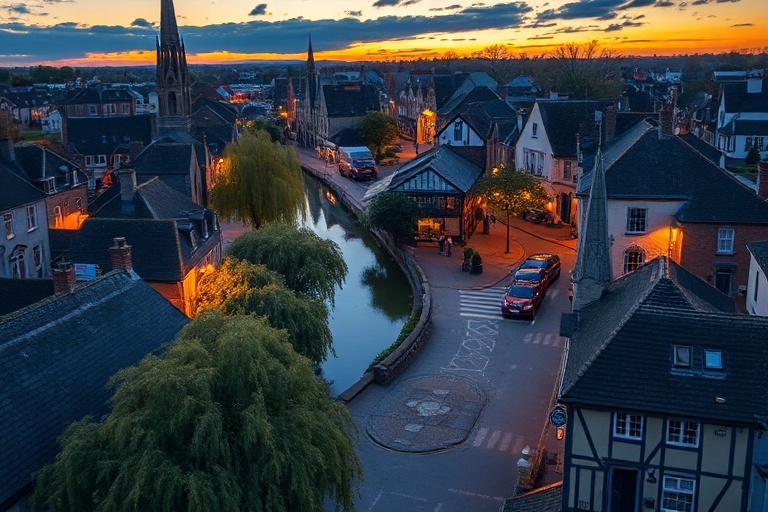
chippenham
Chippenham: A Historic Market Town with Global Connections
Tucked between rolling hills and the River Avon, Chippenham is more than just a postcard-perfect English town. With roots stretching back to Saxon times, this Wiltshire gem has evolved from a minor trading post into a vibrant community that balances heritage with modernity. Its strategic position on ancient trade routes once linked it to London and Bristol, while today it thrives as a commuter hub for nearby cities like Bath and Swindon. What makes Chippenham unique isn’t just its cobbled streets or weekly markets—it’s how this unassuming town reflects broader global trends in urban development, transportation, and cultural preservation.
The Town’s Enduring Legacy: From Saxon Roots to Modern Growth
Archaeological evidence suggests Chippenham was settled as early as the 7th century, when it served as a key stopping point for travelers moving between Salisbury Plain and the Cotswolds. By the Middle Ages, it had earned a royal charter, granting it the right to hold weekly markets—a tradition that continues every Friday and Saturday in the heart of the town. The name itself, derived from Old English, hints at its agricultural past: “Ceap” means market, while “ham” refers to a settlement, painting a picture of a place built on commerce.
Unlike many British towns that faded into obscurity, Chippenham adapted. The arrival of the Great Western Railway in the 1840s transformed it into a critical link in the UK’s expanding rail network. Stations like Chippenham Railway Station, still in use today, became gateways for goods and people, connecting rural Wiltshire to the industrial powerhouses of the North. This infrastructure legacy is evident in the town’s architecture—Victorian terraces stand alongside medieval timber-framed buildings, a silent testament to its layered history.
Economic Evolution: A Microcosm of Global Shifts
In the 20th century, Chippenham’s economy shifted from agriculture and light industry to a more diversified model. Today, it’s known for its strong employment in sectors like advanced manufacturing, technology, and professional services. Companies such as Renishaw, a global leader in engineering technologies, and Spirax Sarco, a specialist in steam system solutions, have established headquarters or significant operations here. This isn’t coincidental—it mirrors a global trend where smaller towns become magnets for innovation, offering lower costs and high-quality living compared to major cities.
The town’s proximity to the M4 motorway and proximity to London (just 90 minutes by train) makes it an attractive option for businesses looking to balance accessibility with affordability. This positioning has drawn comparisons to other “commuter towns” that have seen rapid growth in recent decades, from the outskirts of Paris to the suburbs of Tokyo. Yet Chippenham retains a distinctly local flavor, with independent shops like the Pig & Fiddle pub and the weekly farmers’ market drawing both locals and visitors seeking authenticity.
This blend of global economic forces and local identity is a hallmark of modern urban development. While some towns struggle to compete with megacities, Chippenham has found a niche by leveraging its strengths: a skilled workforce, strategic location, and a high quality of life that’s increasingly rare in today’s fast-paced world.
Cultural Crossroads: Festivals, Arts, and Community Spirit
Chippenham’s cultural scene is a vibrant mix of tradition and innovation. The town hosts several annual events that draw visitors from across the UK, including the Chippenham Folk Festival, which celebrates the town’s musical heritage with performances ranging from Morris dancing to contemporary folk artists. Meanwhile, the Chippenham Literature Festival attracts authors from around the globe, turning the town into a temporary hub for literary debate and discussion.
This focus on arts and culture isn’t just about entertainment—it’s a deliberate strategy to foster community cohesion and economic resilience. Studies show that towns with active cultural scenes tend to have higher levels of civic engagement and lower rates of social isolation. Chippenham’s commitment to these events reflects a broader global movement where small towns are redefining themselves as cultural destinations rather than just places to live or work.
The town’s museums, like the Chippenham Museum & Heritage Centre, play a crucial role in preserving its history while making it accessible to new generations. Exhibits on everything from Roman artifacts to the town’s role in World War II highlight Chippenham’s place in the grand narrative of British history. These institutions serve as bridges between past and present, ensuring that the town’s identity isn’t lost amid rapid change.
A Global Perspective: What Chippenham Teaches Us
Chippenham may not be on the cover of international travel magazines, but it offers valuable lessons for urban planners, economists, and cultural theorists worldwide. Its success in balancing growth with heritage provides a case study in sustainable development—one that prioritizes community over sprawl, authenticity over homogenization. In an era where cities like London and New York face housing crises and cultural erosion, towns like Chippenham demonstrate that there’s another way forward.
Moreover, Chippenham’s story reflects broader global trends. As remote work becomes more common, secondary cities and towns are experiencing a renaissance. People are trading urban congestion for quieter lives without sacrificing access to amenities or opportunities. This shift is reshaping economies from the United States to Australia, where places like Portland, Oregon, or Melbourne’s outer suburbs are seeing similar growth patterns.
Yet Chippenham’s challenges are also instructive. Like many towns, it grapples with issues like housing affordability and the need to modernize infrastructure without losing its character. The debate over the town’s future—whether to embrace high-speed rail links or preserve green spaces—mirrors conversations happening in cities from Berlin to Bangalore. How Chippenham navigates these decisions could set a precedent for others facing similar choices.
Looking Ahead: Chippenham in the 21st Century
The town’s future will likely be shaped by three key factors: connectivity, sustainability, and cultural identity. With plans to improve public transport and broadband infrastructure, Chippenham is positioning itself as a town ready for the digital age. Meanwhile, initiatives to promote green spaces and reduce carbon emissions align with global efforts to combat climate change. These moves aren’t just about keeping up with trends—they’re about ensuring that Chippenham remains a desirable place to live for decades to come.
For visitors, Chippenham offers a glimpse into the heart of England—a place where history and modernity coexist. Whether you’re exploring its medieval lanes, sampling local ales at a 17th-century pub, or attending a folk concert under the stars, the town invites you to slow down and savor its unique charm. In a world that often prioritizes speed over substance, Chippenham reminds us of the enduring value of place.
As the town continues to evolve, one thing is certain: its story is far from over. From its Saxon beginnings to its role in the modern economy, Chippenham proves that small towns can punch above their weight—both locally and globally. For those willing to look beyond the headlines, it’s a place worth discovering.