Eclipse Solar Guide: Types, Safety, and When to See the Next One
“`html
Understanding the Eclipse Solar: Science, Safety and Spectacle
The eclipse solar is one of nature’s most dramatic celestial events, where the moon passes between the Earth and the sun, temporarily blocking out sunlight. These rare occurrences have fascinated humans for millennia, inspiring myths, scientific breakthroughs, and communal viewing experiences. Whether you’re an amateur astronomer, a curious observer, or someone planning for the next visible eclipse in your area, understanding the mechanics, safety, and cultural significance of solar eclipses adds depth to the experience.
The Science Behind an Eclipse Solar
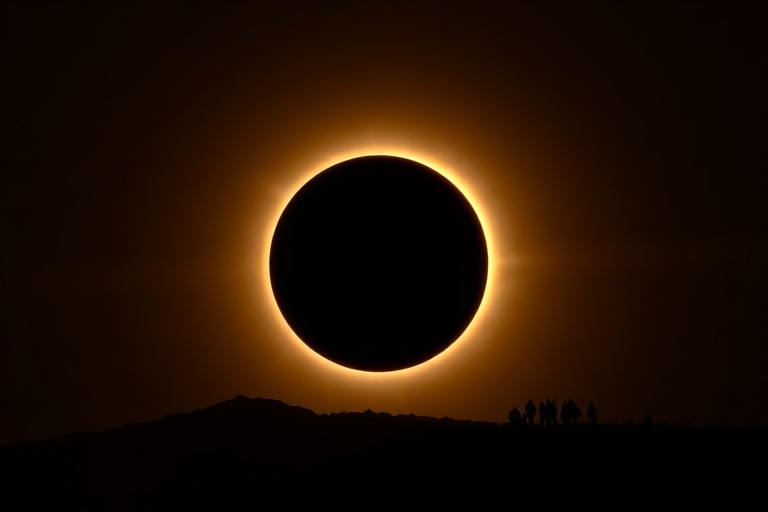
A solar eclipse occurs when the moon’s orbit aligns perfectly with the sun and Earth, casting a shadow on our planet. There are three main types: total, partial, and annular. During a total eclipse solar, the moon completely covers the sun, revealing the sun’s corona—a wispy outer atmosphere visible only during totality. A partial eclipse solar happens when only part of the sun is obscured, while an annular eclipse occurs when the moon is too far from Earth to cover the sun entirely, leaving a bright “ring of fire” visible around the edges.
The geometry of an eclipse solar is precise. The moon’s average distance from Earth is about 238,855 miles, but its orbit is elliptical, which is why we experience both total and annular eclipses. The alignment must occur near a node—the point where the moon’s orbit crosses the plane of Earth’s orbit around the sun. This doesn’t happen every month because the moon’s orbital plane is tilted by about 5 degrees relative to Earth’s orbit, so most new moons pass above or below the sun from our perspective.
Solar eclipses are predictable due to the regularity of celestial mechanics. NASA’s eclipse predictions, based on the science of orbital dynamics, show that total eclipses occur somewhere on Earth roughly every 18 months. However, seeing a total eclipse solar from any single location is rare—on average, it happens once every 375 years for a given spot. This rarity makes each event a unique opportunity for observation and study.
Types of Eclipse Solar Events
Not all eclipses are the same. The type you see depends on the distances between the Earth, moon, and sun, as well as the observer’s location. Below is a breakdown of the three primary types:
- Total Eclipse Solar: The moon completely covers the sun. This can only occur when the moon is close enough to Earth in its orbit to appear large enough to block the solar disk. Totality lasts only a few minutes but offers a breathtaking view of the solar corona, prominences, and sometimes even solar flares.
- Partial Eclipse Solar: The moon covers only part of the sun. This happens when the alignment is imperfect, and the moon’s shadow (the penumbra) passes over only a portion of Earth. Partial eclipses are more common but less dramatic than total eclipses.
- Annular Eclipse Solar: The moon is too far from Earth to cover the sun completely, creating a visible ring of sunlight. This occurs during the moon’s apogee (farthest point in orbit) and results in a striking “ring of fire” effect. Annularity can last up to 12 minutes, longer than totality.
There’s also a rare hybrid eclipse, which shifts between total and annular along different points of its path due to Earth’s curvature. These events are infrequent and occur only a few times per century.
For observers, the experience of an eclipse solar varies dramatically by type. A total eclipse is often described as a surreal, almost spiritual event—day turns to night, temperatures drop, and animals behave as if dusk has arrived. In contrast, an annular eclipse maintains daylight, though with a distinct dimming and a noticeable change in the quality of light. Partial eclipses, while less visually stunning, offer a gradual progression that can be observed safely with proper equipment.
How to Safely Observe an Eclipse Solar
Viewing a solar eclipse requires caution. The sun’s intense rays can cause permanent eye damage, even during a partial eclipse. Never look directly at the sun without proper eye protection. Standard sunglasses, binoculars, or telescopes without solar filters are insufficient and dangerous.
To observe safely, use ISO-certified solar viewing glasses that meet the international standard ISO 12312-2. These glasses block harmful ultraviolet and infrared radiation. Ensure they are free from scratches or damage before use. Another safe method is using a solar filter on telescopes or cameras. For those without equipment, a simple pinhole projector can project an image of the eclipse onto a surface, allowing indirect viewing.
During totality—the brief phase of a total eclipse when the sun is fully covered—it is safe to look at the eclipse with the naked eye. However, this window lasts only a few minutes, and observers must put their protective glasses back on as soon as the sun begins to reappear.
Photographing an eclipse solar requires additional precautions. Camera sensors can be damaged by direct sunlight, so a solar filter must be attached to the lens. Using a tripod and remote shutter release can help capture sharp images, especially during totality when the corona is visible. For those new to astrophotography, practicing with the moon or sun (when not in eclipse) beforehand is advisable.
Cultural and Historical Significance of Eclipses
Throughout history, eclipse solar events have been interpreted in diverse ways across cultures. Ancient civilizations often saw them as omens or divine messages. The Chinese, for example, believed a solar eclipse occurred when a celestial dragon devoured the sun, prompting drumming and fireworks to scare the creature away. In Hindu mythology, the demon Rahu was said to swallow the sun during eclipses, requiring prayers and rituals to restore light.
Eclipses have also played a crucial role in scientific discovery. The total eclipse solar of May 29, 1919, provided experimental confirmation of Einstein’s theory of general relativity. British astronomer Arthur Eddington observed the bending of starlight near the sun during totality, offering empirical support for Einstein’s predictions and revolutionizing modern physics.
The 1868 total eclipse solar allowed astronomers to observe a previously unknown spectral line in the sun’s chromosphere, leading to the discovery of helium—named after the Greek word for the sun, “helios.” This element was later found on Earth, underscoring how celestial events drive terrestrial science.
In modern times, eclipse solar gatherings have become social phenomena. Millions travel to the path of totality to witness these events, boosting local economies and fostering a sense of global community. The 2017 total eclipse across the United States drew over 20 million people to viewing locations, making it one of the most-watched celestial events in history. Social media amplifies the experience, with live streams and shared photographs connecting observers across continents.
When and Where to See the Next Eclipse Solar
Eclipse solar events are predictable with high precision. NASA’s eclipse prediction maps and the Space Science section on Dave’s Locker provide detailed timelines for upcoming eclipses. The next total eclipse solar will occur on April 8, 2024, crossing North America from Mexico through the United States and into Canada. Cities like Dallas, Indianapolis, Cleveland, and Buffalo lie within the path of totality, offering prime viewing opportunities.
For annular eclipses, the next visible one from North America will be on October 14, 2023, with a path stretching from Oregon to Texas. Observers in these regions should prepare early, as accommodations and travel routes often book months in advance.
Tracking an eclipse solar involves understanding the path of totality or annularity, the timing of each phase, and local weather conditions. Clear skies are essential for optimal viewing, so meteorological forecasts play a crucial role in planning. Mobile apps like Eclipse Safari or NASA’s Eyes provide real-time updates and interactive maps to help observers find the best vantage points.
For those outside the path of totality, partial eclipses are still visible, though less dramatic. These events serve as a reminder of the scale and precision of our solar system and offer a chance to witness the dynamic relationship between Earth, moon, and sun.