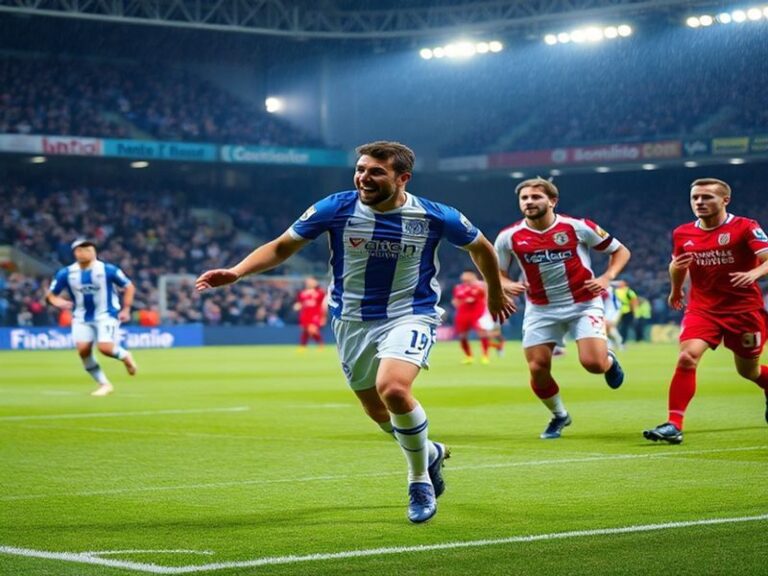
Elversberg’s Rise: How a Small Club is Redefining German Football
“`html
From Saarbrücken’s Shadow to National Attention
For decades, SV Elversberg existed in the quiet corners of German football, overshadowed by the glittering clubs of the Bundesliga and even its more famous neighbors like 1. FC Saarbrücken. Based in the small town of Spiesen-Elversberg in the Saarland region near the French border, the club’s history was one of steady progress rather than sudden fame. Yet, in recent years, Elversberg has transformed from a regional underdog into a team that now commands attention far beyond its usual audience.
The club’s rise is not merely a story of sporting success—it reflects broader trends in European football, where smaller clubs leverage modern strategies, community engagement, and smart financial management to punch above their weight. Elversberg’s journey from the Regionalliga Südwest to the 2. Bundesliga in 2023 was a milestone that signaled a new chapter, one that has captivated fans and analysts alike.
The Infrastructure Behind the Climb
One of the most critical factors in Elversberg’s ascent has been its investment in infrastructure. Unlike many clubs that struggle with outdated facilities, Elversberg has prioritized modernizing its stadium and training grounds. The Waldstadion Kaiserlinde, though modest in capacity, has undergone significant upgrades to meet professional standards. The club’s commitment to infrastructure extends beyond the pitch; administrative offices and youth academies have also received attention, ensuring long-term stability.
This focus on infrastructure is part of a deliberate strategy to attract talent and create an environment where players can develop both technically and personally. The club’s academy has become a pipeline for young players seeking professional opportunities, a model that mirrors successful clubs in smaller leagues across Europe. By blending ambition with pragmatism, Elversberg has positioned itself as a sustainable project rather than a fleeting sensation.
The Role of Community and Identity
Football clubs thrive when they are deeply connected to their communities, and Elversberg embodies this principle. The club’s fan base, though not massive, is fiercely loyal, creating an atmosphere that blends tradition with modernity. The Saarland region, with its unique cultural identity shaped by its proximity to France and Germany, has fostered a distinct football culture in Elversberg. Fans often describe the club as a symbol of local pride, a place where players are seen as neighbors first and athletes second.
This connection to the community has also translated into financial support. Elversberg’s crowdfunding campaigns and local sponsorships have played a crucial role in funding transfers and infrastructure projects. The club’s ability to mobilize its supporters reflects a broader shift in football, where authenticity and transparency are increasingly valued over corporate branding.
Global Trends and the Elversberg Model
Elversberg’s success is not an isolated phenomenon but part of a global trend where smaller clubs defy expectations through innovation and strategic planning. Clubs like Union Berlin in Germany and Brentford in England have demonstrated that financial prudence and smart recruitment can lead to sustained success. Elversberg’s model, however, distinguishes itself through its emphasis on long-term development rather than short-term gains.
In an era where financial fair play regulations are tightening and wealth disparities in football grow ever wider, clubs like Elversberg offer a counter-narrative. Their approach prioritizes stability, community engagement, and player development over reckless spending. This philosophy resonates in an age where fans increasingly question the ethics of modern football, where billionaire owners and inflated transfer fees often overshadow the soul of the game.
Comparisons with Other Rising Clubs
To understand Elversberg’s place in the footballing world, it’s helpful to compare it with other clubs that have risen from relative obscurity to prominence:
- Union Berlin (Germany): Known for its passionate fan culture and rise from the third tier to the Bundesliga, Union Berlin’s journey is a testament to the power of community-driven football.
- Brentford (England): The Bees have leveraged data analytics and shrewd recruitment to climb from the Championship to the Premier League, proving that innovation can bridge gaps in resources.
- Gent (Belgium): This club has become a hub for young talent in Belgium, blending academy development with smart transfers to compete domestically and in European competitions.
- Sporting CP B (Portugal): While not a traditional club, Sporting’s B team has demonstrated how structured development can produce world-class talent without the need for massive spending.
Each of these clubs shares a common thread with Elversberg: a refusal to accept the status quo. They have built their success on principles that prioritize sustainability, community, and smart decision-making over quick fixes. In doing so, they challenge the narrative that only the richest clubs can achieve greatness.
Challenges and the Path Forward
Despite its progress, Elversberg faces challenges that are emblematic of clubs in similar positions. The financial pressures of professional football are relentless, and the club must balance its ambitions with fiscal responsibility. Competing in the 2. Bundesliga, where clubs like Hamburger SV and Fortuna Düsseldorf boast larger budgets and fan bases, is no small feat. The challenge for Elversberg will be to maintain its identity while navigating the complexities of higher-level football.
Another hurdle is the club’s relatively small stadium capacity. While upgrades have been made, the Waldstadion Kaiserlinde remains limited in size compared to the cavernous arenas of bigger clubs. This constraint presents both a challenge and an opportunity—Elversberg can focus on creating an intimate, electric atmosphere that larger clubs cannot replicate, but it must also find ways to grow its revenue streams to fund future ambitions.
The club’s leadership has acknowledged these challenges, emphasizing the need for patience and strategic planning. The goal is not to rush into the Bundesliga but to establish Elversberg as a permanent fixture in the second tier, gradually building a foundation for future success. This approach requires buy-in from fans, players, and stakeholders, all of whom must share a long-term vision.
A Model for the Future?
Elversberg’s story is more than a footballing fairy tale—it is a case study in how clubs can thrive in an increasingly commercialized sport. By focusing on infrastructure, community, and sustainable growth, Elversberg has carved out a unique identity in German football. Its journey offers lessons for clubs across Europe and beyond, particularly those operating outside the financial might of the sport’s elite.
The club’s success also highlights the importance of football as a cultural touchstone. In an age where global brands and social media dominate the conversation, Elversberg reminds us that football’s heart still beats strongest in its local communities. Its rise is a celebration of what can be achieved when ambition is tempered by authenticity.
As Elversberg continues to make its mark, the club’s story will be watched closely by those who believe in the power of football to unite, inspire, and uplift. Whether it ultimately reaches the Bundesliga or remains a perennial contender in the 2. Bundesliga, Elversberg has already cemented its place as a club that matters—not just for its results, but for its ethos.
For fans of the game, Elversberg’s journey is a reminder that football’s magic is not confined to the biggest stages. It can be found in the small towns, the local derbies, and the unwavering belief that greatness is not measured solely in trophies, but in the passion of those who make the game what it is.