Nestled in the foothills of the Ore Mountains in Saxony, Germany, Freiberg stands as a testament to the country’s rich industrial heritage and evolving cultural landscape. With a history stretching back to the 12th century, this town has transformed from a silver mining boomtown into a vibrant university city and UNESCO World Heritage Site contender. Its well-preserved medieval architecture, innovative technical university, and thriving cultural scene make it a compelling destination for travelers and scholars alike.
The Silver Boom That Built Freiberg
Freiberg’s origins trace back to 1168 when silver was discovered in the nearby Schwartzwald region. This discovery triggered one of Europe’s first major mining booms, attracting prospectors and settlers from across the continent. By the early 13th century, Freiberg had become a free imperial city, enjoying significant autonomy and economic prosperity. The town’s wealth was so substantial that it minted its own coins and funded the construction of impressive Gothic buildings that still define its skyline today.
The mining tradition continued for centuries, with Freiberg serving as the center of Saxony’s mining industry. The town’s Technical University, founded in 1765 as the Freiberg Mining Academy, remains one of the world’s oldest educational institutions dedicated to mining and metallurgy. Today, visitors can explore this legacy through the University’s historic campus and the nearby Terra Mineralia mineral collection, which houses one of the world’s finest gem and mineral exhibitions.
Architectural Treasures of the Ore Mountains
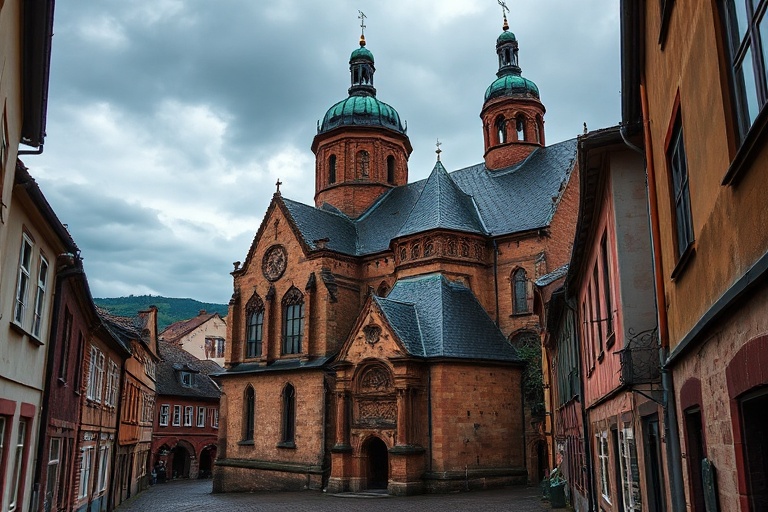
Freiberg’s historic center is a masterclass in Saxon Renaissance and Baroque architecture. The town’s skyline is dominated by the Freiberg Cathedral, a stunning Gothic structure completed in 1512 that features intricate vaulting and a famous Silbermann organ. Adjacent to the cathedral, the Domherrenhof courtyard showcases beautifully preserved Renaissance buildings that once housed the cathedral’s clergy.
The town’s historic marketplace, surrounded by colorful merchant houses, serves as the heart of Freiberg’s social life. Among these buildings, the Alte Münze (Old Mint) stands out with its ornate façade and rich history. The town also boasts an impressive network of underground mining tunnels, including the Reiche Zeche mine, which offers guided tours that transport visitors back to the era of medieval mining techniques.
UNESCO Recognition and Preservation Efforts
Freiberg’s cultural significance has not gone unnoticed by international organizations. The town is part of the Montanregion Erzgebirge, a UNESCO World Heritage Site proposal that recognizes the region’s outstanding universal value as a historic mining landscape. This designation has spurred increased efforts to preserve Freiberg’s architectural heritage while developing sustainable tourism practices.
Local preservationists have worked diligently to restore buildings damaged during World War II and the post-war era. The recent renovation of the Petriplatz area transformed a neglected urban space into a vibrant public square, demonstrating how historic preservation can coexist with modern urban development.
Freiberg Today: Education, Innovation, and Culture
The Technical University of Freiberg remains the town’s economic and intellectual engine. With over 4,000 students enrolled in programs ranging from geoscience to mechanical engineering, the university attracts talent from around the world. Its research initiatives focus on sustainable mining practices, materials science, and environmental technologies, positioning Freiberg at the forefront of Germany’s green economy transition.
Beyond academia, Freiberg has cultivated a thriving cultural scene. The Freiberg Puppet Theater is one of Germany’s oldest and most respected, while the Stadttheater Freiberg hosts a diverse program of performances. The town’s annual Freiberg Christmas Market draws visitors from across Saxony with its traditional crafts, local delicacies, and festive atmosphere.
Culinary Traditions and Local Flavors
Freiberg’s culinary heritage reflects its mining past and agricultural surroundings. Traditional Saxon dishes like Quarkkeulchen (potato pancakes with quark) and Sauerbraten (marinated pot roast) feature prominently in local restaurants. The town also has a strong beer-brewing tradition, with several microbreweries producing craft beers using historic recipes.
For those seeking a modern dining experience, Freiberg’s Kunsthofpassage offers a collection of artisanal food vendors and cafes in a revitalized industrial space. This creative hub exemplifies how the town is balancing its historic identity with contemporary urban development.
Exploring Freiberg: A Visitor’s Guide
Freiberg’s compact size makes it ideal for walking tours, but its rich history requires some strategic planning to fully appreciate. Visitors should begin at the Freiberg Cathedral and explore the surrounding historic center on foot. The City Museum provides excellent context for understanding the town’s development, while the Terra Mineralia exhibition offers a dazzling display of geological wonders.
For those interested in the region’s mining heritage, the Mining Museum and the guided tours of Reiche Zeche mine provide fascinating insights into the technical challenges and social history of underground mining. The nearby Muldental Railway offers scenic views of the Ore Mountains landscape.
Getting There and Getting Around
Freiberg is well-connected to Germany’s rail network, with direct connections to Dresden (45 minutes), Leipzig (1 hour), and Berlin (2 hours). The town’s central location makes it an excellent base for exploring the Ore Mountains region. Once in Freiberg, the public transportation system is efficient and bike-friendly, with numerous rental options available.
For visitors driving from Dresden, the A14 and A4 highways provide easy access. Parking is available at several locations on the outskirts of the historic center, with shuttle services operating during peak tourist seasons.
Conclusion: Why Freiberg Matters
Freiberg represents a rare convergence of history, innovation, and culture in modern Germany. Its well-preserved medieval architecture stands in remarkable harmony with its world-class technical university and vibrant cultural institutions. Unlike many European towns that have sacrificed their heritage for modern development, Freiberg has found a way to honor its past while embracing the future.
The town’s ongoing efforts to preserve its mining heritage while developing sustainable technologies demonstrate a thoughtful approach to urban development. Freiberg’s story reminds us that historic towns can evolve without losing their essential character, serving as both living museums and dynamic communities.
For travelers seeking an authentic German experience beyond the typical tourist trail, Freiberg offers an unexpected delight. Its combination of historic charm, intellectual rigor, and cultural vitality makes it a destination that rewards curiosity and exploration. Whether you’re drawn by the allure of medieval architecture, the promise of innovative research, or simply the chance to experience a genuine Saxon town, Freiberg delivers an experience that lingers long after the visit ends.