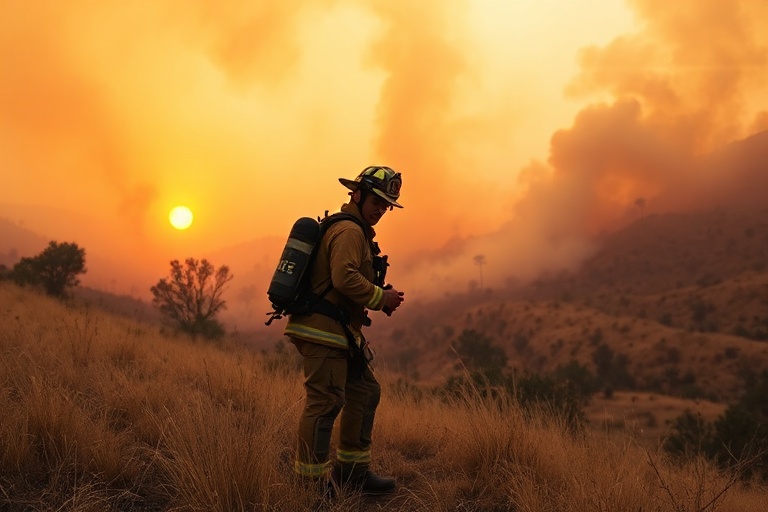
How CAL FIRE Protects California: Mission, Impact, and Future Challenges
“`html
California’s Firefighting Force: Understanding CAL FIRE’s Role and Impact
California’s landscape has long been shaped by wildfires, but the organization tasked with defending communities, ecosystems, and property from these disasters operates with a level of sophistication and scale that few fully grasp. The California Department of Forestry and Fire Protection, universally known as CAL FIRE, stands as one of the largest and most advanced wildfire management agencies in the world. Its reach extends beyond mere firefighting—it shapes land management policies, drives emergency response innovation, and influences statewide resilience efforts.
What Is CAL FIRE? Structure, Mission, and Reach
Established in 1927, CAL FIRE has grown from a small forest protection unit into a statewide powerhouse with over 8,000 employees, including more than 3,000 seasonal and permanent firefighters. The agency operates under the California Natural Resources Agency and functions as both a fire department and a forestry service. Its dual mandate—to suppress wildfires and manage state forests—reflects a balance between immediate emergency response and long-term environmental stewardship.
CAL FIRE is organized into 21 operational units across California’s 58 counties, each tailored to the unique fire risks of its region. These units are supported by a statewide dispatch system, aviation resources including air tankers and helicopters, and specialized teams such as the California Incident Command System (ICS) and the California Urban Search and Rescue Task Force.
Unlike local fire departments, CAL FIRE maintains statewide jurisdiction for wildfire response, especially during declared fire emergencies. It also plays a critical role in fire prevention through public education, defensible space inspections, and prescribed fire programs. In essence, CAL FIRE is not just a responder—it’s a guardian of California’s future.
How CAL FIRE Operates: From Prevention to Suppression
CAL FIRE’s work unfolds across four interconnected phases: prevention, preparedness, response, and recovery. Each phase is supported by data, technology, and interagency collaboration, making the agency a model for wildfire management globally.
The prevention phase is proactive and ongoing. CAL FIRE conducts Defensible Space Inspections in high-risk areas, enforcing state laws that require homeowners to clear vegetation within 100 feet of structures. It also promotes community education through programs like Ready for Wildfire, which teaches residents how to prepare their homes and families for fire season. These efforts have measurable impact—studies show that homes with adequate defensible space are far more likely to survive wildfires.
Preparedness involves training, equipment, and planning. CAL FIRE maintains a fleet of over 800 fire engines, 23 air tankers, and a network of helicopters stationed strategically across the state. Firefighters undergo rigorous training, including the California Firefighter Joint Apprenticeship Program, ensuring a skilled and consistent workforce. The agency also develops Incident Action Plans for high-risk regions, outlining evacuation routes, resource staging areas, and mutual aid agreements with neighboring states and federal agencies like the U.S. Forest Service.
During response, CAL FIRE leads or supports fire suppression efforts, often coordinating with local, state, and federal partners. In 2023 alone, CAL FIRE responded to over 7,500 wildfires, burning more than 250,000 acres. Its ability to rapidly deploy resources—thanks to a real-time Computer Aided Dispatch (CAD) system—helps contain fires before they escalate into catastrophic events.
Recovery efforts focus on ecosystem restoration and community support. After a major fire, CAL FIRE works with partners to assess damage, replant native species, and repair critical infrastructure. It also assists displaced residents through recovery programs, ensuring that communities can rebuild with greater resilience.
Key Aspects of CAL FIRE’s Operation
- Statewide Jurisdiction: Primary responder for wildfires in California’s unincorporated areas and rural communities.
- Dual Role: Combines fire suppression with forest management and reforestation.
- Public Education: Runs programs like Ready for Wildfire to reduce preventable fire starts.
- Technology Integration: Uses satellite monitoring, drones, and predictive modeling to track fire behavior.
- Mutual Aid Network: Relies on regional and national agreements to share resources during large-scale incidents.
The Broader Impact: How CAL FIRE Shapes California’s Future
CAL FIRE’s influence extends far beyond the fire line. By managing over 31 million acres of state forestland, it plays a central role in California’s climate strategy. Healthy forests sequester carbon, support biodiversity, and regulate water cycles—making forest management a key tool in combating climate change. CAL FIRE’s use of prescribed fire—carefully controlled burns to reduce fuel loads—has increased by 500% in the past decade, reflecting a shift toward proactive land management.
The agency also drives innovation in emergency response. CAL FIRE was among the first to adopt unmanned aerial systems (drones) for fire mapping and reconnaissance, and it has pioneered the use of predictive fire modeling software to simulate fire spread under different weather conditions. These tools help incident commanders make faster, more informed decisions, potentially saving lives and resources.
Economically, CAL FIRE’s work has a ripple effect. Wildfires cost California billions annually in suppression, recovery, and economic losses. By reducing fire severity and duration, the agency helps protect industries like tourism, agriculture, and real estate—sectors that contribute hundreds of billions to the state’s economy. For example, the 2020 wildfire season resulted in over $12 billion in damages, but proactive prevention could mitigate future losses.
Yet, challenges remain. Climate change is intensifying fire seasons, with hotter temperatures, longer dry spells, and more extreme weather events. CAL FIRE is adapting, but the scale of the crisis demands systemic solutions—including housing policies that reduce development in fire-prone areas and energy infrastructure upgrades to prevent power-line ignitions.
Looking Ahead: CAL FIRE’s Evolving Role in a Changing Climate
As California grapples with a new era of megafires, CAL FIRE is redefining its approach. The agency has increased its budget to $2.8 billion in 2024, with much of the funding directed toward prevention and workforce development. It has also expanded partnerships with Indigenous communities, recognizing traditional fire practices as a sustainable alternative to high-intensity wildfires.
One of CAL FIRE’s most promising initiatives is the California Forest Management Task Force, which brings together state agencies, tribes, and private landowners to restore forests at scale. By reintroducing cultural burning and mechanical thinning, the task force aims to restore fire-resilient landscapes across millions of acres.
Looking forward, CAL FIRE’s success will depend on collaboration—with local governments, federal agencies, researchers, and communities. The agency’s ability to integrate science, policy, and public engagement positions it as a leader in wildfire management. Yet, its ultimate impact will be measured not just in acres saved, but in the resilience of California’s people, landscapes, and economy.
As climate pressures mount, CAL FIRE stands at the intersection of crisis and innovation. Its work is a reminder that wildfire is not an enemy to be defeated, but a force to be understood and managed. With continued investment and foresight, CAL FIRE can help steer California toward a safer, more sustainable future.
For more insights into how wildfires are reshaping California’s environment and communities, visit our News and Analysis sections on Dave’s Locker.