unión europea
“`html
The European Union: A Complex Tapestry of Cooperation and Change
The European Union stands as one of the most ambitious political and economic projects of the modern era. Since its inception in the aftermath of World War II, it has grown from six founding members to 27 nations, creating a single market that spans much of the continent. This union is not merely an economic alliance but a unique experiment in shared sovereignty, where member states voluntarily cede certain powers to supranational institutions in exchange for collective strength and stability.
The EU’s structure is designed to balance the interests of diverse nations while promoting peace, prosperity, and democratic values. At its core lies the principle of subsidiarity, ensuring decisions are made as closely as possible to the citizens they affect. Yet, this intricate system often faces scrutiny and debate, particularly when crises arise or when national interests clash with collective goals. Understanding the EU requires examining its institutions, policies, and the ongoing challenges that test its cohesion.
The Pillars of the European Union: Institutions and Decision-Making
The EU operates through a system of interconnected institutions, each playing a distinct role in governance. The European Commission acts as the executive arm, proposing legislation and enforcing EU laws. It consists of commissioners from each member state, though they are bound to serve the union’s interests rather than their home countries. This technocratic body is often criticized for its perceived lack of democratic accountability, a tension that has fueled debates about reform.
The European Parliament, directly elected by EU citizens, provides democratic legitimacy to the union’s decisions. Members of the European Parliament (MEPs) debate and amend legislation, particularly in areas like budgets and international agreements. Meanwhile, the Council of the European Union represents the governments of member states, where ministers from each country negotiate and approve laws. This dual system ensures that both supranational and intergovernmental perspectives shape EU policy.
The European Court of Justice (ECJ) serves as the judicial authority, interpreting EU law and ensuring its uniform application across member states. Its rulings often have far-reaching implications, from labor rights to environmental regulations. These institutions work in tandem, but their interplay is not always seamless. Conflicts between the Commission, Parliament, and Council can stall progress, highlighting the challenges of consensus-based governance.
For those interested in how these institutions collaborate on policy, exploring the Politics section on Dave’s Locker provides deeper insights into the decision-making processes shaping the EU’s future.
Economic Integration and the Euro: Benefits and Strains
One of the EU’s most tangible achievements is the creation of a single market, which allows for the free movement of goods, services, capital, and people. This integration has driven economic growth, fostering competition and innovation across borders. The euro, adopted by 20 of the 27 member states, symbolizes this unity, eliminating exchange-rate risks and simplifying trade. However, the eurozone’s design has also exposed vulnerabilities, particularly during financial crises.
The sovereign debt crisis of the early 2010s laid bare the flaws in the euro’s architecture. Countries like Greece, Spain, and Italy struggled with unsustainable debt levels, revealing the lack of fiscal solidarity among members. Bailouts came with stringent austerity measures, deepening recessions and sparking social unrest. The crisis prompted reforms, including the creation of the European Stability Mechanism (ESM) to provide financial assistance, but it also exposed the need for deeper integration, such as a banking union or common fiscal policies.
The economic disparities between northern and southern Europe remain a persistent challenge. While Germany and the Netherlands thrive, nations in southern Europe often grapple with higher unemployment and slower growth. The COVID-19 pandemic further tested the eurozone’s resilience. The EU’s response, including the €750 billion recovery fund, marked a historic shift toward joint borrowing and signaled a new era of solidarity. Yet, the long-term sustainability of such measures continues to spark debate.
The EU’s economic model also faces external pressures, from global trade tensions to the rise of protectionism. The United States and China, the EU’s largest trading partners, have increasingly adopted policies that prioritize domestic industries, complicating the union’s ability to maintain open markets. Brexit, the UK’s departure from the EU, served as a stark reminder of the risks of fragmentation in an interconnected world.
Political Challenges: Brexit, Populism, and Democratic Deficits
Brexit was a watershed moment for the EU, demonstrating both the union’s resilience and its vulnerabilities. The 2016 referendum, in which 52% of UK voters opted to leave, sent shockwaves through Brussels and beyond. The subsequent negotiations laid bare the complexities of disentangling a member state from the EU’s legal and economic frameworks. While the UK’s departure reduced the union’s size, it also removed a historically influential member that often shaped EU policy toward free markets and Atlanticism.
Brexit also emboldened populist movements across Europe, many of which advocate for similar referendums or reforms that challenge the EU’s authority. Parties like France’s National Rally, Italy’s League, and Germany’s Alternative for Germany have gained traction by framing the EU as an undemocratic bureaucracy that undermines national sovereignty. Their rise has forced mainstream parties to adopt more Eurosceptic rhetoric, complicating efforts to deepen integration.
The EU’s democratic deficit is a recurring criticism, with many arguing that power is concentrated in the hands of unelected officials in Brussels. The European Parliament, while directly elected, often struggles to capture the public’s imagination, with voter turnout in European elections consistently lower than in national polls. This disconnect has fueled calls for reform, including proposals to increase transparency, reduce bureaucracy, and empower citizens through participatory democracy.
Yet, the EU has also taken steps to address these concerns. The Conference on the Future of Europe, launched in 2021, invited citizens to debate the union’s priorities, from climate change to digital rights. While the initiative’s impact remains to be seen, it reflects a growing recognition that the EU must do more to engage its people and justify its existence in an era of rising nationalism.
The EU’s Global Role: Soft Power and Geopolitical Ambitions
Beyond its internal dynamics, the EU plays a significant role on the global stage, often leveraging its economic and diplomatic influence to promote its values. The union is a major donor of development aid, providing billions annually to regions like Africa, the Middle East, and Asia. Its trade agreements, such as the one with Canada (CETA) and Japan (EPA), aim to set global standards for labor rights, environmental protections, and digital commerce.
The EU’s approach to foreign policy is rooted in multilateralism, with a strong emphasis on international institutions like the United Nations and the World Trade Organization. This stance has positioned the EU as a counterbalance to unilateralism, particularly in contrast to the policies of former US President Donald Trump, who frequently clashed with Brussels over issues like climate change and Iran sanctions. However, the EU’s ability to project power is limited by its lack of a unified military and the divergent foreign policy priorities of its member states.
Climate change is one area where the EU has demonstrated global leadership. The European Green Deal, unveiled in 2019, aims to make the EU the first climate-neutral continent by 2050. The plan includes ambitious targets for reducing greenhouse gas emissions, investing in renewable energy, and transitioning to a circular economy. While critics argue the timeline is unrealistic, the deal has set a precedent for other regions to follow.
The EU’s response to Russia’s invasion of Ukraine in 2022 further underscored its geopolitical ambitions. In the face of aggression, the EU swiftly imposed sanctions, provided military aid to Ukraine, and pledged to reduce its dependence on Russian energy. This crisis highlighted the union’s potential to act as a unified bloc, even as it revealed divisions over issues like defense spending and migration.
Key Areas of EU Global Influence
- Trade: The EU is the world’s largest single market, negotiating agreements that shape global commerce. Its trade policies often prioritize sustainable development and human rights.
- Climate Action: The European Green Deal positions the EU as a leader in environmental policy, with binding targets for carbon neutrality and renewable energy adoption.
- Humanitarian Aid: The EU is the world’s top humanitarian donor, providing emergency assistance and long-term development support to vulnerable populations.
- Security and Defense: While limited by national sovereignty, the EU has made strides in defense cooperation, including the Permanent Structured Cooperation (PESCO) and the European Peace Facility.
For a deeper exploration of the EU’s role in global affairs, the News section on Dave’s Locker offers up-to-date analysis on the union’s evolving strategies and challenges.
Conclusion: The EU’s Path Forward
The European Union remains a work in progress, a bold experiment in shared sovereignty that continues to evolve in response to internal and external pressures. Its achievements—from peace and prosperity to global leadership on climate change—are undeniable, yet so too are its challenges. From economic disparities to populist backlash, the EU must navigate a complex landscape where the benefits of unity are often weighed against the costs of compromise.
As the world grapples with crises like pandemics, wars, and climate change, the EU’s ability to act decisively will be tested. Reform is inevitable, but the direction it takes will depend on the willingness of member states to cede more sovereignty, the capacity of its institutions to adapt, and the engagement of its citizens in shaping its future. The EU’s story is far from over; it is a narrative of resilience, adaptation, and the enduring pursuit of a more united Europe.
—
METADATA
{
“title”: “How the European Union Works: Institutions, Challenges, and Global Impact”,
“metaDescription”: “Explore the EU’s structure, economic policies, political challenges, and global role in this comprehensive analysis.”,
“categories”: [“Politics”, “News”],
“tags”: [“European Union”, “EU institutions”, “Brexit”, “Eurozone”, “EU global role”],
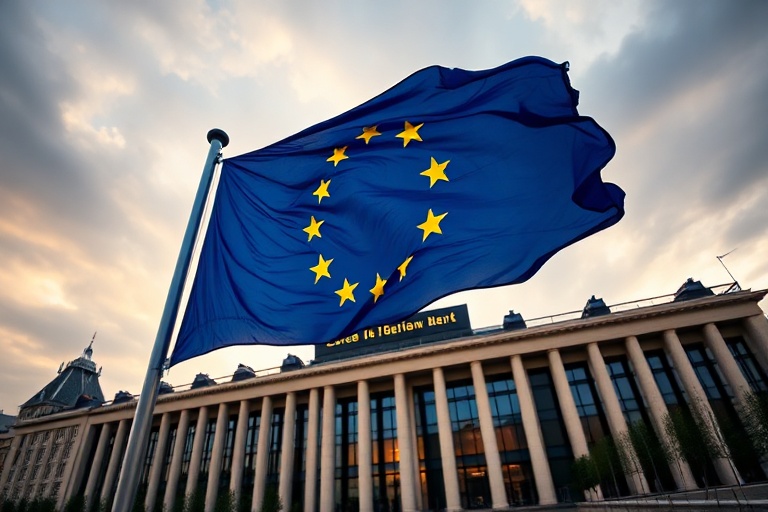
“imageDescription”: “A split-image illustration: on the left, a panoramic view of the European Parliament in Strasbourg with the EU flag prominently displayed; on the right, a symbolic representation of economic integration with interconnected gears labeled with currencies and trade routes, set against a backdrop of diverse European landscapes. The mood is professional yet dynamic, blending institutional gravitas with forward-looking optimism.”
}
—END METADATA—