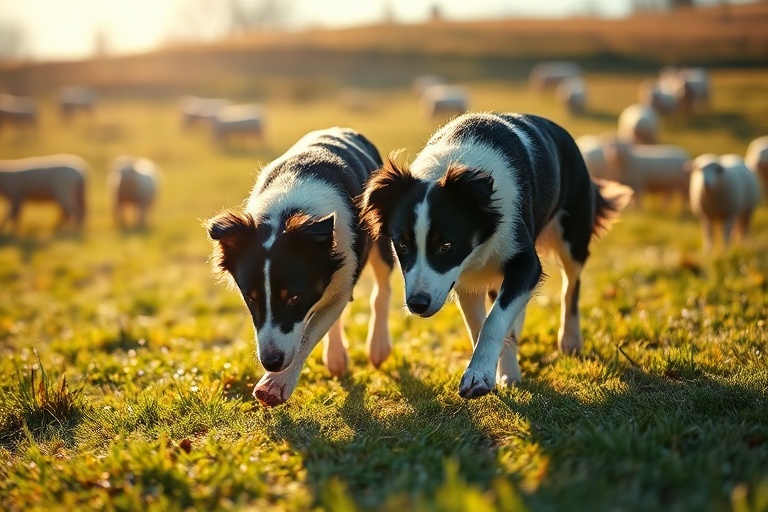
How Sheep Are Revolutionizing Crime and Environmental Detection
Meet the Sheep Detectives: How Livestock Are Solving Real Crime
In the rolling hills of the English countryside, a team of unlikely investigators is making a name for itself—not in labs or courtrooms, but in the fields where sheep graze. These aren’t your average farm animals. They’re part of a growing initiative where trained sheep are being used to sniff out crime, locate missing persons, and even detect environmental hazards. Known colloquially as “sheep detectives,” these animals are redefining the boundaries of what livestock can contribute to society.
The concept may sound far-fetched, but it’s rooted in science. Sheep possess an olfactory system far more powerful than humans—nearly 20 times stronger in fact. Their noses contain over 200 million scent receptors, compared to about 5 million in humans. This biological advantage, combined with targeted training, allows them to identify specific odors, from the scent of a human lost in the wilderness to the chemical traces of illegal substances buried underground.
The Science Behind the Sniff
Researchers have long studied the olfactory abilities of animals, from dogs to rats, in law enforcement and search-and-rescue operations. Sheep, however, offer unique advantages. They’re intelligent, trainable, and—unlike many working dogs—they don’t require high-calorie diets or constant veterinary care. Their calm demeanor also makes them ideal for working in sensitive environments, such as disaster zones or areas with delicate ecosystems.
One of the earliest documented cases of sheep being used in detection work took place in the UK, where scientists at Aberystwyth University partnered with local law enforcement to train sheep to identify the scent of human remains. The project, funded by the Home Office, involved exposing sheep to decomposing tissue samples in controlled settings. Over time, the animals learned to associate the scent with a reward—typically food—and would alert handlers by pawing at the ground or staring intently at the source.
This isn’t just theoretical. In 2021, a sheep named “Daisy” made headlines after she helped locate the body of a missing hiker in Snowdonia National Park. Daisy, trained through the university’s program, followed a scent trail left by the victim’s clothing and led rescue teams to a remote gully where the body was recovered. The case demonstrated the practical value of sheep in search operations, especially in rugged terrain where traditional methods like cadaver dogs may struggle.
Beyond Crime: Environmental and Agricultural Applications
The role of sheep detectives extends beyond criminal investigations. Their keen sense of smell is also being harnessed to address environmental and agricultural challenges. In New Zealand, for example, researchers are training sheep to detect the presence of invasive plant species that threaten native ecosystems. These plants often emit volatile organic compounds (VOCs) that are imperceptible to humans but easily distinguishable to sheep.
In another innovative project, sheep are being deployed in mining regions to sniff out toxic gases like methane or hydrogen sulfide. Miners have long relied on canaries as early warning systems, but sheep offer a more sustainable alternative. Their ability to detect gas leaks in real-time could prevent disasters and reduce environmental contamination.
Sheep are also proving useful in agriculture, particularly in identifying plant diseases before they become visible to the naked eye. Farmers in Scotland have started training sheep to recognize the scent of potato blight, a devastating fungal disease that can wipe out entire crops. By detecting the disease early, farmers can take preventative measures, saving both time and resources.
The Training Process: From Farm to Field
Training a sheep detective isn’t as simple as tossing a treat in the right direction. It requires patience, consistency, and an understanding of animal behavior. The process typically begins with imprinting, where young lambs are exposed to the target scent—whether it’s human remains, a specific plant, or a chemical compound—while being rewarded with food. Over time, the sheep learns to associate the scent with the reward, and handlers introduce distractions to test the animal’s focus.
Handlers use a combination of clicker training and scent discrimination exercises. For example, a sheep might be presented with multiple soil samples, only one of which contains the target scent. If the sheep identifies the correct sample, it receives a reward. Mistakes are corrected gently, with no physical punishment, ensuring the animal remains motivated and stress-free.
The training timeline varies depending on the complexity of the task. Simple scent detection, like identifying a specific plant, might take a few weeks. More advanced tasks, such as locating human remains in a large, unfamiliar area, can take several months. Sheep have an average working lifespan of 10-12 years, giving them ample time to contribute to detection efforts.
One of the challenges in training sheep detectives is ensuring they remain reliable in real-world conditions. Unlike dogs, which are often used in controlled environments, sheep must be able to work in unpredictable settings—from dense forests to flooded fields. Researchers are continually refining training techniques to account for these variables, including exposing sheep to different weather conditions and terrains during their training.
The Future of Sheep Detectives
As the field of animal-assisted detection grows, so too does interest in sheep detectives. Advocates argue that these animals could become a standard resource for law enforcement, environmental agencies, and agricultural organizations. Their low maintenance costs, adaptability, and strong scenting abilities make them a cost-effective alternative to traditional detection methods.
However, the field is not without its critics. Some animal welfare advocates question whether training sheep for detection work is ethical, particularly when the tasks involve exposure to human remains or toxic substances. In response, proponents emphasize the importance of humane training practices and the animals’ well-being. Sheep, they note, are naturally curious and food-motivated, making the work engaging rather than stressful.
Looking ahead, researchers are exploring ways to expand the capabilities of sheep detectives. Projects are underway to train sheep to detect specific diseases, such as tuberculosis in livestock or certain cancers in humans. The potential applications are vast, and with continued innovation, sheep could become as common in detection work as dogs are today.
For now, the sheep detectives of today are quietly making a difference—one sniff at a time. Their stories may not always make the headlines, but their contributions are undeniable. In a world where technology often dominates the conversation around crime-solving and environmental monitoring, these woolly investigators remind us that sometimes, the simplest solutions are the most effective.
To learn more about innovative uses of animals in detection work, visit our Science category. For a deeper look at how technology is transforming law enforcement, check out our Technology section.
Why Sheep? The Advantages of Using Livestock for Detection
Sheep may not be the first animals that come to mind when thinking of detection work, but their unique biology and temperament make them ideal candidates. Unlike dogs, which require extensive training and can become stressed in unfamiliar environments, sheep are naturally calm and adaptable. Their grazing habits mean they’re already comfortable in outdoor settings, reducing the need for acclimation.
Another advantage is their size. Sheep are large enough to carry lightweight detection equipment, such as GPS trackers or small sensors, without being encumbered by it. This opens up possibilities for real-time data collection during search operations. Additionally, sheep are herd animals, which means they’re less likely to become anxious when working in groups—a common scenario in field operations.
Their diet is also a practical consideration. Sheep are ruminants, meaning they primarily eat grass and require minimal supplemental feeding. This makes them far cheaper to maintain than dogs, which need high-protein diets and regular veterinary care. For organizations operating on tight budgets, such as rural police departments or small farms, sheep detectives offer a sustainable solution.
The Ethical Debate: Are Sheep Detectives a Step Too Far?
The use of animals in detection work is not without controversy. Critics argue that training sheep to sniff out human remains or toxic substances could be psychologically taxing for the animals, even if handlers take precautions. Sheep are prey animals by nature, and exposing them to strong, unnatural scents—especially those associated with death or danger—could cause long-term stress.
Proponents, however, point to studies that show sheep form strong bonds with their handlers and enjoy the mental stimulation that comes with training. They also note that sheep are routinely used in agricultural research, often for invasive procedures, without widespread outcry. The key, they say, lies in responsible training practices and ensuring the animals’ well-being is prioritized above all else.
One potential solution is the development of scent-detection technology inspired by sheep biology. Researchers at the University of Leeds are currently working on an electronic nose, or “e-nose,” that mimics the olfactory capabilities of sheep. While not a replacement for live animals, such technology could reduce the ethical concerns while still leveraging the science behind scent detection.
How You Can Support or Get Involved
For those inspired by the work of sheep detectives, there are several ways to get involved or support these initiatives. Many universities and research institutions welcome volunteers for animal-assisted detection programs. These roles often involve assisting with training sessions, data collection, or even helping to care for the animals.
If you’re a farmer or landowner, you might consider training your own sheep for detection work. Organizations like the Animal Detection Society offer workshops and resources for those interested in starting a program. These initiatives not only provide practical benefits but also foster a deeper connection between humans and animals.
For the broader public, supporting ethical animal research and conservation efforts can help ensure these programs continue to grow. Donations to organizations like the Royal Society for the Prevention of Cruelty to Animals (RSPCA) or local agricultural research groups can make a tangible difference in advancing humane detection methods.
Sheep detectives may still be a niche field, but their impact is undeniable. As technology and science continue to evolve, these woolly investigators could play an increasingly vital role in solving crimes, protecting the environment, and safeguarding public health. Their story is a testament to the unexpected ways animals and humans can collaborate—and a reminder that sometimes, the most effective tools are the ones we least expect.