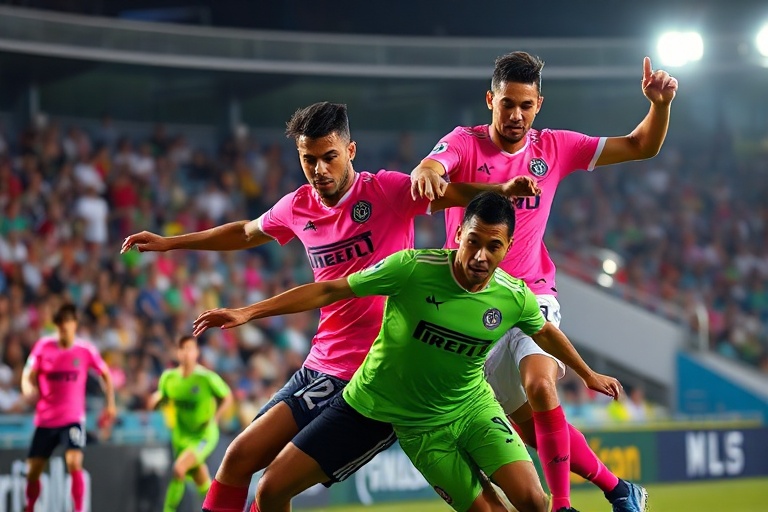
The rivalry between Inter Miami CF and the Portland Timbers extends beyond mere competition on the pitch. It represents a collision of philosophies, cultures, and ambitions within Major League Soccer. While both clubs share the common goal of expanding soccer’s footprint in the United States, their approaches—and the narratives that surround them—could not be more different.
Inter Miami, co-founded by David Beckham, entered MLS in 2020 with star power, splashy signings, and a global brand identity. The club’s presence in Miami, a city synonymous with entertainment and ambition, has drawn international attention. Portland, on the other hand, has long been a model of consistency and community-driven soccer. The Timbers have cultivated a loyal fanbase through grassroots engagement and a commitment to local talent.
The Beckham Effect: Miami’s Global Ambitions
Inter Miami’s creation was driven by a desire to bring world-class soccer to a city known for its cultural influence. Beckham’s involvement elevated the franchise’s profile long before the team played its first match. The club’s marquee signings—such as Gonzalo Higuaín, Rodolfo Pizarro, and Jordi Alba—reflected a strategy aimed at immediate impact rather than gradual development.
This approach has not been without controversy. Critics argue that Miami’s reliance on big names has overshadowed the development of younger talent. Yet, the club’s ability to attract global audiences, particularly through high-profile friendlies and social media engagement, cannot be dismissed. In markets where soccer is still growing, Inter Miami’s star-driven model serves as a gateway for casual fans.
Portland, meanwhile, has taken a different path. The Timbers’ success has been built on fostering local talent and maintaining a connection to the community. The club’s academy system and emphasis on homegrown players have earned praise for promoting sustainable growth within MLS. While Portland may lack the same level of global star power, its identity is rooted in authenticity—a quality that resonates deeply with its supporters.
Playing Styles: Pragmatism vs. Passion
On the field, the contrast between Inter Miami and Portland is equally stark. Miami’s style under manager Phil Neville has often prioritized defensive solidity and quick transitions, relying on experienced players to control the tempo. The club’s tactical approach reflects its ambition to compete at the highest level, even if it occasionally sacrifices the free-flowing creativity associated with South American soccer traditions.
Portland, under manager Giovanni Savarese, has cultivated a more fluid and attacking style. Known for their high-pressing, technical play, the Timbers emphasize possession and creativity, often drawing comparisons to European clubs like Barcelona or Ajax. This approach has not only produced entertaining football but has also allowed Portland to develop players who thrive in possession-based systems.
The differences in playing style are not merely tactical but cultural. Miami’s pragmatism mirrors its broader corporate ambitions, while Portland’s attacking flair reflects its progressive soccer culture. When these two teams meet, it’s not just a match—it’s a clash of ideologies.
The Fan Experience: A Tale of Two Cities
Soccer culture in Miami and Portland could not be more different. In Portland, soccer is woven into the fabric of the city. The Timbers’ fanbase, known for its loyalty and vocal support, fills Providence Park with a vibrant, chant-filled atmosphere. The club’s connection to the community is evident in initiatives like the Timbers Army, a supporters’ group that plays an active role in local philanthropy.
Inter Miami, by contrast, is still building its identity. While Miami’s diverse population has embraced the club, the fan culture is more fragmented. The team’s home matches at DRV PNK Stadium often feature a mix of international visitors and local supporters, creating an energetic but less cohesive atmosphere. Miami’s challenge lies in fostering a sense of belonging among its fanbase—a task complicated by the transient nature of its population.
Yet, this disparity highlights a broader trend in MLS. As the league expands, clubs must navigate the balance between global appeal and local authenticity. Portland’s success in maintaining a strong fanbase offers a blueprint for clubs seeking to build lasting connections, while Miami’s global ambitions reflect the realities of a city that thrives on international influence.
The Global Perspective: MLS in the International Arena
From a global standpoint, Inter Miami and Portland represent two distinct paths for MLS clubs aiming to make an impact beyond North America. Miami’s strategy aligns with the league’s broader push to attract international attention, particularly in markets where soccer is still growing. The club’s partnerships with global brands and its association with Beckham’s legacy position it as a bridge between MLS and the wider soccer world.
Portland, however, embodies the potential for MLS to develop a unique identity rooted in local culture. The Timbers’ success has demonstrated that a club does not need global superstars to compete—it needs passion, authenticity, and a commitment to its community. This approach has earned Portland respect not just within MLS but also among international observers who see the club as a model for sustainable growth.
As MLS continues to evolve, the rivalry between Inter Miami and Portland will serve as a microcosm of the league’s broader challenges. Can a club succeed by leaning into its global brand, or is authenticity the key to long-term sustainability? The answer may lie somewhere in between, but for now, the clash between Miami’s ambition and Portland’s authenticity offers a compelling narrative for soccer fans worldwide.
Key Takeaways from Inter Miami vs. Portland
- Inter Miami: Global brand, star power, pragmatic approach, and a focus on immediate impact.
- Portland Timbers: Community-driven, local talent-focused, attacking style, and a strong fan culture.
- Playing Styles: Miami prioritizes defensive solidity and transitions, while Portland emphasizes possession and creativity.
- Fan Culture: Portland’s vibrant, grassroots support contrasts with Miami’s more fragmented but growing fanbase.
- Global Impact: Miami’s strategy aligns with MLS’s push for international recognition, while Portland represents a model for sustainable growth.
For fans of sports and soccer enthusiasts, the rivalry between Inter Miami and Portland is more than just a match—it’s a reflection of the diverse paths MLS clubs can take to succeed. Whether through global ambition or local authenticity, both clubs contribute to the league’s ongoing evolution, offering lessons for the future of soccer in the United States and beyond.