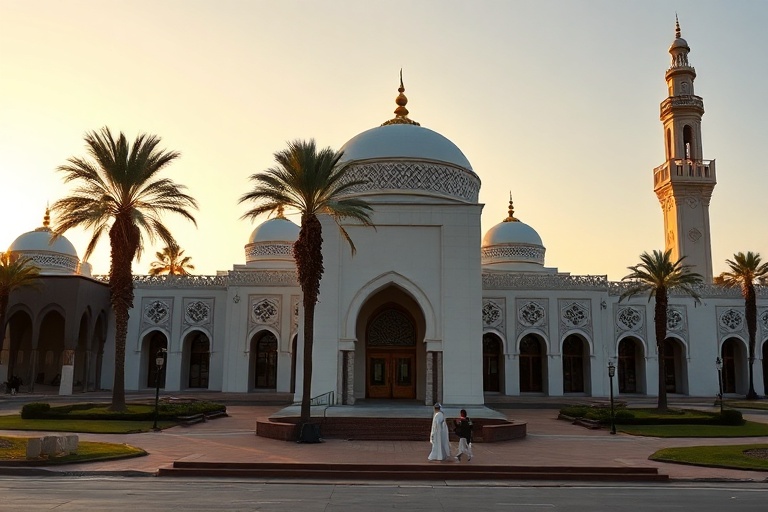
The Islamic Center of San Diego (ICSD) stands as a cornerstone of Muslim life in Southern California, blending spiritual devotion with active civic engagement. Since its founding in 1972, the center has grown from a modest gathering place into one of the region’s most influential Islamic institutions, serving thousands of worshippers and families each year. Its role extends beyond prayer services to include educational programs, interfaith dialogue, and social services that address the diverse needs of San Diego’s Muslim community.
Located in the Clairemont Mesa neighborhood, the center’s prominent white-domed mosque and adjacent facilities serve as both a spiritual refuge and a cultural beacon. In an era marked by misinformation and rising Islamophobia, places like ICSD play a crucial role in fostering understanding and building bridges across communities. The center’s commitment to outreach, educational initiatives, and youth engagement reflects a broader trend among American mosques to assert their presence as integral parts of local civic life.
History and Evolution of the Islamic Center of San Diego
The Islamic Center of San Diego traces its origins to the early 1970s, when a small group of Muslim families sought to establish a place of worship and community gathering. Initially meeting in private homes and rented spaces, they secured land in Clairemont in 1978 and completed construction of the current mosque in 1989. The architectural design—inspired by traditional Islamic motifs—was intended to evoke both familiarity and reverence, creating a space that felt both sacred and welcoming to worshippers of all backgrounds.
Over the decades, the center has expanded significantly. Today, it includes a full-service mosque, a weekend Islamic school, a library, and spaces for community events. The ICSD’s growth mirrors the broader expansion of Muslim communities across the United States, particularly in regions like Southern California that have seen steady immigration from the Middle East, South Asia, and the Horn of Africa. This diversity is reflected in the center’s leadership, programming, and membership, which includes people of Arab, South Asian, African American, and Latino Muslim backgrounds.
One of the most notable milestones in the center’s history was the appointment of its first full-time imam in 1995. Imam Taha Hassane, a scholar trained in both Syria and the United States, brought a blend of traditional Islamic scholarship and contemporary American sensibilities to his role. Under his leadership, the center developed robust youth programs, interfaith initiatives, and social services that addressed the needs of a growing and increasingly diverse community.
Programs and Initiatives: Beyond the Prayer Hall
The Islamic Center of San Diego is not just a place of worship; it is a hub of education, social service, and cultural exchange. Its programming reflects a commitment to serving the holistic needs of the Muslim community while also engaging with the wider public. Among its most impactful initiatives are its educational offerings, which cater to all age groups.
- Weekend Islamic School: Serving hundreds of children, the school offers classes in Quranic studies, Islamic history, Arabic language, and ethics. The curriculum is designed to be both academically rigorous and spiritually nourishing, preparing students to navigate the complexities of modern life with a strong moral foundation.
- Youth Engagement Programs: The center hosts regular youth circles, leadership workshops, and social events that provide safe spaces for Muslim teenagers and young adults. These programs aim to counter feelings of isolation and marginalization while fostering a sense of belonging and civic responsibility.
- Women’s Programs: Recognizing the diverse roles women play within the community, the ICSD offers tailored programs including Quran study groups, health workshops, and leadership training. These initiatives empower women to take on active roles in both religious and community leadership.
- Interfaith and Civic Engagement: The center actively participates in interfaith dialogues, collaborating with local churches, synagogues, and community organizations. It also hosts events such as blood drives, food drives, and voter registration drives, demonstrating its commitment to civic duty and social justice.
The ICSD’s social services are another critical component of its mission. The center operates a food pantry, assists with immigration-related challenges, and provides counseling services for families in need. These efforts highlight the center’s role as a lifeline for many, particularly during times of economic hardship or crisis.
Cultural and Social Impact in San Diego
The Islamic Center of San Diego occupies a unique position in the cultural fabric of the city. Its annual events, such as the Eid al-Fitr and Eid al-Adha celebrations, draw thousands of attendees—both Muslim and non-Muslim—creating opportunities for cultural exchange and mutual understanding. These gatherings are often highlighted in local media, showcasing the diversity of San Diego’s religious and ethnic communities.
The center’s influence extends beyond its physical walls. Its leaders frequently participate in citywide initiatives, from public health campaigns to educational reforms. For example, ICSD representatives have collaborated with the San Diego Unified School District to promote cultural competency training for teachers, ensuring that Muslim students feel seen and respected in their classrooms.
Moreover, the center has become a model for other mosques across the country seeking to strengthen their community ties. Its approach—balancing religious observance with active civic engagement—has inspired similar initiatives in cities like Los Angeles, Chicago, and Houston. This trend reflects a broader shift among American Muslims toward asserting their identity as both deeply religious and fully American, a duality that the ICSD embodies.
Challenges and the Path Forward
Despite its many contributions, the Islamic Center of San Diego faces challenges that mirror those of Muslim communities nationwide. Rising Islamophobia, particularly in the wake of global conflicts and political polarization, has placed additional burdens on institutions like ICSD. Hate crimes against mosques and Muslim individuals have increased in recent years, prompting the center to enhance its security measures while also doubling down on its community outreach efforts.
Another challenge is the generational divide within the Muslim community. Younger Muslims, many of whom are American-born, often seek a more progressive interpretation of Islam that aligns with their lived experiences. The ICSD has responded by introducing programs that encourage critical thinking and open dialogue, allowing for a diversity of opinions within an Islamic framework.
Looking ahead, the center is poised to continue its growth. Plans for expansion include a new community center that will house additional classrooms, a gymnasium, and a larger prayer hall to accommodate San Diego’s expanding Muslim population. These developments signal the ICSD’s ongoing commitment to serving as a spiritual and social anchor for generations to come.
For those interested in exploring the Islamic Center of San Diego further, the center offers public tours and open houses several times a year. These events provide an opportunity to witness firsthand the center’s role in fostering community, education, and interfaith dialogue. Whether one is a Muslim seeking a place of worship, a student of comparative religion, or a curious neighbor, the ICSD extends a warm invitation to learn and engage.
In a city known for its diversity and innovation, the Islamic Center of San Diego stands as a testament to the power of faith, community, and resilience. It reminds us that places of worship are not just repositories of tradition but also engines of progress, capable of shaping the future while honoring the past.
For more insights into how faith communities engage with broader societal issues, visit our Culture section. To explore the role of religious institutions in civic life, check out our News category.