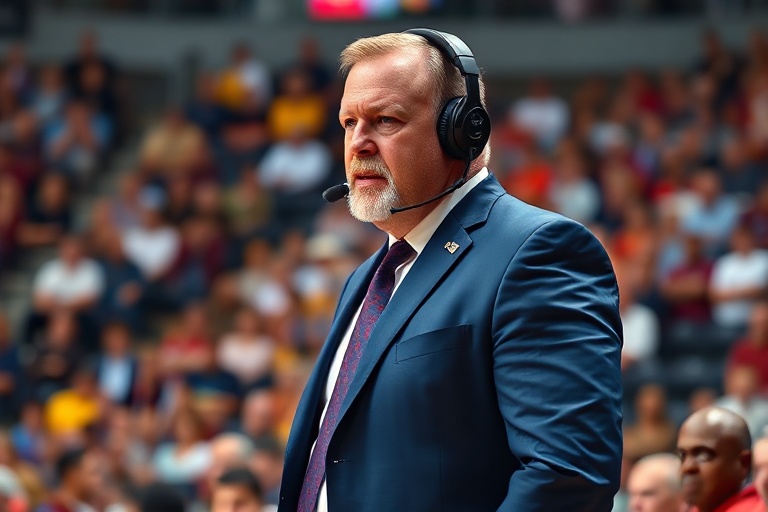
J.B. Bickerstaff: How Cleveland Built a Contender Through Quiet Leadership
J.B. Bickerstaff’s tenure in Cleveland has unfolded like a masterclass in controlled evolution rather than dramatic revolution. Since taking over as head coach of the Cleveland Cavaliers in May 2020, Bickerstaff has methodically reshaped a franchise that once teetered on the brink of irrelevance into a team that now demands respect in the Eastern Conference. His approach—grounded in adaptability, player development, and tactical pragmatism—offers a compelling blueprint for how organizations can rebuild without the luxury of top-tier draft picks or blockbuster trades.
The Cleveland Transformation: From Struggles to Sustainable Contenders
When Bickerstaff arrived in Cleveland, the Cavaliers were in the midst of a transitional period following the departure of LeBron James in 2018. The team cycled through coaches and rosters, searching for an identity that never quite materialized. Bickerstaff inherited a roster stocked with young talent like Collin Sexton and Darius Garland, but also one burdened by defensive liabilities and a lack of cohesion.
His first full season, 2021-22, served as a statement. The Cavaliers finished 44-38, securing a playoff spot for the first time since 2018. What stood out was not just the win total, but the style of play. Bickerstaff implemented a defensive identity that had been absent for years, ranking seventh in defensive efficiency. Garland and Evan Mobley emerged as cornerstones, while veterans like Ricky Rubio and Caris LeVert provided stability. The team’s chemistry became its greatest strength.
The Cavaliers’ 2023 playoff run under Bickerstaff further cemented his impact. Though Cleveland fell to the New York Knicks in the first round, the performance showcased the franchise’s progress. The Cavaliers pushed the series to five games, a testament to their resilience and tactical discipline. This run was not about star power; it was about a system that maximized the talents of its players while masking its weaknesses.
A Coaching Philosophy Built on Flexibility and Trust
Bickerstaff’s coaching style is often described as understated, but that should not be mistaken for passive. His philosophy revolves around three core principles: defensive intensity, offensive versatility, and player empowerment. Unlike coaches who demand rigid adherence to a specific system, Bickerstaff adapts his schemes based on personnel, a trait that has allowed Cleveland to remain competitive even as its roster has evolved.
Defensively, Bickerstaff emphasizes communication, positioning, and relentless effort. The Cavaliers’ defensive rating improved from 112.5 in the 2020-21 season to 109.3 in 2021-22, a significant jump that reflected his influence. His ability to instill a defensive mindset in young players like Mobley—a player who thrives in switch-heavy schemes—has been particularly notable.
Offensively, Bickerstaff’s system is fluid. He encourages ball movement and three-point shooting while maintaining a balanced attack. The Cavaliers ranked fifth in three-point shooting percentage during the 2022-23 season, a stark contrast to the isolation-heavy offense that defined earlier eras. This shift has not only modernized the team’s identity but also made it more sustainable in a league increasingly dominated by perimeter shooting.
Player development is where Bickerstaff’s approach shines brightest. Garland, once seen as a project guard, has flourished under Bickerstaff’s guidance, becoming an All-Star in 2022. Mobley, the third overall pick in the 2021 draft, has developed into a Defensive Player of the Year candidate. Even veterans like Donovan Mitchell, acquired in a blockbuster trade in 2022, have thrived in Bickerstaff’s system, posting career-highs in efficiency and durability.
Key Tenets of J.B. Bickerstaff’s Coaching Approach
- Defensive Identity: Prioritizes communication, rotations, and effort to create a cohesive unit.
- Adaptive Offense: Balances ball movement, three-point shooting, and post play to maximize personnel.
- Player Development: Focuses on incremental growth, particularly with young players and late-blooming prospects.
- Cultural Stability: Maintains a consistent environment that fosters trust and accountability.
The Broader Implications: What Bickerstaff’s Success Means for the NBA
Bickerstaff’s rise in Cleveland is more than just a coaching success story; it is a case study in how modern NBA franchises can compete without relying on superstar free agents or high lottery picks. His approach aligns with the league’s evolving priorities: efficiency, versatility, and player development. In an era where the salary cap and luxury tax penalties limit financial flexibility, Bickerstaff’s model offers a viable path to competitiveness.
The Cavaliers’ success also challenges the conventional wisdom that only coaches with elite pedigrees or championship experience can lead a rebuild. Bickerstaff, who spent years as an assistant in Houston and Memphis, has carved out his own identity without the shadow of a former superstar looming over his tenure. This is particularly relevant for mid-market franchises like Cleveland, which must maximize every advantage in a league dominated by financial behemoths.
Moreover, Bickerstaff’s emphasis on defense and system play reflects a counter-trend to the isolation-heavy, star-driven offenses that have dominated the NBA in recent years. As the league becomes more analytics-driven, teams are increasingly valuing versatility and two-way play. Bickerstaff’s Cavaliers embody this shift, proving that a well-structured system can elevate even a mid-tier roster to playoff contention.
The Road Ahead: Challenges and Opportunities
Despite the progress, Bickerstaff faces challenges as he looks to take Cleveland to the next level. The team’s playoff struggles in 2023 highlighted its limitations against top-tier opponents. The Cavaliers’ lack of a true franchise cornerstone—someone who can dominate games single-handedly—remains a hurdle. While Garland and Mobley are franchise players, neither is currently at the level of a Stephen Curry or Nikola Jokić, players who can carry a team deep into the playoffs.
Additionally, the Cavaliers’ front office must address the roster’s depth. Key bench players like LeVert and Rubio have moved on, leaving a void in experience and playmaking. The team’s reliance on Garland and Mobley to generate offense is a risk, particularly in close games where a secondary creator is needed. Bickerstaff will need to find ways to diversify the offensive attack, perhaps by developing young wings like Isaac Okoro or Dean Wade into more reliable scoring options.
However, the opportunities outweigh the challenges. The Cavaliers have a young, talented core that is only beginning to reach its prime. Mobley, now entering his third season, is poised for an All-NBA caliber year, while Garland remains on the cusp of superstardom. The franchise also has financial flexibility, with ample cap space to pursue complementary free agents or trade assets. If Bickerstaff can continue to refine the team’s system and address its depth issues, Cleveland could soon emerge as a legitimate contender in the East.
For Bickerstaff, the next two seasons will be pivotal. If he can lead the Cavaliers to a deep playoff run—or even a Finals appearance—he will solidify his reputation as one of the league’s most underrated coaches. His success could also pave the way for other assistant coaches to ascend to head coaching roles, proving that there is more than one path to excellence in the NBA.
Conclusion: The Unsung Hero of Cleveland’s Rebuild
J.B. Bickerstaff’s journey in Cleveland is a reminder that leadership does not always come with a megaphone. His ability to mold a fractured roster into a cohesive, competitive team speaks volumes about his character and basketball IQ. In an NBA landscape obsessed with flash and star power, Bickerstaff has quietly built something sustainable through discipline, adaptability, and trust in his players.
As the Cavaliers continue their ascent, Bickerstaff’s legacy will be defined not by trophies or viral moments, but by the steady improvement of his team and the culture he has cultivated. For franchises seeking a blueprint for success in the modern NBA, his story offers a compelling alternative to the high-risk, high-reward strategies that often dominate headlines. In Cleveland, J.B. Bickerstaff has done more than rebuild a team—he has redefined what it means to compete with intention.
For fans of the game, his tenure is a refreshing reminder that greatness in basketball is not always about the brightest lights or the loudest voices. Sometimes, it’s about the quiet architects who lay the foundation brick by brick.
To follow the Cavaliers’ season and see how Bickerstaff’s system continues to evolve, visit our Sports and News sections for updates and analysis.