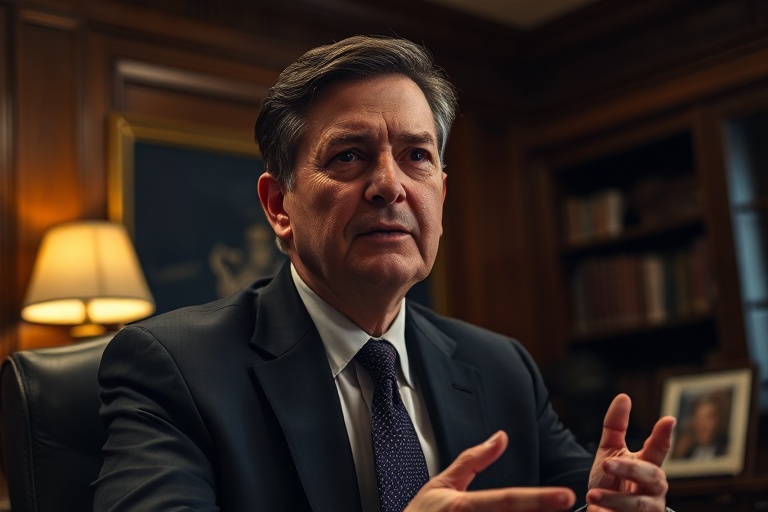
james b comey
James Brien Comey Jr. remains one of the most polarizing figures in recent American political history. As the 7th Director of the Federal Bureau of Investigation (FBI) from 2013 to 2017, Comey’s tenure was marked by high-stakes investigations, controversial decisions, and unprecedented public scrutiny. His actions during the 2016 U.S. presidential election—particularly regarding the investigation into Hillary Clinton’s private email server and the later inquiry into Russian interference—reshaped public trust in institutions and influenced the outcome of a historic election.
Early Career and Rise to Power
Born on December 14, 1960, in Yonkers, New York, Comey graduated from the College of William & Mary in 1982 and earned his law degree from the University of Chicago in 1985. Before joining the FBI, he held several prominent legal roles, including serving as a federal prosecutor, U.S. Attorney for the Southern District of New York, and Deputy Attorney General under President George W. Bush. His early career was defined by a reputation for integrity, a sharp legal mind, and an unyielding commitment to justice—qualities that would later define his tenure at the FBI.
Comey’s appointment as FBI Director by President Barack Obama in 2013 was widely seen as a bipartisan decision. He was confirmed by the Senate with a 93-1 vote, a rare show of near-unanimous support for a high-level executive appointment. His leadership style emphasized transparency, accountability, and a willingness to challenge even the most powerful figures in government.
Key Moments in Comey’s Early Career
- 1996: Became a federal prosecutor in Manhattan, where he worked on organized crime and Wall Street corruption cases.
- 2002-2003: Served as U.S. Attorney for the Southern District of New York, prosecuting high-profile cases including Martha Stewart and Adelphia Communications executives.
- 2003-2005: Appointed Deputy Attorney General, where he played a crucial role in approving controversial surveillance programs post-9/11.
- 2005-2013: Worked in private practice at Lockheed Martin and Bridgewater Associates, maintaining a relatively low public profile.
The 2016 Election and the Clinton Email Investigation
The most defining moment of Comey’s tenure—and one that continues to spark debate—was his handling of the FBI’s investigation into Hillary Clinton’s use of a private email server while she was Secretary of State. The inquiry, which began in 2015, became a lightning rod for political controversy, with Republicans accusing Clinton of mishandling classified information and Democrats questioning the timing and transparency of the FBI’s actions.
In July 2016, Comey held a highly unusual press conference to announce that no charges would be filed against Clinton, but he simultaneously criticized her handling of classified information as “extremely careless.” The announcement drew sharp criticism from both sides: Clinton’s supporters saw it as an attempt to influence the election, while her detractors viewed it as insufficient accountability. The decision to go public with the findings—rather than following standard DOJ protocol of keeping such matters confidential—set a precedent for future disclosures.
Then, just days before the November 2016 election, Comey sent a letter to Congress informing them that the FBI had discovered additional emails related to the investigation. The announcement, which came after months of public frustration with the FBI’s handling of the case, was met with outrage from Democrats who accused Comey of violating long-standing norms to interfere in the election. Clinton and her allies have since argued that Comey’s actions cost her the presidency, a claim supported by some political analysts who suggest the timing of his letter swayed undecided voters.
Fallout and Consequences
- Erosion of Public Trust: Comey’s decisions damaged perceptions of the FBI’s impartiality, with critics arguing that his actions politicized an agency meant to remain above the fray.
- Political Polarization: The controversy deepened divisions between Democrats and Republicans, with each side accusing the other of weaponizing the FBI for partisan gain.
- Legislative Scrutiny: Congress launched multiple investigations into the FBI’s handling of the Clinton email case, as well as its broader role in the 2016 election.
- Comey’s Firing: In May 2017, President Donald Trump abruptly fired Comey, citing “the great soil of discord” in the FBI. The dismissal sparked accusations of obstruction of justice and led to the appointment of Special Counsel Robert Mueller to investigate Russian interference in the election.
Comey’s Memoir and Public Legacy
In April 2018, Comey published A Higher Loyalty: Truth, Lies, and Leadership, a memoir that offered an insider’s perspective on his time at the FBI and his clashes with both the Trump administration and Hillary Clinton’s campaign. The book became an instant best-seller, topping charts and reigniting debates about his decisions. Comey framed his actions as attempts to uphold the integrity of the FBI, while critics accused him of self-justification and grandstanding.
Comey’s public appearances following the book’s release further fueled his polarizing image. He became a frequent commentator on issues of ethics, leadership, and institutional trust, often drawing parallels between his experiences and broader societal challenges. His willingness to speak out—even when it put him at odds with powerful figures—has earned him both admiration and condemnation.
Beyond his memoir, Comey has remained an active voice in discussions about the role of the FBI in modern democracy. He has criticized the Trump administration’s attacks on the press and the judiciary, while also calling out perceived failures in leadership across the political spectrum. His 2020 book, Saving Justice: Truth, Transparency, and Trust, expanded on these themes, arguing for greater accountability in government and media.
Broader Implications: The FBI in the Age of Scrutiny
Comey’s tenure and its aftermath have had lasting effects on the FBI and American politics. The controversies surrounding his decisions have raised critical questions about the balance between transparency and confidentiality, the role of federal law enforcement in elections, and the accountability of unelected officials in a democracy.
The FBI, once regarded as an apolitical institution, now faces unprecedented scrutiny. Critics argue that Comey’s actions—particularly his public statements about ongoing investigations—have eroded public trust and set a dangerous precedent. Supporters, however, contend that his willingness to defy political pressure was a necessary check on power, particularly in an era of heightened partisanship.
Comey’s case also highlights the challenges of leadership in a hyper-connected world. His decisions were magnified by social media, cable news, and the 24-hour news cycle, turning what might have been routine bureaucratic matters into national debates. This phenomenon reflects a broader trend in which institutions—regardless of their actual influence—are increasingly subject to public judgment in real time.
The fallout from Comey’s tenure has also influenced how future FBI directors approach high-profile cases. His successors have faced immense pressure to avoid the controversies that plagued his time in office, leading to more cautious and less communicative approaches to sensitive investigations. Yet, the demand for transparency persists, creating a paradox for an agency tasked with balancing secrecy and public accountability.
The Comey Effect: A Lasting Shadow
- Institutional Distrust: Polls consistently show declining public confidence in the FBI, with partisan divisions shaping perceptions of its legitimacy.
- Legal and Ethical Debates: Scholars and lawmakers continue to debate the appropriateness of disclosing sensitive information about ongoing investigations.
- Media and Misinformation: Comey’s case underscored the challenges of reporting on law enforcement without amplifying partisan narratives.
- Leadership in Crisis: Comey’s willingness to challenge authority has become a model for some and a cautionary tale for others in positions of power.
As the United States grapples with questions of justice, accountability, and the role of institutions in a polarized society, James Comey’s legacy remains a touchstone for debate. Whether viewed as a hero who stood up to power or a bureaucrat whose actions crossed ethical lines, his story forces a reckoning with the complexities of leadership in the 21st century.
Conclusion: Lessons from a Controversial Tenure
James Comey’s career offers a case study in the challenges of leading an institution like the FBI in an era of intense political division. His decisions—whether praised or condemned—have forced a national conversation about the balance between transparency and discretion, the role of law enforcement in democracy, and the personal qualities required to navigate power responsibly.
For those studying leadership, Comey’s tenure provides valuable lessons. His commitment to truth-telling, even when it was politically inconvenient, demonstrates the importance of integrity in public service. Yet his actions also serve as a reminder of how quickly good intentions can be misinterpreted or weaponized in a polarized environment.
As the FBI and other institutions continue to adapt to the demands of the modern age, Comey’s story remains relevant. It challenges us to consider not just what leaders do, but how their actions ripple through society, shaping trust, expectations, and the very fabric of democracy.
For further reading on leadership in high-stakes environments, explore our Analysis section, where we examine the intersection of power, ethics, and public trust.