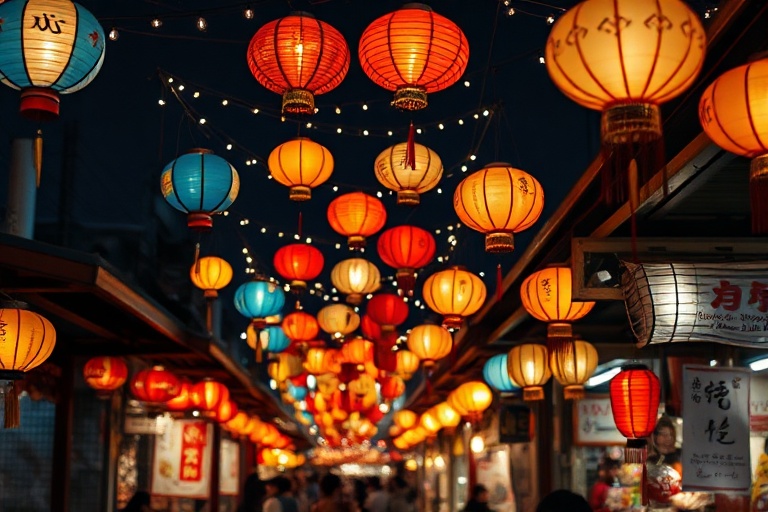
Lanterns: History, Culture, and Modern Uses of Light
“`html
Lanterns Through the Ages: Lighting Up Culture and Celebration
The humble lantern has served humanity for millennia, evolving from a simple vessel for fire to a symbol of hope, celebration, and cultural identity. Across continents and centuries, these glowing beacons have illuminated both practical needs and spiritual journeys. Their story is one of innovation, tradition, and the universal human desire to conquer darkness.
From the paper lanterns that dance above Tokyo’s streets during cherry blossom season to the floating sky lanterns that drift into the night sky during Thailand’s Yi Peng festival, lanterns transcend mere illumination. They become vessels of meaning, carrying prayers, wishes, and communal joy. Their presence marks festivals, guides travelers, and even influences artistic expression. To understand lanterns is to glimpse the diverse ways cultures have harnessed light as both a physical and metaphorical tool.
The Ancient Origins: More Than Just a Light Source
Archaeological evidence suggests that the earliest lanterns appeared in the Bronze Age, around 2000 BCE, in regions like Mesopotamia and Egypt. These were often simple clay or metal containers with a handle, designed to protect a flame from wind. The Greeks and Romans later adapted lanterns for practical use, employing them in homes, temples, and public spaces. The Romans, in particular, favored bronze lanterns with intricate designs, some of which were found in the ruins of Pompeii.
But lanterns were never solely utilitarian. In ancient China, during the Han Dynasty (206 BCE–220 CE), lanterns became entwined with philosophical and spiritual practices. Confucian scholars used them to symbolize enlightenment, while Taoist traditions incorporated them into rituals to guide ancestral spirits. The earliest recorded lantern festival, the Lantern Festival (元宵节), emerged during the Han era, marking the end of Lunar New Year celebrations with vibrant displays of light.
In Japan, lanterns took on a different role. Buddhist temples adopted them as offerings to deities, a practice that continues today. The iconic stone lanterns (tōrō) found in temple gardens were not just decorative; they represented the transience of life, a core tenet of Buddhist philosophy. Even the materials used—stone, wood, or metal—were chosen for their durability and symbolic weight.
A Global Tapestry: Lanterns as Cultural Icons
Lanterns have woven themselves into the fabric of countless cultures, each adopting and adapting them in unique ways. In India, the festival of Diwali sees millions of oil lamps (diyas) lit to celebrate the victory of light over darkness. These small clay lamps are placed in homes, temples, and along streets, creating a sea of flickering gold. The tradition dates back over 2,500 years and is tied to both Hindu mythology and the harvest season.
Meanwhile, in Europe, lanterns played a pivotal role in medieval and Renaissance life. Cities like London and Paris used lanterns to combat crime and improve public safety. The introduction of street lanterns in the 17th century was a revolutionary step, reducing nighttime violence and allowing commerce to flourish after sundown. The design of these lanterns—often made of wrought iron and glass—reflected the aesthetic sensibilities of the era, with some even featuring intricate filigree.
In the Americas, lanterns arrived with European settlers but were quickly adopted and adapted by Indigenous cultures. The Navajo people, for example, incorporated lanterns into their winter ceremonies, using them to symbolize the return of the sun. In Mexico, the Day of the Dead (Día de los Muertos) features candlelit lanterns as part of altars, guiding spirits back to the world of the living. These traditions highlight how lanterns became a bridge between old and new worlds.
Modern Marvels: Innovation Meets Tradition
Today, lanterns are as much a product of modern technology as they are of ancient tradition. The invention of electricity transformed the lantern from a flame-based object to a versatile light source. Electric lanterns, with their durable bulbs and rechargeable batteries, are now staples in camping, emergency kits, and outdoor adventures. Brands like Coleman and Black Diamond have turned lanterns into high-performance gear, blending practicality with sleek design.
Yet, even in the digital age, traditional lanterns retain their cultural significance. In China, the Lantern Festival remains a major event, with cities like Beijing and Shanghai hosting massive displays of handcrafted lanterns depicting mythological creatures and historical scenes. These lanterns are often made from silk, paper, and bamboo, a testament to centuries-old craftsmanship. Similarly, in Thailand, the Yi Peng festival in Chiang Mai sees thousands of sky lanterns (khom loi) released into the night sky, each carrying prayers and wishes.
Technology has also given rise to new forms of lanterns. Solar-powered lanterns are now common in off-grid communities, providing sustainable light in regions without reliable electricity. Companies like D.light have pioneered affordable solar lanterns, transforming lives in rural Africa and South Asia. These modern lanterns are more than just light sources; they are tools for education, economic empowerment, and gender equality, as they free women and children from the hazards of kerosene lamps.
The Symbolism of Light: Why Lanterns Endure
The enduring appeal of lanterns lies in their dual nature: they are both practical and symbolic. On a practical level, they provide light in the darkest places, whether it’s a street corner in Victorian London or a refugee camp in Syria. Their portability and reliability make them indispensable in emergencies, from hurricanes to power outages.
Symbolically, lanterns represent hope, guidance, and the triumph of light over darkness. In literature, they often serve as metaphors for enlightenment or the search for truth. The phrase “light at the end of the tunnel” finds its visual counterpart in the lantern, a beacon guiding travelers through unknown terrain. Even in modern times, lanterns are used in protests and vigils, their glow serving as a collective call for change.
Here’s a closer look at how lanterns function as symbols across cultures:
- China: Lanterns symbolize unity, prosperity, and the warding off of evil spirits. The red lanterns of the Lantern Festival are believed to bring good fortune.
- Japan: Stone lanterns in Zen gardens represent the impermanence of life (mujō), a core concept in Buddhist thought.
- India: During Diwali, lamps (diyas) signify the victory of knowledge over ignorance and light over darkness.
- Western cultures: Lanterns often symbolize guidance, as seen in the “Lantern Bearers” of Celtic mythology or the “Will-o’-the-wisp” legends of Europe.
Preserving the Legacy: The Future of Lanterns
The future of lanterns lies in balancing tradition with innovation. As climate change and urbanization reshape our world, the role of lanterns is evolving. Sustainable materials, solar power, and smart lighting are becoming standard features in modern lantern design. Yet, the cultural rituals surrounding lanterns show no signs of fading. Festivals like Yi Peng in Thailand and the Fête des Lumières in Lyon, France, draw millions of visitors each year, proving that the allure of light is timeless.
For collectors and enthusiasts, lanterns are also gaining recognition as art forms. Antique lanterns from China, Japan, and Europe fetch high prices at auctions, valued for their craftsmanship and historical significance. Museums, such as the Museum of Lantern Art in China, dedicate entire exhibitions to the artistry of lantern-making, showcasing everything from delicate paper lanterns to ornate metalwork.
As we move forward, lanterns will likely continue to adapt, embracing new technologies while honoring their rich histories. Whether it’s a solar-powered lantern in a rural village or a handcrafted silk lantern floating above a festival crowd, the essence remains the same: light as a universal symbol of hope, guidance, and human connection.
In a world that often feels divided by borders and beliefs, lanterns stand as a reminder of our shared humanity. They light the way, not just for our feet, but for our hearts and minds.