Ascension Island: A Remote Outpost Bridging History and Nature
“`html
Ascension Island: A Remote Outpost Bridging History and Nature
Ascension Island is one of the most isolated inhabited places on Earth, situated in the South Atlantic Ocean between the coasts of Africa and South America. This British Overseas Territory covers just 34 square miles but holds a strategic position that has shaped its unique identity. From its volcanic origins to its role in modern telecommunications, Ascension Island remains a fascinating blend of natural wonder and human ingenuity.
The Geological Origins and Natural Landscape
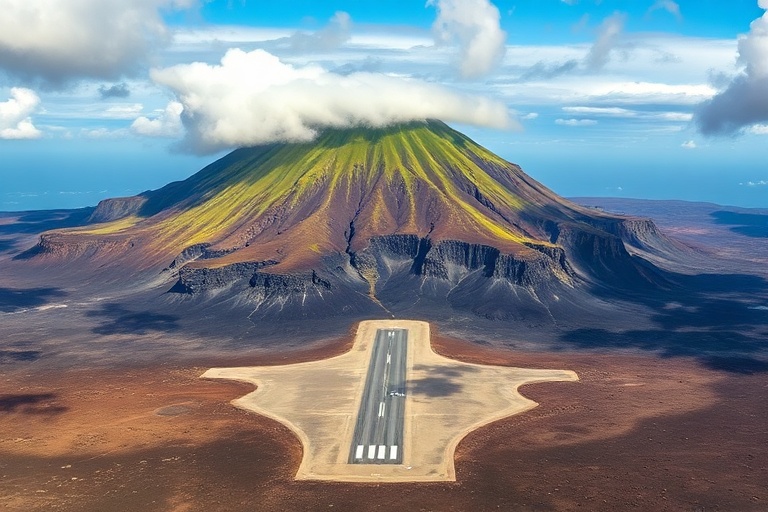
Formed by volcanic activity around a million years ago, Ascension Island is a dramatic expression of Earth’s geological forces. The island’s terrain is dominated by rugged peaks, including the highest point, Green Mountain, which rises to 2,817 feet. Despite its arid climate, the island supports a surprising variety of flora and fauna, much of it introduced by humans over centuries.
The island’s isolation has led to the evolution of unique species, such as the Ascension frigatebird and the endemic Ascension Island grass. Conservation efforts are now underway to protect these fragile ecosystems from invasive species and climate change. The island’s volcanic history is also evident in its geothermal activity, particularly around the Boiling Hill area, where hot springs bubble to the surface.
For travelers seeking adventure, Ascension Island offers a rare opportunity to explore a landscape that feels untouched by time. The dramatic contrasts between black volcanic sands, green peaks, and azure waters create a visual spectacle that few other places can match.
A Strategic Crossroads in Global History
Ascension Island’s remote location has made it a critical outpost at key moments in history. Discovered by the Portuguese in 1503, the island was later claimed by the British in 1815 as a vital stopover for ships traveling between Europe and the East. Its position in the Atlantic made it an ideal refueling point for the British Royal Navy, particularly during the Napoleonic Wars.
During World War II, Ascension Island gained further strategic importance as a refueling and communication hub for Allied forces. The construction of Wideawake Airfield in 1942 transformed the island into a crucial link in transatlantic aviation routes. Today, the airfield remains operational, serving as a vital stop for military and civilian aircraft.
The island’s role in global communications continued into the 20th century with the establishment of satellite ground stations. These stations played a key role in relaying signals during the Cold War, and today, they support modern telecommunications networks. Ascension Island’s history is a testament to its enduring significance in an ever-changing world.
Life on Ascension Island: A Community of Pioneers
With a population of around 800 people, Ascension Island is home to a tight-knit community that includes British military personnel, contractors, and a small number of civilian residents. Life on the island is defined by its isolation and self-sufficiency. Residents rely on a single power plant, desalination facilities, and regular supply ships to sustain their way of life.
The island’s infrastructure is minimal but highly functional. There are no traffic lights, and the main settlement, Georgetown, is a quiet hub of activity. Despite its remoteness, the community is vibrant, with social events, sports leagues, and cultural activities that bring residents together. The island’s only school, Two Boats School, serves children from kindergarten through high school, offering a unique education in a one-of-a-kind setting.
For those who choose to live on Ascension Island, the experience is both challenging and rewarding. The isolation fosters a strong sense of camaraderie, while the natural beauty provides endless opportunities for exploration and adventure. It’s a lifestyle that few can imagine, yet one that leaves a lasting impression on those who experience it.
The Future of Ascension Island: Challenges and Opportunities
As the world becomes increasingly interconnected, Ascension Island faces both opportunities and challenges. The island’s strategic location makes it an attractive site for future infrastructure projects, such as renewable energy initiatives and expanded telecommunications networks. However, its isolation also presents significant hurdles, from high operational costs to environmental concerns.
One of the island’s most pressing challenges is climate change. Rising sea levels and increased storm activity threaten the island’s fragile ecosystems and infrastructure. Conservationists are working to mitigate these risks through habitat restoration and sustainable practices. Meanwhile, the island’s leadership is exploring ways to diversify its economy, potentially leveraging its unique assets for tourism and research.
For now, Ascension Island remains a place where history and nature intersect in extraordinary ways. Whether it’s the legacy of its volcanic origins, the echoes of its strategic past, or the resilience of its modern community, the island continues to captivate those who encounter it.
For travelers and history enthusiasts alike, Ascension Island offers a rare glimpse into a world that few have experienced. It’s a place where the past and present coexist, and where the spirit of exploration is alive and well.
Exploring Further: Resources for the Curious
If you’re interested in learning more about Ascension Island, consider exploring these resources:
- Travel – Discover more remote destinations and travel insights.
- History – Dive into the fascinating stories behind other historic outposts.
Ascension Island may be small in size, but its impact on history and nature is anything but. It’s a place that invites reflection on humanity’s relationship with isolation, resilience, and the natural world.