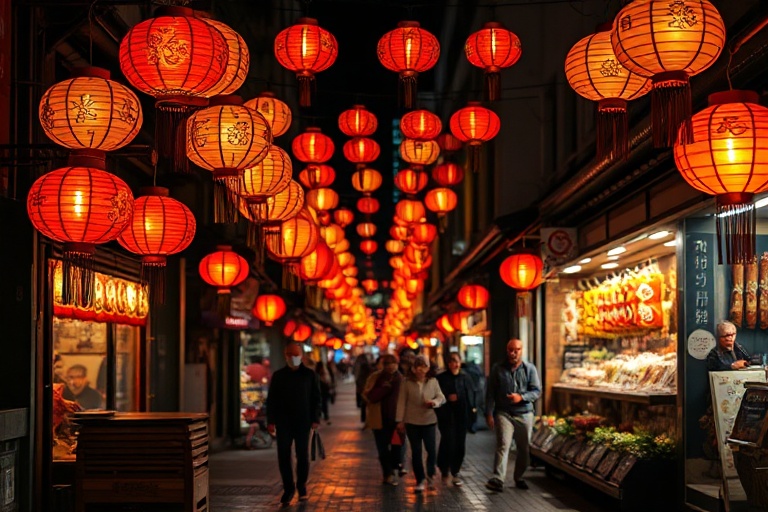
Lanterns: History, Meaning, and Global Traditions Explored
“`html
Lanterns: A Global History of Light, Symbolism, and Celebration
Few objects carry as much weight across cultures and centuries as the humble lantern. More than just a source of illumination, lanterns serve as vessels of tradition, artistry, and collective memory. Their glow has marked festivals, guided travelers, and inspired spiritual reflection from ancient temples to modern city streets. The story of the lantern is one of adaptation and meaning—how a simple tool evolved into a symbol of hope, remembrance, and human connection.
The Origins of the Lantern: From Practicality to Ritual
Lanterns trace their lineage back over two millennia. Early forms appeared in China during the Han Dynasty (206 BCE–220 CE), where bamboo and paper structures housed candles or oil lamps. These were not merely functional; they were tied to festivals like the Lantern Festival, marking the end of Lunar New Year celebrations. The Chinese lantern tradition emphasized both beauty and symbolism, with red lanterns representing good fortune and prosperity.
Meanwhile, in Europe, the Roman Empire utilized bronze and iron lanterns to light streets and public spaces. Unlike their Asian counterparts, these lanterns were utilitarian, designed to extend the usable hours of daylight in bustling cities. By the Middle Ages, European lanterns had become part of religious processions, particularly during Easter and Christmas vigils, where their flickering light symbolized divine presence.
The lantern’s spread across continents reflects humanity’s universal need for light in darkness. Whether in a Kyoto alley during Obon or a medieval European cathedral, the lantern became a bridge between the physical and metaphysical worlds.
Cultural Lantern Festivals: Where Light Becomes Art
Few places celebrate lanterns with the intensity of Asia, where entire festivals revolve around their beauty and symbolism. The Taipei Lantern Festival, held annually during Lunar New Year, transforms the city into a canvas of glowing art. Elaborate designs—often depicting mythological creatures or modern themes—are suspended above streets, their light reflecting off the faces of thousands of onlookers. The festival’s centerpiece is the launch of a massive sky lantern, carrying wishes and prayers into the heavens.
In Thailand, the Yi Peng Festival in Chiang Mai sees thousands of paper lanterns released into the night sky during Loy Krathong. Each lantern carries personal hopes and collective prayers for the new year. The sight of hundreds of lanterns ascending in unison creates a breathtaking, almost otherworldly spectacle. This tradition underscores a profound cultural belief: light not only illuminates the external world but also the inner self.
Across the globe, similar traditions thrive:
- Japan’s Toro Nagashi: During Obon, families float lanterns down rivers to guide ancestral spirits home.
- India’s Diwali: Oil lamps, or diyas, line homes and temples, symbolizing the victory of light over darkness.
- Brazil’s Festa Junina: Colorful paper lanterns hang above street parties celebrating saints with music and dance.
These festivals reveal a shared human impulse: to transform light into meaning. Whether through prayer, remembrance, or celebration, lanterns become vessels of emotion, carrying stories that transcend language.
The Artistry Behind Lantern Crafting
Lanterns are not just cultural artifacts; they are works of art. The craftsmanship involved in their creation varies widely, from the intricate paper folding of Japanese washi lanterns to the delicate metalwork of Moroccan oil lanterns. In Vietnam, silk lanterns are hand-painted with scenes from folklore and history, their translucent fabric diffusing light into soft, dreamlike hues.
One of the most revered traditions is the Korean lotus lantern, or yeon deung. Crafted from bamboo and adorned with silk or paper, these lanterns are central to Buddha’s Birthday celebrations. The lotus motif symbolizes purity and enlightenment, and the lanterns themselves are works of ephemeral beauty, often discarded after use—a reminder of the transient nature of life.
Modern lantern artists continue to innovate. In the West, designers like Dale Chihuly have reimagined the lantern as a sculptural piece, using glass to capture light in ways that blur the line between utility and art. Meanwhile, in countries like the Philippines, community workshops keep traditional lantern-making alive, teaching younger generations the skills passed down through generations.
Lanterns in the Modern World: Technology Meets Tradition
Today, lanterns exist at the intersection of tradition and innovation. Solar-powered lanterns are transforming lives in regions with limited electricity, providing safe, sustainable light to rural communities. These modern iterations retain the lantern’s symbolic power while addressing practical needs. In Africa, organizations distribute solar lanterns during refugee crises, offering both illumination and a sense of normalcy in chaotic environments.
Yet, even as technology advances, the cultural significance of lanterns endures. In 2020, as the world grappled with the COVID-19 pandemic, lantern festivals became acts of defiance and hope. In South Korea, Seoul’s Lotus Lantern Festival went virtual, with participants lighting lanterns at home and sharing images online. The act of lighting a lantern—whether in person or digitally—became a collective gesture of resilience and solidarity.
Even in technology, the lantern’s influence persists. LED lanterns, with their adjustable brightness and portability, are now staples at outdoor festivals and camping trips. Designers draw inspiration from historical lanterns, blending vintage aesthetics with modern functionality. Smart lanterns, equipped with Bluetooth speakers and color-changing LEDs, cater to a generation that values both tradition and convenience.
The Lantern as a Universal Symbol
What makes the lantern so enduring? Perhaps it is its dual nature: both a tool and a talisman. A lantern guides the traveler through dark forests, but it also illuminates the path of the soul. It is a simple object, yet one that carries layers of meaning across cultures and centuries.
In literature and film, the lantern often appears as a metaphor for hope and guidance. From the flickering lantern in The Great Gatsby to the glowing paper lanterns in Spirited Away, these objects transcend their physical form to represent aspiration, memory, and the human spirit. They remind us that light—whether literal or symbolic—is not just something we seek, but something we create.
As we move further into an era dominated by digital screens and artificial light, the lantern offers a counterpoint: a tangible, communal experience of illumination. It invites us to pause, to gather, and to find meaning in the glow. Whether lit during a festival, hung in a temple, or carried through a quiet night, the lantern remains a powerful emblem of what it means to be human.
In a world often divided by borders and beliefs, the lantern stands as a universal language—one that speaks in light, color, and shared humanity. It is more than an object; it is a tradition, an art form, and a beacon of hope that continues to shine across generations and cultures.
—