NEP vs SCO: How India’s Education Policy Meets Regional Alliances
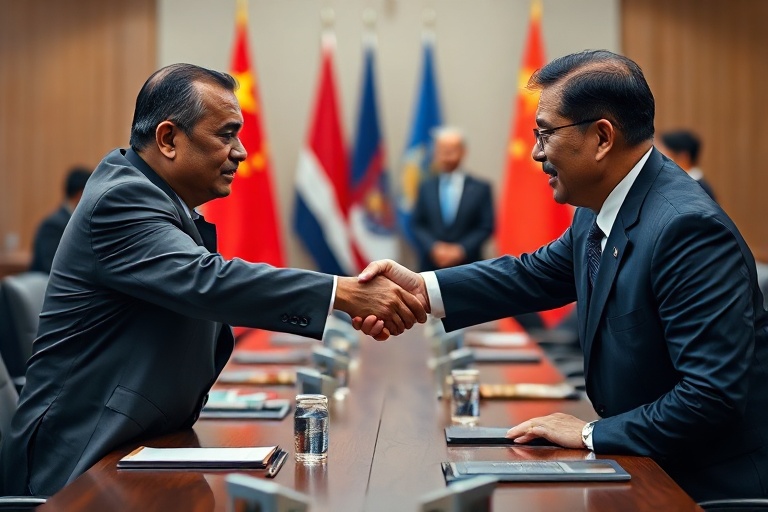
The National Education Policy (NEP) of India and the Shanghai Cooperation Organization (SCO) represent two distinct yet increasingly interconnected frameworks reshaping education, diplomacy, and economic development across Asia and beyond. While NEP focuses on modernizing India’s educational landscape, SCO operates as a political, economic, and security alliance with deep educational initiatives. Their convergence signals a strategic realignment in global power dynamics, particularly as India strengthens its role within the SCO while implementing sweeping reforms at home.
The juxtaposition of these two entities is not merely academic. It reflects a broader trend where education policy becomes a tool of soft power, economic leverage, and geopolitical positioning. To understand their implications, it’s essential to examine their origins, goals, and the ways they intersect in practice.
The National Education Policy: A Blueprint for India’s Future
Unveiled in 2020 after a 34-year hiatus, India’s National Education Policy (NEP) is a radical departure from traditional models. It introduces sweeping changes: a shift from 10+2 to a 5+3+3+4 school structure, emphasis on mother-tongue or local language instruction until Grade 5, and a push toward multidisciplinary higher education. The policy also promotes digital learning, vocational training from Grade 6, and the establishment of a National Research Foundation to boost innovation.
Critics argue that the NEP’s language policy could marginalize non-Hindi speakers and that its implementation challenges—such as teacher training, infrastructure gaps, and bureaucratic inertia—are substantial. Yet, supporters highlight its potential to democratize education, reduce rote learning, and align India’s workforce with 21st-century demands. By 2030, the government aims to increase the Gross Enrollment Ratio (GER) in higher education from 26.3% to 50%, a goal that hinges on NEP’s success.
What makes NEP particularly significant is its timing. Launched during a global pandemic that exposed educational inequalities, it positions India as a leader in educational reform, especially in the Global South. The policy’s focus on accessibility, equity, and vocational integration resonates with developing nations seeking alternatives to Western models.
The Shanghai Cooperation Organization: Beyond Security and Toward Education
Founded in 2001, the Shanghai Cooperation Organization (SCO) began as a regional security bloc but has evolved into a multifaceted alliance. Its eight full members—China, India, Pakistan, Russia, Kazakhstan, Kyrgyzstan, Tajikistan, and Uzbekistan—now collaborate on trade, energy, and increasingly, education. The SCO’s educational initiatives include the SCO University, established in 2008, which offers joint degree programs in energy, IT, and regional studies, and the SCO Youth Council, which fosters cultural and academic exchanges.
Unlike NEP, which is domestically focused, SCO’s educational programs serve as diplomatic tools. They promote mutual recognition of degrees, academic mobility, and cultural diplomacy—particularly important as China and India vie for influence across Central and South Asia. The SCO’s emphasis on regional connectivity aligns with China’s Belt and Road Initiative (BRI), creating a parallel educational infrastructure that could shift the balance of academic power away from Western institutions.
The SCO’s approach is pragmatic: education is leveraged to build trust, standardize practices, and reduce dependency on external powers. For India, participation in SCO educational programs offers an opportunity to counterbalance China’s dominance in regional institutions while expanding its own soft power footprint.
Where NEP and SCO Converge: Education as Geopolitical Currency
The intersection of NEP and SCO is most visible in three areas: academic mobility, digital education, and workforce development. India’s push for internationalization under NEP aligns with SCO’s goal of creating a shared educational space. For instance, the SCO University now includes Indian universities, allowing students to pursue degrees recognized across member states. This not only enhances educational access but also strengthens regional cohesion.
Digital education is another convergence point. NEP’s focus on online learning and digital infrastructure complements SCO’s Digital Silk Road, which aims to expand internet connectivity and e-learning across Central Asia. Projects like the SCO’s “Smart Cities” initiative and India’s DIKSHA platform for school education could integrate, creating a unified digital ecosystem for millions of learners.
Workforce development is perhaps the most strategic overlap. Both NEP and SCO prioritize vocational training and STEM education to meet labor market demands. India’s plan to establish 10,000 Atal Tinkering Labs (ATLs) under NEP could extend into SCO member states, fostering a new generation of innovators tied to regional economic blocs rather than global corporations.
This alignment reflects a broader shift: education is no longer just a domestic policy issue but a geopolitical asset. Nations are increasingly using it to project influence, secure alliances, and shape global standards—much like they do with military or economic policies.
Challenges and Criticisms
Despite their potential, the NEP-SCO nexus faces significant hurdles. First, bureaucratic fragmentation. India’s education system is administered by multiple agencies, and integrating NEP with SCO’s multilateral framework requires unprecedented coordination. Second, geopolitical tensions. India’s strained relations with China—SCO’s dominant member—could complicate joint educational ventures, especially in sensitive fields like AI and cybersecurity.
Third, quality control. While SCO promotes mutual recognition of degrees, standards vary widely among member states. A degree from a Kazakh university may not meet the same benchmarks as one from an Indian Institute of Technology, raising concerns about academic rigor and equity.
Finally, there’s the question of inclusivity. While SCO includes Central Asian republics, its focus remains on member states, leaving out countries like Sri Lanka or Bangladesh that are crucial to India’s regional influence. Similarly, NEP’s language policies have sparked debates about linguistic marginalization, which could deter participation from non-Hindi-speaking communities.
Looking Ahead: What the Future Holds
The fusion of NEP and SCO represents more than policy alignment—it signals a recalibration of global educational power. As India emerges as a key player in both domestic reform and regional alliances, its choices will influence how education is delivered, regulated, and weaponized in the 21st century.
For students and educators, this could mean greater opportunities for cross-border collaboration. For policymakers, it demands a delicate balance between national priorities and regional cooperation. And for the world, it raises a critical question: Will education become a force for equitable development, or will it be yet another arena for geopolitical competition?
The answer may well lie in how effectively NEP and SCO can transcend their origins to serve the millions of learners caught between tradition and transformation.
Key Takeaways
- NEP is India’s ambitious plan to overhaul its education system, emphasizing accessibility, vocational training, and digital learning.
- SCO uses education as a tool for regional integration, security, and soft power, particularly through its university and youth programs.
- The two frameworks increasingly intersect in digital education, academic mobility, and workforce development.
- Geopolitical tensions, bureaucratic hurdles, and quality disparities pose major challenges to deeper integration.
- Their convergence reflects a global trend where education becomes a strategic asset in international relations.
As India implements NEP and strengthens its role in SCO, the world will watch closely. The stakes are high—not just for students, but for the future of global governance itself.
For more insights into India’s educational reforms, visit our Education category. To explore how regional alliances are shaping global policy, check out our News section.