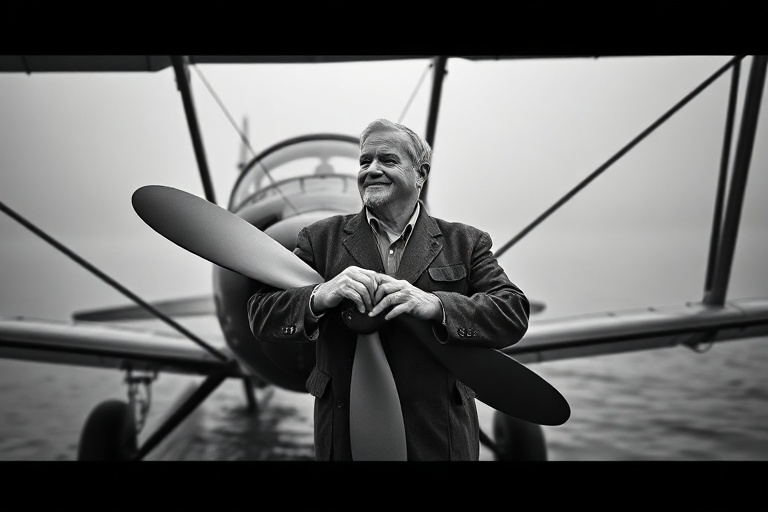
Ron Holland: The Designer Who Redefined Superyacht Luxury
For decades, Ron Holland has stood at the forefront of superyacht design, blending artistry with engineering to create some of the most recognizable vessels on the water. With a career spanning over 50 years, Holland’s influence extends beyond aesthetics—he has redefined what it means to sail in style, comfort, and performance. His designs are not just boats; they are floating masterpieces that challenge convention while respecting tradition.
Born in New Zealand in 1947, Holland’s journey began in the world of competitive sailing. His early exposure to racing yachts shaped his understanding of hydrodynamics and structural integrity, principles that would later define his design philosophy. By the 1970s, he had transitioned from competitor to designer, quickly gaining attention for his innovative approach. His breakthrough came with the Imp series in the late 1970s, which introduced a new level of performance and elegance to the superyacht market.
The Holland Signature: Speed, Elegance, and Innovation
Holland’s designs are instantly recognizable by their sleek lines, low-profile cabins, and emphasis on performance. Unlike traditional yachts that prioritize grandeur over agility, Holland’s vessels are built for both speed and comfort. This dual focus has made his designs particularly appealing to owners who value both luxury and the thrill of sailing.
One of Holland’s most significant contributions to yacht design is his use of lightweight materials and advanced hull shapes. By incorporating carbon fiber and other composites, he reduced weight without sacrificing strength, allowing his yachts to achieve higher speeds with less power. This innovation was groundbreaking in an industry often resistant to change.
His work also emphasizes interior spaces that are both functional and breathtaking. Holland understood that a yacht’s interior should feel like a home, not a museum. His designs often feature open-plan layouts, expansive windows, and natural materials like teak and stone, creating environments that are as inviting as they are impressive.
Key Projects That Define His Legacy
Holland’s portfolio includes some of the most iconic superyachts ever built. Below are a few standout projects that highlight his impact on the industry:
- Nahlin (1983): A 50-meter classic that became a benchmark for modern yacht design, blending traditional craftsmanship with contemporary performance.
- Hyperion (1998): A 55-meter ketch known for its striking silhouette and cutting-edge rigging, which Holland designed to maximize both speed and comfort.
- Hanuman (2009): A 58-meter schooner that won multiple awards for its innovative sail plan and luxurious interiors, proving Holland’s ability to merge tradition with modernity.
- Project Opus (2018): A 65-meter displacement yacht that pushed the boundaries of efficiency and elegance, featuring a hybrid propulsion system and a minimalist aesthetic.
Each of these projects underscores Holland’s ability to anticipate trends in the superyacht industry. His designs often set new standards, influencing competitors and inspiring younger designers to think beyond conventional boundaries.
The Broader Impact on Yacht Design and Beyond
Holland’s work extends beyond individual yachts. His design philosophy has had a ripple effect across the entire marine industry, influencing everything from smaller recreational boats to commercial vessels. His emphasis on sustainability, for instance, has become increasingly relevant as the industry grapples with environmental concerns. Holland has advocated for the use of eco-friendly materials and energy-efficient systems, proving that luxury and sustainability can coexist.
Moreover, Holland’s approach to design has reshaped the relationship between owner and vessel. His yachts are not just status symbols; they are extensions of their owners’ personalities and lifestyles. This shift has redefined the role of the superyacht in modern society, moving away from mere opulence toward a more holistic vision of luxury.
In interviews, Holland has often spoken about the importance of listening to clients while also challenging their expectations. He believes that great design should surprise and delight, pushing boundaries without alienating the user. This philosophy has earned him respect not just as a designer, but as a visionary who understands the deeper meaning of luxury.
What’s Next for Ron Holland?
Even after decades in the industry, Holland shows no signs of slowing down. His latest projects continue to explore the intersection of technology, sustainability, and artistry. One of his most ambitious undertakings is the development of a new generation of hybrid-powered yachts, which aim to reduce emissions without compromising performance. This commitment to innovation ensures that his work remains relevant in an evolving market.
Holland has also expanded his influence beyond yacht design. He has consulted on residential architecture, furniture design, and even automotive projects, demonstrating the versatility of his creative approach. His ability to adapt and innovate keeps him at the cutting edge of multiple industries.
For those interested in the evolution of superyacht design, Holland’s career offers a masterclass in balancing tradition and progress. His work serves as a reminder that true luxury is not about excess, but about thoughtful innovation and enduring craftsmanship.
As the superyacht industry continues to evolve, Ron Holland’s legacy will undoubtedly endure. His designs will remain benchmarks for excellence, and his influence will inspire future generations of designers to think differently about the vessels they create.
Why Ron Holland Matters in Today’s Yacht Market
The superyacht industry today faces increasing scrutiny over its environmental impact and ethical considerations. In this context, Holland’s emphasis on sustainability and performance is more relevant than ever. His designs prove that it is possible to create vessels that are both luxurious and responsible, challenging the industry to adopt better practices.
Moreover, Holland’s success highlights the importance of individual craftsmanship in an era dominated by mass production. His work is a testament to the value of human creativity and expertise, qualities that are becoming increasingly rare in a digital world. For yacht owners and enthusiasts, this is a refreshing reminder of what true luxury looks like.
As Holland continues to push the boundaries of design, his story serves as an inspiration for anyone who believes in the power of innovation. Whether you’re a sailor, a designer, or simply someone who appreciates beauty and craftsmanship, Ron Holland’s work offers a compelling vision of what the future of luxury can be.