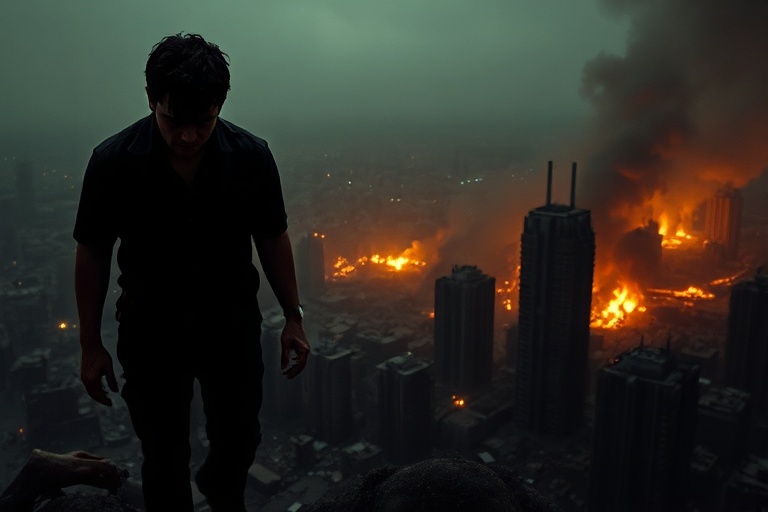
The Boys Finale Ends Seven Seasons of Dark, Unfiltered Storytelling
The final season of The Boys concluded with an explosive finale that delivered on the show’s signature blend of violence, satire, and moral reckoning. Titled “The Instant White-Hot Wild,” the episode served as a definitive end to the series’ seven-season run, wrapping up long-standing character arcs while leaving room for interpretation about the world that remains.
Created by Eric Kripke and based on the comic by Garth Ennis and Darick Robertson, The Boys has consistently pushed boundaries in its critique of corporate power, celebrity culture, and unchecked authority. The finale reinforced these themes, though not without controversy. Fans and critics alike dissected every moment, from the fate of beloved characters to the symbolic destruction of Vought’s empire.
The Legacy of Seven: Hughie’s Journey to Redemption
Hughie Campbell’s transformation from a grieving victim to a ruthless avenger reached its apex in the finale. After years of trauma and loss, Hughie finally confronts Homelander in a climactic battle that mirrors their first encounter in Season 1—but with a crucial difference: this time, Hughie is the one holding the gun. His decision to spare Homelander, only to later ignite the rocket that destroys Vought’s headquarters, underscores the show’s central question: can justice be achieved without becoming what you fight against?
Hughie’s arc is one of the show’s most compelling, and the finale ensures his story doesn’t end with hollow victory. Instead, he walks away with a scarred face, a broken body, and the knowledge that he played a role in dismantling the very system that tormented him. The final shot of Hughie sitting alone on a park bench—reminiscent of his first appearance—bookends his journey with tragic symmetry.
Homelander’s Downfall: The Ultimate Villain’s End
Antony Starr’s performance as Homelander has been a defining feature of The Boys, and the finale delivered a conclusion worthy of his complexity. After years of manipulating the public, betraying allies, and committing unspeakable acts, Homelander’s reign ends not with a bang, but with a whimper. His final moments are spent screaming in the wreckage of Vought Tower, a far cry from the godlike figure he once portrayed.
The show’s subversion of the superhero trope is complete here. Homelander, who began as an invincible parody of Superman, dies as a broken man, abandoned by his son and destroyed by his own hubris. His death isn’t a hero’s sacrifice—it’s a pathetic unraveling, one that leaves the audience neither triumphant nor sorrowful, but exhausted. The final season of The Boys makes it clear: power, no matter how absolute, is always temporary.
The Fate of the Supe Community: A New World Order
The finale doesn’t just focus on the main cast. The wider community of Supes faces a reckoning of their own. Vought’s collapse leaves a power vacuum, and the show hints at a future where Supes might exist without corporate control—but at what cost? The Boys’ victory isn’t clean. The collateral damage includes the deaths of countless innocents, the destruction of entire city blocks, and the psychological toll on those who survived.
One of the most intriguing developments is the rise of Soldier Boy as a potential new threat. His escape at the end of the finale suggests that the cycle of violence isn’t over. The show leaves audiences with a chilling reminder: evil isn’t a single entity. It’s a system, and systems have a way of regenerating.
The Final Season’s Thematic Payoff
The Boys has always been as much about its themes as its characters. The finale doubles down on its critique of American capitalism, media manipulation, and the cult of celebrity. Vought’s downfall isn’t just the result of a rocket attack—it’s the inevitable collapse of an empire built on lies, exploitation, and the deification of monsters.
The show’s creators have spoken about the influence of real-world events on the series, particularly the rise of influencer culture and the erosion of trust in institutions. The finale feels like a dark reflection of our own moment, where power is concentrated in the hands of the few, and the masses are left to clean up the wreckage. It’s a bleak vision, but one that’s delivered with dark humor and brutal honesty.
For long-time viewers, the finale also serves as a love letter to the show’s most devoted fans. Easter eggs, callbacks to earlier seasons, and callbacks to the comics all reward those who’ve stuck with the series since its early days. Yet even newcomers can appreciate the raw, unfiltered storytelling that has become The Boys’ signature.
What Comes Next?
With the main series concluded, the question remains: will there be more The Boys? Amazon has announced a sequel series, Gen V, which focuses on the younger generation of Supes at a Vought-run university. While it’s a spin-off, the finale’s ending suggests that the world of The Boys is far from over. Soldier Boy’s escape, the potential return of other villains, and the lingering impact of Vought’s collapse all leave the door open for further stories.
For now, though, fans can reflect on a series that never shied away from pushing buttons. The Boys Finale doesn’t offer easy answers or neat resolutions. Instead, it delivers a story that feels as messy, chaotic, and morally ambiguous as the world it critiques. And that might be the most honest ending of all.
Final Thoughts
The finale of The Boys is a testament to the show’s audacity. It refuses to give audiences the catharsis they might expect from a superhero story. There are no heroes left standing, no clear victories, and no promise of a better future. Instead, there’s only the cold reality that power corrupts, systems collapse, and the fight for justice is never truly over.
Whether you see the finale as a masterstroke or a misfire likely depends on how much you value ambiguity over resolution. But one thing is certain: The Boys will be remembered as a series that dared to ask uncomfortable questions—and provided answers that were equally uncomfortable. In a genre dominated by hope and heroism, that’s no small feat.
For more on the world of The Boys, check out our analysis of the show’s impact on Entertainment at Dave’s Locker, or explore deeper dives into its themes on our Analysis page.