Trump Iran Policy: Legacy of Maximum Pressure and Global Tensions
“`html
Trump’s Iran Policy: A Legacy of Tension and Uncertainty
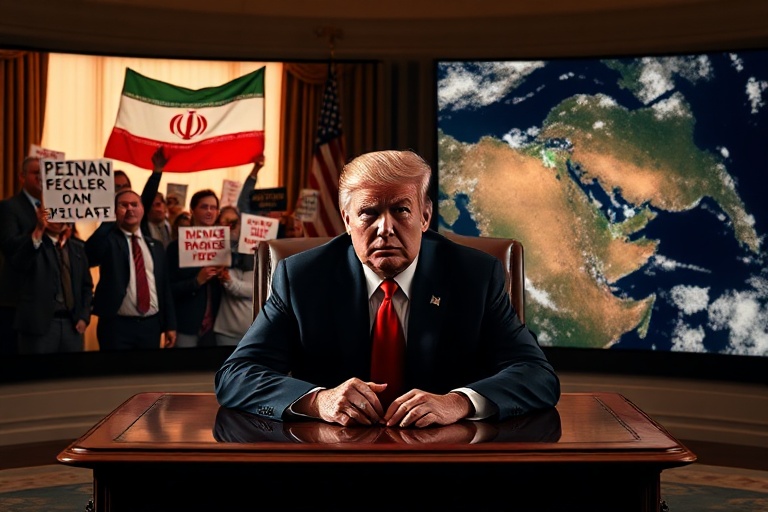
The relationship between the United States and Iran has long been one of the most volatile geopolitical dynamics of the 21st century. Under President Donald Trump, that tension reached new heights, marked by a policy of maximum pressure, withdrawal from international agreements, and a series of high-stakes confrontations. While the Biden administration has sought to reset relations, the scars left by Trump’s approach continue to influence the region’s stability and global diplomacy.
The Withdrawal from the Iran Nuclear Deal
One of Trump’s first major foreign policy actions was to withdraw the U.S. from the Joint Comprehensive Plan of Action (JCPOA), commonly known as the Iran nuclear deal. Signed in 2015 under the Obama administration, the JCPOA aimed to curb Iran’s nuclear program in exchange for sanctions relief. Trump, however, argued that the deal was flawed, failing to address Iran’s ballistic missile program and regional influence.
The withdrawal, announced in May 2018, was met with international criticism. European allies, including France, Germany, and the UK, expressed disappointment, while Iran accused the U.S. of violating international law. The decision left the future of the deal uncertain and set the stage for a period of escalating hostilities.
- May 2018: Trump announces U.S. withdrawal from the JCPOA.
- August 2018: The first round of reinstated U.S. sanctions targeting Iran’s economy takes effect.
- November 2018: Secondary sanctions are imposed, targeting countries that continue to trade with Iran.
The withdrawal not only strained U.S.-Iran relations but also created a rift between the U.S. and its European allies. The Trump administration’s insistence on reimposing sanctions despite European efforts to preserve the deal highlighted the growing divide in transatlantic relations.
Maximum Pressure: A Strategy of Economic Warfare
Trump’s Iran policy centered on a strategy known as “maximum pressure,” designed to cripple Iran’s economy and force concessions on its nuclear program and regional behavior. The approach involved reimposing sanctions lifted under the JCPOA and imposing new ones targeting key sectors of Iran’s economy, including oil exports, banking, and shipping.
The impact was immediate and severe. Iran’s oil exports, a critical revenue source, plummeted from over 2 million barrels per day in 2018 to less than 500,000 barrels per day by late 2019. The rial, Iran’s currency, lost nearly two-thirds of its value against the U.S. dollar. Inflation soared, and unemployment rose, leading to widespread protests and unrest within the country.
While the maximum pressure campaign aimed to weaken the Iranian government, it also had unintended consequences. The economic hardship fueled public discontent, with protests erupting across Iran in late 2019. The government responded with a violent crackdown, further exacerbating the crisis. Critics argued that the policy failed to achieve its stated goals and instead pushed Iran toward greater defiance and closer ties with other adversaries, such as Russia and China.
Military Escalation and the Shadow of Conflict
The maximum pressure strategy was not limited to economic measures. It also included a military component, as tensions escalated in the Persian Gulf and beyond. In 2019, several high-profile incidents raised the specter of direct conflict between the U.S. and Iran.
In June 2019, the U.S. blamed Iran for attacks on two oil tankers in the Gulf of Oman, an accusation Iran denied. A month later, Iran shot down a U.S. military drone, claiming it had violated Iranian airspace. Trump authorized a retaliatory strike but called it off at the last minute, opting instead for cyberattacks on Iranian targets.
The most dramatic moment came in January 2020, when a U.S. drone strike killed Iranian General Qasem Soleimani, a powerful military figure and architect of Iran’s regional influence. The assassination sparked outrage in Iran and across the Middle East, with Iran vowing revenge. Days later, Iran launched missile strikes on U.S. military bases in Iraq, injuring dozens of American service members.
The killing of Soleimani marked a turning point in U.S.-Iran relations, pushing the two nations to the brink of war. While neither side sought a full-scale conflict, the incident underscored the fragility of the region’s security and the risks of miscalculation.
Legacy and the Path Forward
As Trump’s presidency came to an end in January 2021, the legacy of his Iran policy remained a subject of intense debate. Supporters argued that the maximum pressure campaign had weakened Iran’s economy and forced it to negotiate from a position of weakness. Critics, however, contended that the policy had failed to achieve its goals and instead pushed Iran toward greater defiance and closer ties with adversaries like China and Russia.
The Biden administration’s approach to Iran has sought to reverse some of Trump’s policies, including rejoining the JCPOA and easing sanctions. However, progress has been slow, complicated by Iran’s own political dynamics and regional ambitions. The Trump-era policies have left a lasting impact on U.S.-Iran relations, as well as on the broader geopolitical landscape.
For those interested in the broader context of U.S. foreign policy, Dave’s Locker’s News section offers in-depth analysis and reporting on global affairs. Similarly, for a closer look at the Middle East’s evolving dynamics, the Politics category provides valuable insights.
The Trump-Iran saga is far from over. The policies of the past continue to shape the present, and the future of U.S.-Iran relations remains uncertain. What is clear, however, is that the decisions made during Trump’s presidency have left an indelible mark on the region and the world.