Trump White House Helipad Plans Spark International Attention
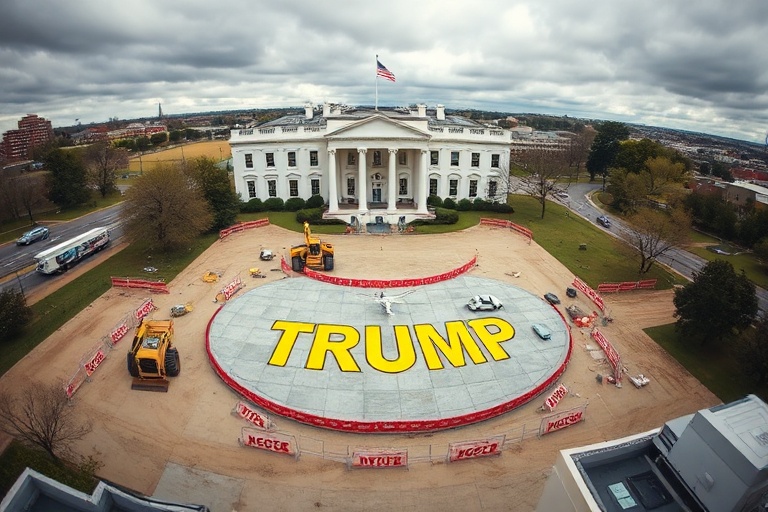
The Trump administration’s proposal to construct a new helipad on the South Lawn of the White House has become a flashpoint in global discussions about security, symbolism, and the evolving nature of presidential infrastructure. While the White House already operates with extensive aerial support—including Marine One, the presidential helicopter—this plan introduces new considerations about visibility, accessibility, and the blending of security with public perception.
Critics argue that such a helipad would alter the historic aesthetic of the White House grounds, potentially altering the visual narrative of the presidency. Supporters, however, frame it as a practical modernization of an aging facility. The debate transcends domestic politics, reflecting broader tensions between security needs and the symbolic weight of the American presidency on the world stage.
Security vs. Symbolism: The Helipad’s Dual Role
The White House has long relied on helicopters for presidential transport, primarily through the U.S. Marine Corps’ HMX-1 squadron. Marine One, the call sign for any Marine Corps aircraft carrying the president, is a cornerstone of executive mobility and emergency response. However, current operations require the helicopter to land on the South Lawn, a process that involves clearing public areas and coordinating with the Secret Service.
Proponents of the new helipad argue that a dedicated, permanent structure would streamline operations, reduce logistical challenges, and enhance security protocols. A fixed platform could allow for faster boarding and disembarking, minimizing exposure during high-risk moments. Additionally, it could standardize maintenance and reduce wear on the existing lawn, which has suffered damage from repeated landings.
Yet, the symbolic implications are significant. The South Lawn is one of the most recognizable outdoor spaces in the world—a stage for diplomacy, public events, and historical moments. Altering its appearance, even subtly, could send a message about priorities. In an era where global perceptions of leadership are increasingly scrutinized, the aesthetics of power matter.
Global Reactions: How Other Nations View the Proposal
International observers have reacted with a mix of curiosity and concern. In Europe, where royal palaces and historic government buildings often balance modern security with architectural preservation, the helipad plan has drawn comparisons to ongoing debates about surveillance and accessibility in public spaces.
In France, for instance, the Élysée Palace maintains a rooftop helipad, but its use is tightly controlled and rarely seen by the public. German officials, meanwhile, have emphasized the importance of open, accessible government spaces, a principle rooted in post-war democratic reconstruction. These perspectives highlight a cultural divide: some nations prioritize visible security, while others favor transparency.
A notable contrast comes from Russia, where the Kremlin’s security apparatus often prioritizes isolation over accessibility. The helipad at the Kremlin is a well-guarded facility, rarely discussed in public forums. This approach reflects a different philosophy—one where the leader’s movements are shielded from public view. The Trump administration’s proposal seems to occupy a middle ground, neither fully exposed nor entirely concealed.
Logistical and Environmental Considerations
Beyond symbolism and security, the helipad raises practical questions. The White House grounds are a historic site, and any construction would require approval from multiple agencies, including the National Park Service and the Commission of Fine Arts. Environmental impact assessments would also be necessary, particularly concerning noise pollution and disruption to local wildlife.
Noise is a particularly contentious issue. Marine One’s twin-turbine engines are loud, and a dedicated helipad could increase the frequency of flights. Residents in nearby neighborhoods, already accustomed to periodic helicopter noise, might face heightened disruption. The Trump administration has not released detailed plans about flight frequency or noise mitigation, leaving open questions about how these concerns would be addressed.
Another consideration is cost. While exact figures have not been disclosed, helipad construction at comparable government facilities has ranged from $5 million to $15 million. Given the administration’s broader infrastructure priorities, funding allocation could become a point of contention in budget debates.
Historical Precedents and Controversies
This is not the first time the White House has considered structural changes to its grounds. In the 1980s, a proposal to install a swimming pool for President Reagan was met with resistance from preservationists. Similarly, plans to erect a tennis court during the Clinton administration faced public backlash. Each instance revealed the tension between modern convenience and historical integrity.
One of the most infamous examples came in 1974, when President Nixon’s administration installed a helipad on the White House grounds without public announcement. The structure, later dismantled, became a symbol of executive overreach. The current proposal risks reviving memories of that controversy, especially given the administration’s broader rhetoric about transparency and accountability.
The Nixon-era helipad was eventually removed after public outcry, but not before it became a lasting example of how infrastructure decisions can shape perceptions of leadership. Today’s debate echoes that history, raising questions about whether such a facility aligns with the public’s expectations of the presidency.
What’s Next for the Helipad Plan?
As of now, the helipad remains a proposal without formal approval. The General Services Administration, which oversees federal properties, has not released a timeline for review or construction. However, the idea has already entered the broader discourse on presidential infrastructure, joining debates about border walls, golf courses, and executive residences.
For now, the White House continues to rely on the existing South Lawn landing protocol. But as security needs evolve and the demands of the presidency grow more complex, the conversation about modernizing the White House’s operational capabilities will persist. Whether a helipad becomes a reality may depend on how well the administration balances security, symbolism, and public perception.
One thing is certain: in an age where every decision is scrutinized through a global lens, the helipad’s fate will be watched far beyond the borders of the United States. It is not merely a matter of logistics—it is a statement about power, visibility, and the future of leadership in the 21st century.
For more on the intersection of politics and infrastructure, explore our Politics section, where we analyze how government decisions shape everyday life. And for a deeper look at global security trends, visit our Analysis page.