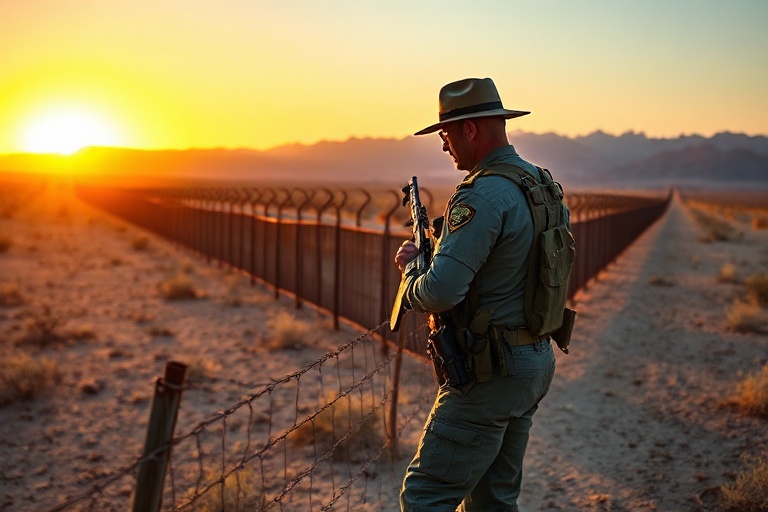
Border Control: Security vs Humanitarian Needs Explained
“`html
Border Control: Balancing Security and Humanitarian Concerns
The concept of border control sits at the intersection of national security and humanitarian responsibility. Nations worldwide grapple with how to manage their borders effectively while upholding international obligations. This balance becomes even more critical amid rising global migration, evolving threats, and shifting political landscapes.
Border control isn’t just about physical barriers or surveillance systems—it encompasses a complex web of policies, technologies, and human decisions. From the Mediterranean Sea to the U.S.-Mexico border, nations employ different strategies to regulate who enters and why. The challenge lies in creating systems that deter illegal activity without violating human rights or undermining diplomatic relations.
The Evolution of Border Control Strategies
Historically, border control relied heavily on physical barriers and manned checkpoints. The ancient Great Wall of China and Hadrian’s Wall in Roman Britain served as early examples of territorial defense. In the modern era, countries have expanded these methods with advanced technologies and legal frameworks.
Today’s strategies blend traditional enforcement with digital tools. Biometric systems like facial recognition and fingerprint scanning have become common at major international crossings. Meanwhile, countries such as Australia and the United States have implemented remote surveillance technologies, including drones and satellite monitoring, to patrol vast and often inhospitable border regions.
Legal approaches have also evolved. The Schengen Agreement in Europe eliminated internal border checks among participating nations while strengthening external borders. Conversely, the U.S. has increasingly relied on partnerships with neighboring countries to manage migration flows before they reach its borders, a policy known as “prevention through deterrence.”
Technology’s Growing Role in Border Management
Technology has transformed border control from a labor-intensive process into a data-driven operation. Artificial intelligence now assists in analyzing vast amounts of information to identify potential security threats. Machine learning algorithms can detect unusual travel patterns or flag suspicious documents that human inspectors might overlook.
Drones equipped with thermal imaging have become invaluable for monitoring remote and often dangerous terrains. In the U.S., Customs and Border Protection operates a fleet of unmanned aerial vehicles to survey the southern border, covering areas where physical barriers would be impractical or environmentally disruptive.
However, these advancements come with significant ethical considerations. Privacy advocates warn that widespread surveillance could lead to mass data collection and potential abuse. There are also concerns about the accuracy of AI systems, particularly in misidentifying individuals based on incomplete or biased training data.
Some countries have taken a more balanced approach by combining high-tech solutions with community-based initiatives. In Canada, for example, border authorities collaborate with Indigenous communities along remote northern borders to share local knowledge and enhance monitoring efforts.
The Humanitarian Dilemma at the Border
Border control policies often face scrutiny when they clash with humanitarian principles. The treatment of asylum seekers and refugees has become a contentious issue globally. Australia’s offshore processing centers in Nauru and Papua New Guinea, for instance, have drawn international condemnation for their harsh conditions and prolonged detentions.
In Europe, the Mediterranean migrant crisis has forced nations to reconsider their approach to search and rescue operations. While some countries have reduced their participation in rescue missions, arguing it encourages more crossings, others maintain that humanitarian obligations must take precedence over deterrence.
The United Nations High Commissioner for Refugees (UNHCR) has repeatedly emphasized that border policies must comply with international law, including the principle of non-refoulement, which prohibits returning refugees to places where they face persecution. Yet, enforcement varies widely, with some nations adopting strict “pushback” policies that intercept boats before they reach territorial waters.
Key Challenges in Balancing Security and Humanitarian Needs
- Resource Allocation: Countries with extensive borders, such as the U.S. or Russia, struggle to allocate sufficient personnel and technology to monitor every entry point effectively.
- Legal Complexities: Asylum claims often require lengthy legal processes, creating backlogs that strain both administrative systems and humanitarian resources.
- Public Perception: Policies perceived as either too lenient or overly restrictive can lead to political backlash, influencing elections and government stability.
- Environmental Impact: Physical barriers, such as walls or fences, can disrupt ecosystems and displace wildlife, particularly in sensitive border regions like the Rio Grande Valley or the Carpathian Mountains.
Case Studies: Different Approaches to Border Control
Examining specific examples reveals the diversity of approaches and their outcomes. Germany’s handling of the 2015 refugee crisis, where over a million asylum seekers arrived, tested the limits of its border control systems. Initially, Germany suspended Schengen border rules to process arrivals, but later reinstated checks amid political pressure.
In contrast, Singapore employs a highly restrictive but efficient model. The city-state uses a combination of strict immigration laws, advanced surveillance, and severe penalties for violations. This approach has kept unauthorized entries extremely low but has also drawn criticism for its lack of flexibility in accommodating refugees.
Canada presents a middle-ground example. With one of the world’s longest undefended borders alongside the U.S., Canada relies heavily on intelligence-sharing and risk assessment rather than physical barriers. This strategy prioritizes prevention while maintaining a reputation for humanitarian openness.
The Future of Border Control
Looking ahead, border control will likely become even more sophisticated—and contentious. Climate change is expected to increase migration flows as rising sea levels and extreme weather displace populations. Nations will need to adapt their policies to address these new challenges without compromising security or human rights.
Technological innovation will continue to shape border management. Blockchain technology, for instance, is being explored to create secure, tamper-proof travel documents. Meanwhile, predictive analytics could help authorities anticipate migration patterns before they occur, allowing for more proactive rather than reactive measures.
However, technological solutions must not overshadow the need for diplomatic cooperation. Transnational threats, such as human trafficking and drug smuggling, require coordinated efforts between neighboring countries. The European Union’s Frontex agency and the U.S.’s partnerships with Mexico and Central American nations highlight the importance of collaboration in managing shared borders.
Ultimately, the future of border control will depend on finding a sustainable equilibrium between security imperatives and humanitarian obligations. As nations navigate this delicate balance, public discourse and ethical considerations must remain at the forefront of policy discussions.
For a deeper look at how technology intersects with global policy, explore our Technology section. To understand the broader geopolitical implications of border policies, visit our Politics category.
Conclusion
Border control remains one of the most complex challenges facing modern nations. It demands a multifaceted approach that integrates technology, legal frameworks, and humanitarian considerations. While security concerns are valid and necessary, they must not come at the expense of fundamental human rights. The most effective border policies will be those that adapt to evolving circumstances while upholding the values of justice and compassion. As the world continues to change, so too must our strategies for managing its boundaries.